Cannabis smuggling via Brussels Airport tenfold increase: 8 arrests after seizure of 500 kg
Cannabis seizures at Brussels Airport rose from 800 kg in 2024 to more than 7.8 tonnes in 2025. Eight suspects were arrested following a controlled delivery.
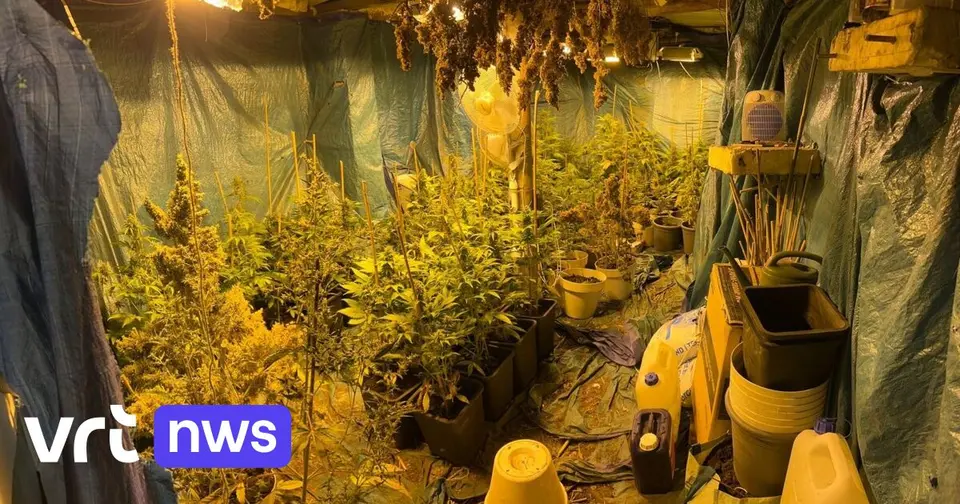
Cannabis imports via Zaventem tenfold increase in one year
More than 500 kilogrammes of cannabis hidden in clothing pallets: Belgian customs officers intercepted this at BruCargo, the cargo zone of Brussels Airport, on 24 August. Investigators from Brussels federal police did not immediately seize the shipment but followed the drugs discreetly.
Three days later, that surveillance resulted in a large-scale police operation: 8 suspects were arrested, the drugs consignment seized, along with 4 vehicles and a signal jammer. "Various mobile phones were also seized," says An Berger of the federal police. "Their analysis should provide additional information for the ongoing investigation and clarify the various people involved in this import and their respective roles." Four of the eight suspects have since been remanded in custody by the investigating judge.
According to Vrt.be, this seizure — large as it is — is no longer an exception. The figures speak for themselves: in 2024, just under 800 kilogrammes of cannabis were discovered at Zaventem, via both freight and passenger transport. In 2025, that rose to 6 tonnes via BruCargo and another 1.8 tonnes via commercial airline flights. "That is a tenfold increase," according to Berger.
Fewer plantations, more imports
The rise in smuggling is accompanied by a decline in the number of cannabis plantations in the country. Criminal organisations increasingly opt for imports from regions where cannabis is legally cultivated, such as Canada, Thailand and California. "Such a plantation requires considerable resources and time," Berger explains. "You have to find a location, tap electricity, deploy staff for maintenance and harvesting. Now cannabis is simply purchased and smuggled via legal goods flows."
Federal police have noted not only an increase via cargo flights but also via postal packages and other logistics channels. "Criminal organisations abuse all available logistics channels and spread their risk by sometimes sending many small packages of drugs," according to Berger. She adds that 95 per cent of airport crime cases at federal police involve drug-related offences. At Europol, a project is currently underway to better map large-scale imports from Canada, Thailand and California.
Drug couriers enticed with holidays
The use of human couriers is also increasing. Earlier this week, a Norwegian employee of a humanitarian organisation appeared before Brussels correctional court, having been caught at Brussels Airport on 17 June with 23 kilogrammes of cannabis in her luggage. The Halle-Vilvoorde public prosecutor's office states that she had been recruited by a criminal organisation to bring the drugs from Bangkok to Europe.
"These people are often offered a holiday in Thailand," says Mickaël Splingard of the Halle-Vilvoorde public prosecutor's office. "In return, they have to take 1 or 2 suitcases of cannabis on the plane. Those might seem like small quantities, but cannabis is sold here at 8 to 9 euros per gramme. A travel suitcase containing 25 kilogrammes of cannabis easily generates 200,000 euros."
Halle-Vilvoorde public prosecutor's office takes tougher stance
Since last year, the Halle-Vilvoorde public prosecutor's office has adopted a harder line against drug couriers. "There must be a fear of justice," says Splingard. "The profits in drug trafficking are phenomenal. You pay no taxes and have a nice life financially. If you make that choice, you must also accept that a sentence follows."
That Brussels Airport is popular with foreign couriers is no coincidence, according to Splingard. "Sentences here are much milder than in other countries. Furthermore, we suffer from insufficient capacity to carry out checks, which also reduces the likelihood of being caught." The prosecutor's office recalls a suspect who had conducted a comparative study to find out where he faced the least risk — and was nevertheless caught upon arrival in Belgium.
Source: Google News BE NL