Cocaine seizures at Antwerp port fall to historic lows in 2024: 44 tonnes intercepted
A total of 44.252 kg of cocaine was seized at Antwerp port last year — a historic decline compared with record-breaking years. Criminals are switching to smaller shipments and new routes.
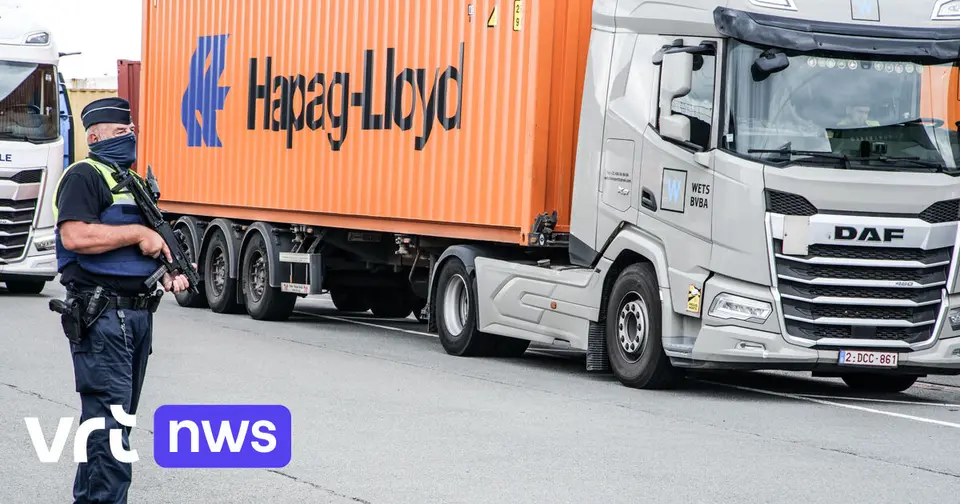
Historic decline in cocaine seizures at Antwerp port, but smugglers adapt
Antwerp port seized a total of 44,252.46 kilogrammes of cocaine in 2024 — a sharp decline compared with 2023, when the quantity was three times higher. This is reported by vrt.be based on annual customs figures.
"Absolutely a historic decline," says Kristian Vanderwaeren, head of customs. For the first time in years, no new record has been set, which he considers a clear break with the trend.
Fewer large seizures, more detections
Notably, despite the lower total quantity, the number of detections actually increased. Vanderwaeren attributes the decline to a drop in large drug seizures of more than two tonnes. In 2024, only two were recorded; in 2023 there were thirteen. "Those large containers of 8, 9, 10 tonnes we barely had last year," Vanderwaeren said.
At the same time, he warns against premature optimism. Federal police have also raised similar concerns. "It does not mean there is less cocaine coming in or circulating. It could be that the cocaine is simply less visible," said An Berger of the police.
More seizures in countries of origin
Part of the explanation for the Antwerp decline lies with the countries of origin themselves. In South America, a total of 230 tonnes of cocaine was seized last year, of which 81 tonnes was destined for Belgium. In 2023 that was still 45 tonnes. "Latin American countries are investing in police, in customs, in scanners and that is having success," Vanderwaeren said.
Ecuador remains the principal country of origin. Places three through five are also Latin American countries. An exception is the second position, which this year goes to Sierra Leone on the west coast of Africa.
New routes and smuggling methods
Drug cartels continuously seek alternative supply routes. Aside from West Africa, Georgia is also emerging as a transit zone. At the same time, air traffic is increasing: customs spoke last month of an "enormous increase" at Brussels Airport. The so-called "drop off" is also gaining ground: drugs are thrown overboard in the North Sea, after which criminals use a tracker to know the exact location and collect the cargo.
Bob Van den Berghe, drug expert at the United Nations, also points to growing use of smaller ports. "It is a kind of water-bed effect. To bypass the larger ports, they use smaller ports, which often have fewer resources and sometimes less experience." Seizures in Le Havre, Hamburg, Zeebrugge and Ghent illustrate this trend. "Something to monitor closely nearby," Van den Berghe emphasises.
Smuggling methods become more diverse
The most commonly used method remains the so-called "rip-off": drugs are placed in sports bags between cargo and removed from containers at the port itself by "extractors". Because extractors cannot remove tonnes at a time, this method is only suitable for smaller quantities. The number of small detections rose spectacularly in 2024, from 29 to 78.
Smuggling hidden in legitimate cargo — bananas, sugar, wood — also remains common. More advanced techniques include soaking textiles or cardboard with drugs, which are later extracted again in a laboratory. Vanderwaeren paradoxically sees in these complex methods a sign of increasing pressure on criminal organisations. "To extract cocaine from clothing, you need a lab. To extract cocaine from coal, you need a very good lab, otherwise everything catches fire. For me, that is an indication that criminals are having a harder time."
"Cat and mouse game" continues
Vanderwaeren describes the situation as a continuous cat and mouse game. "Criminals are inventive. They always have been and we must be attentive to that. They seek the most efficient route and test it through small shipments, which they then scale up."
Outgoing finance minister Vincent Van Peteghem (CD&V) emphasises that the results are the result of targeted investment. "We have made the necessary investments in scanners, in personnel. We have scanned more than ever, with results." Van Peteghem wants to continue that approach in the coming years, which is already a point of contention in the ongoing government negotiations.
Source: Nieuwsblad