Defence Minister Justiniano to Assembly: Evo Morales will be arrested, but no date set
The Defence Minister confirmed that former president Evo Morales will be apprehended, although the exact timing remains "under constant evaluation" for security reasons.
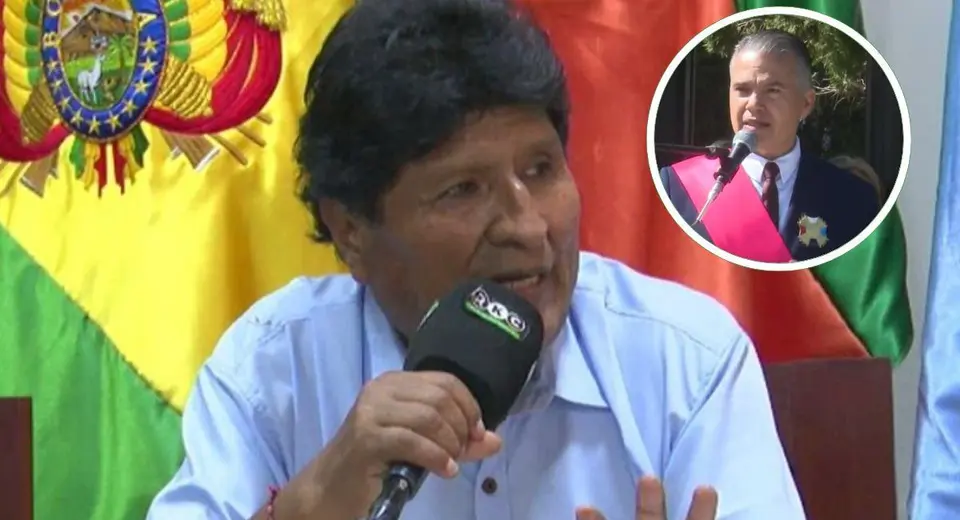
Justiniano confirms arrest of Evo Morales pending operational definition
Defence Minister Ernesto Justiniano confirmed to the Plurinational Legislative Assembly that former president Evo Morales will be arrested, although he clarified that the exact moment of capture has not yet been set. According to bolivia.com, the statement came following questions from assembly members who demanded clarification on the delay in executing the outstanding arrest orders.
"Evo Morales will be detained, but we are not going to discuss that at this moment because it is a matter of security; when are we going to do it? It is a matter that is under constant evaluation and we are addressing security measures," Justiniano stated to the legislative chamber.
The Public Ministry has confirmed the existence of two arrest orders in the hands of the Bolivian Police. The first corresponds to an alleged case of aggravated human trafficking filed in Tarija, linked to a relationship with a minor during his presidential term, from which a daughter was reportedly born, as well as alleged benefits granted to the young woman's family. The second order is related to alleged crimes of armed uprising, terrorism and other charges stemming from the mobilisations and road blockades recorded between May and June of the current year.
The Tarija Court declared Morales in rebellion in May 2026 after he failed to appear at the start of the oral trial. At that hearing, the arrest order, national asset freeze and preventive annotation of assets were renewed.
Justiniano also addressed the framework of the state of exception that the Executive seeks to extend for 90 days. He explained that meetings remain permitted as long as a ministerial resolution is not issued restricting marches, although road blockades are expressly prohibited. He acknowledged, at the same time, that the measure has not completely eliminated this type of protest, attributing the persistence of road cuts to an entrenched culture of sectoral mobilisation. He mentioned interventions or dialogues recorded in localities such as San Julián, San Pablo and Yapacaní.
Source: Google News BO — Crime