Bolivian detained with 16 kilograms of coca leaves in Chillán held in preventive custody
The PDI detained a 19-year-old Bolivian youth with 16.5 kilograms of coca leaves in Chillán. The Guarantee Court decreed preventive custody and set three months for the investigation.
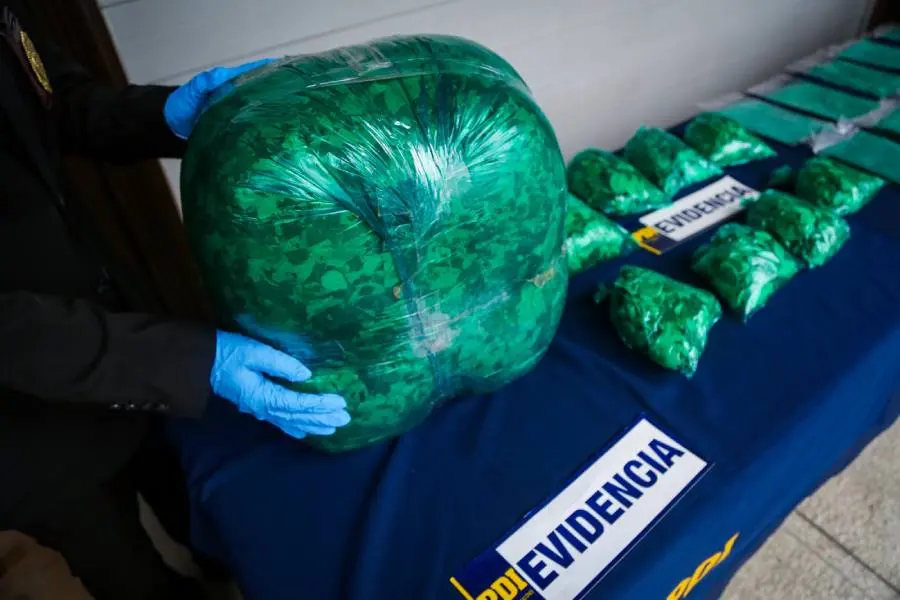
Operation "Hoja Sur": first case of coca leaves in the Ñuble region
The Anti-Narcotics Brigade of the PDI detained a 19-year-old Bolivian national with 16.5 kilograms of coca leaves in the city of Chillán. According to ladiscusion.cl, the Public Prosecution Service formalised charges against the accused before the Guarantee Court of Chillán, which decreed preventive custody and granted three months for the development of the judicial investigation.
The leaves were portioned into bags and mixed with flavourings. According to the PDI, the shipment was destined for Bolivian and Peruvian nationals working agricultural tasks in the locality of Coihueco.
A prohibited element sold in formal establishments
Coca leaves appear on the list of prohibited precursor elements under Law 20.000 of the Criminal Procedure Code, as they are the raw material from which cocaine is produced, although they are neither hallucinogenic nor addictive in themselves. Despite this prohibition, their sale exists in established shops and traditional market outlets in the area. Herbalists in central Chillán consulted by ladiscusion.cl stated they were unaware of their illegal status: "Really? Who told you they were illegal? Our supplier from Santiago has been bringing them to us for years," they stated.
Seasonal context and educational campaign
The presidential delegate for Ñuble, Diego Sepúlveda, explained that at this time of year "there is greater arrival of citizens from Bolivia and Peru due to agricultural work seasons," which would contribute to the circulation of the leaves in the region. To prevent the habit of chewing coca—a practice not penalised in other countries—from spreading among Chilean temporary workers, the regional minister of security, Héctor Ponce, indicated that "educational campaigns are being conducted in companies, neighbourhood associations and educational establishments to explain that it constitutes a crime in Chile."
The operation, named "Hoja Sur," is the first of its kind in the Ñuble region, although since 2022 similar cases have been recorded with increasing frequency in cities such as Calama, Alto Hospicio, Puerto Aysén and Melipilla.
Judicial precedent: ILO Convention 169
A ruling by the Oral Criminal Court of Arica in 2015, described as historic by the Public Criminal Defence Service, acquitted a 63-year-old Bolivian citizen detained with 16.8 kilograms of coca leaves. The tribunal recognised that the accused was of Aymara origin and that coca consumption constitutes an ancestral practice of that culture, invoking ILO Convention 169, which obligates the State to respect the customs of indigenous and tribal peoples.
The subprefect Jhonatan Silva, chief of the Anti-Narcotics Brigade of Ñuble, clarified that "in other countries such as Peru or Bolivia its consumption is recognised as an ancestral practice, but here in Chile it is not." Customs confirmed to ladiscusion.cl that the Agricultural and Livestock Service authorises the entry of these leaves into the country, although not in large quantities.
Source: Google News BO — Crime