Government condemned to pay 40 million pesos to former student tortured at Talcahuano Naval Base in 1974
The Tenth Civil Court of Santiago ordered the State to compensate Antonio Moreno, detained and tortured by the Navy in 1974. The court classified the facts as crimes against humanity.
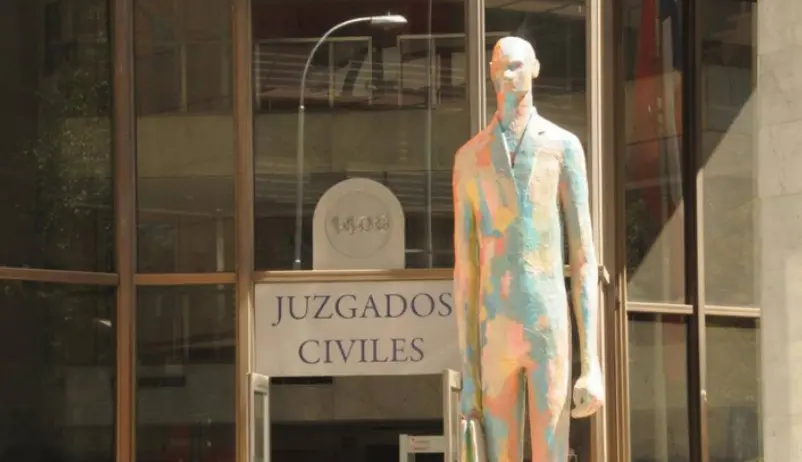
Justice condemns the government for torture at the Talcahuano Naval Base during the dictatorship
The Tenth Civil Court of Santiago condemned the government to pay compensation of 40,000,000 pesos to Antonio Moreno, a former university student detained by Navy personnel on 29 March 1974, according to diarioconcepcion.cl. Judge María Isabel López Garay classified the facts as crimes against humanity and rejected all exceptions presented by the State.
According to the ruling (case number 3.520-2024), Moreno was apprehended in public and transported hooded to the Talcahuano Naval Base, where he was subjected to torture. The ruling rejected the exceptions of comprehensive compensation and extinctive prescription raised by the government.
The ruling: crimes against humanity and inapplicable prescription
The sentence states that articles 6 and 7 of the Political Constitution establish the principles of legality and responsibility of State organs, "these being responsible for both their actions and omissions". The court also cited article 4 of Law No. 18,575, which obligates the State to respond for damages caused by its organs in the exercise of their functions.
In this context, Judge López Garay concluded that the prescription periods contemplated in articles 2332 and 2515 of the Civil Code are not applicable to the case, as they enter "in direct contradiction with international norms of ius cogens, with Customary Law, Conventional Law and Constitutional Law". Applying such periods to human rights violations, the ruling states, "would represent a serious contradiction of the legal system itself".
Prior compensation does not preclude judicial compensation
The court also rejected the government's argument that compensation granted previously by the State would prevent new compensation through judicial proceedings. The ruling clarifies that article 24 of Law No. 19,123 establishes that the reparation pension "may be compatible with any other, of any kind", which renders the exception of satisfactory reparation inadmissible.
"The voluntary measures assumed by the State through the reparation laws do not constitute a waiver or prohibition for victims to go to the courts to obtain a declaration of the appropriateness of compensation for moral damage", states the sentence. The benefits established in Laws No. 19,123, No. 19,992 and No. 19,980, the ruling adds, "are not incompatible with judicial compensation for moral damage".
Psychological damage that persists to this day
Regarding the damage suffered by Moreno, the court took into account a psychological report that certifies that the claimant suffers from Post-Traumatic Stress Disorder that persists to the present day, with consequences that the ruling describes as "psychological vulnerability with palpable consequences in his life".
The sentence also enumerated other direct consequences of the detention: the rupture of Moreno's life project, the impossibility of developing his professional career in Chile, forced exile, the death of his parents during his absence, and estrangement from his family and social circle. "All these elements lead this judge to prudentially set the compensation for the claimant at the sum of 40,000,000 pesos", the ruling concludes, also considering the amounts recognised in analogous cases by the Higher Courts of Justice and the payments already received under the reparation laws.
The Talcahuano Naval Base as a detention centre
Although Moreno's case focuses on the Talcahuano Naval Base, the systematic use of that facility as a torture centre was documented following the coup d'état of 11 September 1973. The installations of Fort El Morro were used between 1973 and 1985 by the SIRE, the Navy, the DINA and the CNI. According to collected testimonies, hundreds of detainees from Concepción and its surroundings were taken to that facility.
The Valech Report identifies the location as "Talcahuano Naval Base/El Morro Base of Talcahuano", according to information from Chile's National Monuments Council.
Source: Google News CL — Crime