Organised crime in mining could cost Colombia up to $19 trillion
A Fedesarrollo study warns that Colombia would lose between $10 and $19 trillion in tax revenue if it fails to contain organised crime in critical minerals.
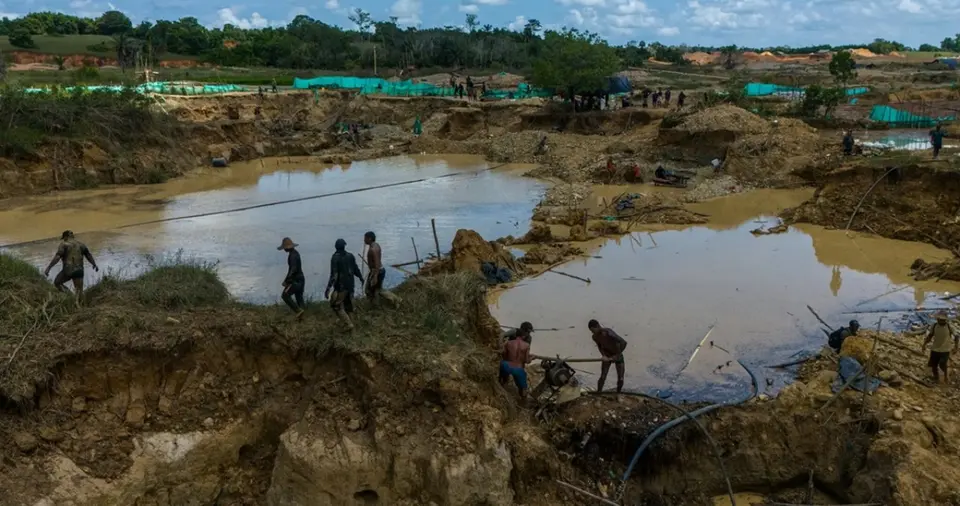
Colombia at risk of losing trillions due to organised crime in critical minerals mining
A study prepared by Fedesarrollo and Loom Strategy Centre warns that Colombia could lose between $10 trillion and $19 trillion in revenue by 2050 if the state fails to contain the advance of organised crime in the exploitation of critical minerals, according to eloriente.com.
The research, titled Regulating for the State, not for organised crime: fiscal revenue, organised crime and critical minerals in Colombia, examines the scenario facing the country amid growing global demand for resources essential for the energy transition, digitalisation and the development of technologies such as artificial intelligence.
The report notes that minerals such as copper, nickel, coltan, lithium and rare earths will be fundamental for the manufacture of batteries, solar panels and electronic equipment. Colombia has significant geological potential for their exploitation, but the development of that industry will depend on the state's ability to guarantee conditions of legality and security in the territories.
If the country strengthens formal mining and prevents criminal organisations from controlling these resources, the state could generate between $10 trillion and $19 trillion in tax revenues over the coming decades, according to the study's projections.
In contrast, the expansion of illegal economies could replicate the model observed with illegal gold mining. In that sector, a large portion of profits ends up financing armed groups and criminal networks; in 2025 alone it generated between $32 trillion and $34 trillion, a figure equivalent to 1.9% of Gross Domestic Product.
The researchers warn that the problem goes beyond the loss of public resources. Illegal exploitation also increases deforestation, contaminates water sources, degrades strategic ecosystems and weakens institutional presence in regions where armed organisations have historically operated.
The report proposes a coordinated response among environmental authorities, security bodies and entities responsible for mining control. Among the recommendations are strengthening governance in territories with mining potential, improving mineral traceability mechanisms and creating conditions to attract formal investment to the sector.
The study's authors also highlight that Colombia has the possibility of becoming a strategic supplier of critical minerals to the United States, Japan and the European Union, markets seeking alternatives to China amid growing global demand. The decisions the country makes in the coming years will determine whether these resources become a source of economic growth or a new mechanism for organised crime financing.
Source: Google News CO — Crime