Manufactured gas cut leaves five Havana municipalities without service
The Melones plant suspends operations from 21:00 until 05:00, affecting Old Havana, Central Havana, Cerro, Diez de Octubre and Revolution Square.
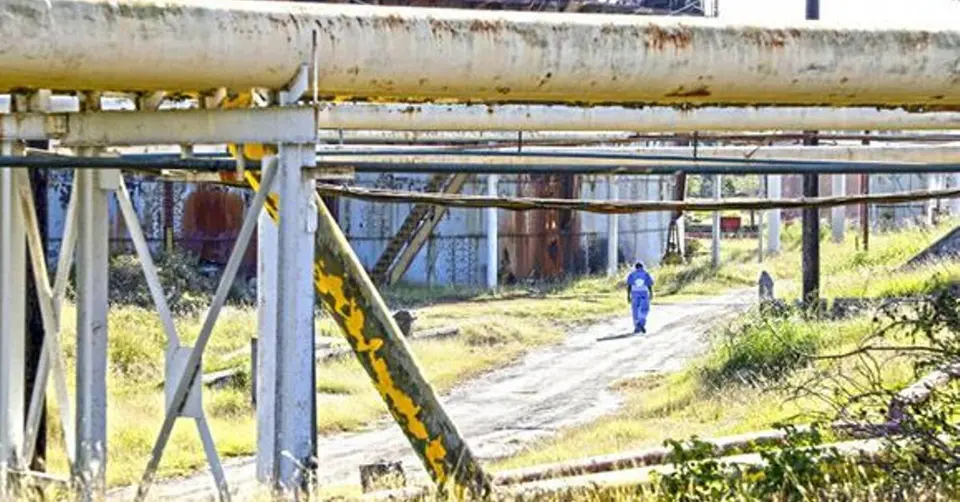
Shutdown at Melones worsens domestic crisis in Cuban capital
The Manufactured Gas Company announced a total shutdown of production plant number one, located at Melones, which will interrupt the "street gas" service between 21:00 hours on Thursday and 05:00 on Friday morning. According to 14ymedio.com, the measure responds to what authorities call "unavoidable maintenance works" and affects the municipalities of Old Havana, Central Havana, Cerro, Diez de Octubre and Revolution Square, the most populated in the capital.
The Melones plant receives natural gas from the Jaruco wells, operated by Energás and the Canadian company Sherritt, through an underground pipeline approximately 25 kilometres long. The facility filters the gas, reduces its pressure and mixes it with air to produce methanated air, with a nominal capacity of around 40,000 cubic metres per hour.
Another interruption in an already strained routine
The cut, although expected to be brief, adds to a domestic routine degraded by blackouts and shortage of liquefied gas. For numerous Havana families, the network interruption does not simply mean losing service for a few hours, but resorting to charcoal or firewood for cooking. Each breakdown adds an additional burden to households that already organise their day around the schedule of the balita, the electricity report and the next failure.
The impact goes beyond kitchens. In the wake of blackouts, a market for electrical generators adapted to operate on street gas has grown in Havana. Some are modified in artisanal fashion; others are marketed as equipment capable of operating on petrol, liquefied gas or natural gas. The domestic pipeline, originally designed to light a stove, has become for many the last resort to operate a fan, charge a mobile phone or keep a refrigerator running during the night.
The gasification programme advances at minimal pace
The cut comes just two months after the official press announced the reactivation of the gasification programme in Havana. The promise was to incorporate 25,000 new customers during 2026, after almost a decade without systematically connecting families. By the end of March, however, only 735 households had been added, a modest figure compared to the scale of the deficit.
The expansion does not respond to a technological innovation, but to the return of an infrastructure that the Government itself kept frozen for years. The programme, promoted since the 1990s, was presented at the time as a profound transformation of the domestic energy matrix in the capital. It was halted by the so-called Energy Revolution—which bet on electricity—a Fidel Castro policy that has today become unsustainable.
In the midst of the energy crisis, manufactured gas has reappeared as "state policy" and as a tool to reduce electrical consumption during peak hours. But the Melones shutdown shows the reverse side of that discourse: the network that must alleviate the crisis, abandoned for years, also requires urgent repairs, valves, parts and maintenance that do not arrive in time.
The state balita, not functioning normally
The alternative of liquefied gas, the popular balita, does not operate regularly either. In many provinces delivery cycles have lengthened and sales points remain out of stock. The shortage of the state cylinder has turned every distribution notice into a race against time.
To this is added the sale in dollars of the balita through digital platforms such as Supermarket23 and Kmcero. The first offers 22-pound cylinders for 29 dollars, paid from abroad; the second commercialises 10-kilogramme balitas for 24 dollars. In both cases the customer must deliver an empty cylinder, the same container that circulates in the state network.
The price evidences the distance between official discourse and everyday life. A balita at more than 20 dollars is beyond the reach of those earning salaries in Cuban pesos, all the more so when transport or delivery requirements can increase the cost of the order. For many families, the dollarisation of gas does not represent a solution, but confirmation that basic services are beginning to divide between those with access to foreign currency and those with only a salary in CUP and a rationing booklet.
Source: Google News CU — La Habana