Spanish child sex offender arrested in Havana after attempting to marry for Cuban residency
Martiño Ramos Soto, sentenced in Spain to 13 years for raping a minor pupil, was found in Havana. He had planned to marry a Cuban woman to regularise his status on the island.
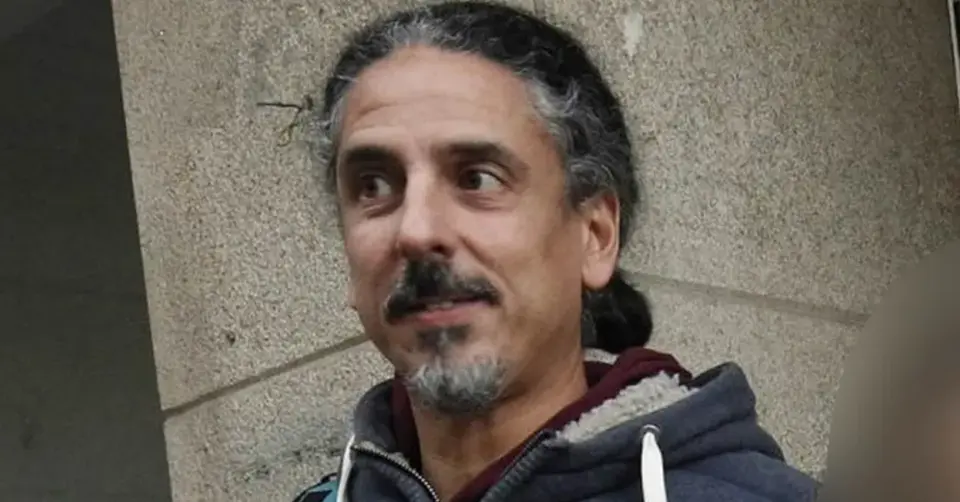
Fugitive Spaniard sought Cuban residency through marriage before his arrest
Martiño Ramos Soto was "calm, at his home" when Cuban police detained him, and "stated that he was unaware of any pending matters in Spain". This was revealed by inspector Roberto Llamazares of Interpol to Galician television. The officer added a previously unknown detail: the fugitive had been attempting to marry a woman on the island in order to obtain a residency permit.
According to 14ymedio.com, Ramos Soto had become integrated into Havana's artistic and cultural circles under the name Martín Soto. He lived in the neighbourhood of El Vedado, ran a screen-printing business, and presented himself as a photographer. In this way he managed to build a circle of friends — many of them young people and models — who discovered his true identity with shock when the digital newspaper El Español published the information last Sunday.
The fugitive, 50 years old and a former music teacher linked to the left-wing political movement En Marea, has a pending sentence of 13 years and six months in prison for the rape of a minor pupil. The victim was only 12 years old at the beginning of the events, and the sentence includes aggravating factors for her minority and for the sadistic practices employed — including beatings. In July 2025, Spain's Supreme Court upheld the sentence and ordered his imprisonment, but Ramos Soto had fled 12 days before.
Route of escape and months without detention
Before arriving in Cuba, the fugitive passed through Portugal, Brazil, and Peru. He had been on the island since July without the authorities taking action. Sources from the Fugitive Location Brigade of the Drug and Organised Crime Unit of the Spanish Police explained to the newspaper El Mundo that Ramos Soto had been under surveillance for a month without his knowledge, and that in recent weeks the necessary international cooperation had been coordinated for his arrest and to process extradition.
The Spanish National Police made no criticism of their Cuban counterparts: "Upon recognising the crime and the gravity of the facts, they wished to cooperate in every way possible from the outset", according to their spokesman. "Cuba is not obliged to hand over a fugitive, but may do so under the principle of reciprocity", he added.
On 17 October a European and international detention order — effective in Cuba — was issued, and on 31 of the same month the Ourense Provincial Court issued an order requesting the Ministry of Justice to process extradition, which has already been submitted and is pending the decision of the Cuban judges.
Marriage as a frustrated strategy
Fernando González, head of the Spanish Police's fugitive unit, confirmed the theory of marriage of convenience. "He went to request the papers from the Embassy in order to obtain residency. It does not have to be a problem for arresting him and achieving extradition, but it could be something more that complicates the process", he assessed. Since he had not completed the procedure, he clarified, the path remains clear.
González also denied that it was the Protective Mothers association who located the fugitive. "I do not say that in this case, as in any other case, citizen cooperation is not important, and they may even have reported it to some police officer in Galicia. But we have no record of it and I did not know about them until today", the police official stated. The publication of the most-wanted campaign, in which Ramos Soto appeared, responded according to González to "operational criteria".
Expectations of swift return
The Government's representative in Galicia, Pedro Blanco, considered the return of the convicted man imminent. "I am confident that in the coming hours or days he may be in Spain to serve the sentence to which he was condemned", he declared during an event on the occasion of the International Day for the Elimination of Violence Against Women, at which he thanked the work of the National Police.
Cuban lawyer Arián González, resident in the province of Ourense, agreed with that forecast. "I believe it will be very swift because Cuba tends to respect cooperation with Spain; although there is no convention in the criminal sphere, diplomatically there is a good relationship between the two countries", he declared to the Ourense media outlet La Región. González emphasised that the sentence — which has exhausted all appeals and is upheld by the Supreme Court — concerns a type of crime "that provokes strong repudiation, contempt and condemnation in Cuban society, with sentences of up to 30 years in prison, and the country has no interest in any kind of damage to its reputation".
The lawyer warned, however, about the conditions awaiting the convicted man in case he remains on the island: "A Cuban prison will be torture for the inmate from Ourense, incomparably more torturous than a Spanish prison".
Among the most likely options is the possibility that Ramos Soto himself requests his return to Spain, where the conditions of imprisonment would be comparatively more favourable. The final decision, in any case, rests with the Cuban judges.
Ramos Soto is considered one of the ten most wanted fugitive criminals sought by the Spanish National Police. Galician and national media have been following the details of his location and arrest in Havana for several days.
Source: Google News CU — La Habana