National Court forces Pedraz to notify Interpol of charges against Obiang's son
The Criminal Division orders the judge to inform Interpol of the charges brought against three senior equatorial Guinean officials for terrorism, kidnapping and torture.
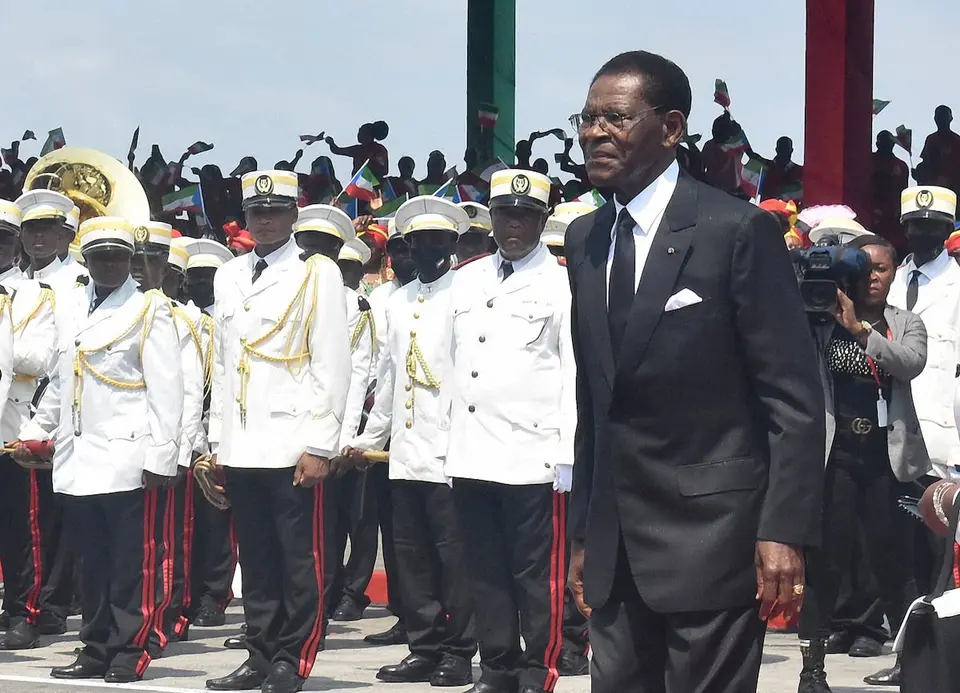
The Criminal Division overrules Pedraz and demands notification to Interpol in the Obiang case
The National Court has ordered judge Santiago Pedraz to notify Interpol of the charges against Carmelo Ovono Obiang—son of the president of Equatorial Guinea—, Interior Minister Nicolás Obama Nchama and director general of Presidential Security Isaac Nguema Ondo for offences of terrorism, kidnapping and torture. This is set out in an order from the Criminal Division, to which El País has had access.
The three suspects under investigation are linked to the kidnapping of four opposition figures resident in Spain, two of them Spanish nationals, who were transferred in 2019 under false pretences from Juba (South Sudan) to a prison in Mongomo, Equatorial Guinea, aboard Obiang's presidential aircraft. There they were tried by a military tribunal and sentenced to terms of between 60 and 90 years on alleged coup d'état charges. One of the four, Julio Obama, aged 61, died in unclear circumstances. Amnesty International and Human Rights Watch condemned the proceedings for lack of guarantees and evidence.
The investigating judge's refusal
Pedraz had refused to send information to Interpol, considering that "nothing new has occurred other than the charging order", according to his ruling. The judge argued that "there is no basis whatsoever for communicating procedural milestones to Interpol" and that "the legal classification is already on record". The Division rejected this approach.
Both prosecutor Vicente González Mota and the victims' lawyer, Aitor Martínez, from the Movement for the Liberation of Equatorial Guinea Third Republic, had requested the investigating judge to send to Interpol the resolution of the Supreme Court's Second Division—which attributed jurisdiction in the case to Spanish courts—, the charging order, provisional detention orders and international arrest warrants. Both parties also requested that the Secretary General of Interpol be urged to review its decision not to include the data.
Interpol's position and Equatorial Guinea's protest
In January, Interpol sent the court an email stating that registering the data provided would not be consistent with a resolution of its General Assembly relating to genocide cases, crimes against humanity and war crimes. This rule allows a member state to lodge a protest when the request affects a national of another country. Equatorial Guinea did so, thereby blocking the inclusion of information in the databases of the organisation, which groups together 196 countries.
The new notification to be sent to Interpol will clarify that the suspects under investigation have been charged with kidnapping for terrorist purposes—not crimes against humanity—which, in the view of the prosecution and the victims' representatives, would exclude the applicability of that resolution.
Second order from the Division in six months
This is the second time the Criminal Division has forced Pedraz to send information to Interpol. In December 2024, the same tribunal ordered him to send "all those proceedings from which existing evidence emerges against the suspects under investigation, as well as each one's participation in the facts". On that occasion, the police organisation had requested additional data to "prevent its file from being deleted" and granted the judge a moratorium in which to respond. Pedraz did not meet the request.
Throughout the investigation, the judge also resisted issuing International Arrest Warrants despite the three suspects under investigation being in default and failing to appear on two occasions when they were due to give evidence by videoconference. The Division, in ruling on the appeals lodged by the prosecution and the complainants, ultimately forced him to issue them. The signing of those warrants fell to Francisco de Jorge, substitute judge, during a week when Pedraz was on leave. De Jorge also decreed provisional detention for the Guinean president's son and the other two senior officials.
Validity of the order in Europe
The arrest warrant against the three suspects under investigation is active in all European offices of Sirene—the network responsible for validating descriptions of persons sought for detention—so any of them would be detained and transferred to the National Court if they set foot on European soil.
The order now forcing Pedraz to notify Interpol is signed by judges Fernando Andreu, Joaquín Delgado and José Joaquín Hervás. It represents another judicial setback for the investigating judge in a case in which the Criminal Division has repeatedly upheld appeals lodged by the prosecution and the victims' representatives.
Source: El País