Social media coordinated mass assault on Ceuta in July: "We are a thousand and we're entering"
A police report reveals how Facebook, TikTok and WhatsApp organised mass entries into Ceuta in July 2026, with messages that evolved from open calls to operational coordination.
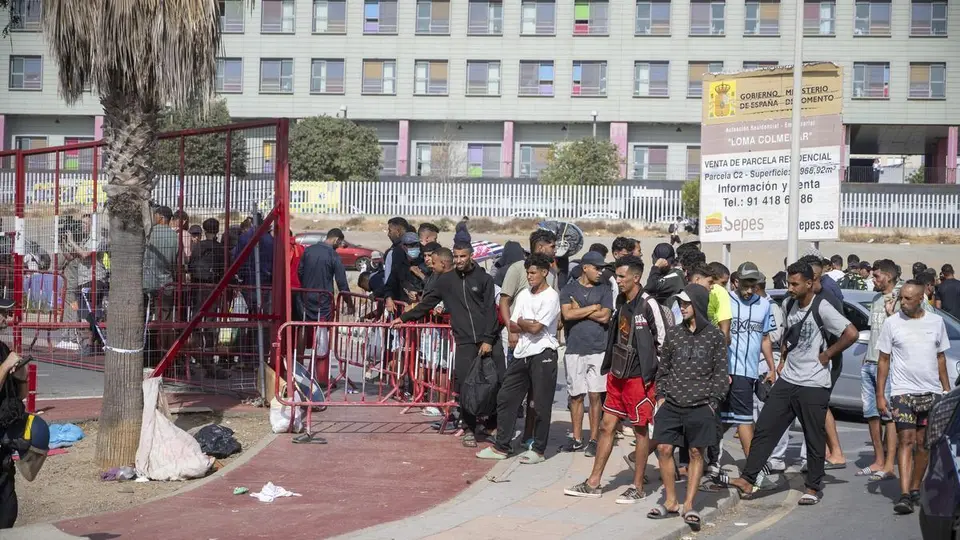
Police report: social media as driving force behind mass assaults on Ceuta in July 2026
Google News ES — Crime (es) reports that the National Immigration and Borders Centre (CENIF) of the National Police has submitted a report to the National Audience that emphasises the decisive role of social media in the organisation and dissemination of the calls that preceded mass entries into Ceuta during the last days of July.
The document was submitted to judge María Tardón prior to the decision on whether to admit or reject criminal proceedings over the facts. According to the officers, the call issued on 30 July—like the other mass entries—followed a "pre-established pattern to optimise the effect of publications and provoke maximum dissemination effect".
From open platforms to encrypted groups
The report describes a strategy in three phases. In the first, the calls begin on openly accessible applications such as Facebook, Instagram and TikTok, with direct messages of encouragement and requests for information: "Is there a planned exit?", "Does anyone know another group besides this one for those who want to go to Ceuta?" or "On 30 July 2026 we're going to stage an attack on Ceuta. It's going to be the best assault".
In the second phase, on 29 and 30 July, the conversation migrates mainly to closed messaging groups such as WhatsApp, where the tone becomes more operational: "Let each group communicate with each other via handwritten notes instead of the internet, since it's being monitored", "We're grouping together to leave… we want to move forward in groups of 10", or travel instructions such as "Indrive for 4 people… train to Tangiers and taxi to Mdiq; then on foot 1h30 to Fnideq".
Real-time messages during entry
During the last two days of July, activity generalises simultaneously across all platforms. The messages focus on real-time updates of the situation at the border and urgent calls to seize the moment: "They've opened the gate this morning", "Tomorrow, God willing, there will be another assault", "The assault, the assault, Allahu Akbar! Night of assault, the last one to turn off the light" or "Brothers, come down, customs has opened".
Among the most explicit messages recorded in the report are: "Everyone get up to Castillejos now", "Everyone get down to Castillejos, we are a thousand and we're entering, I'll show you the way" and "The police are wearing their normal clothes and people are on their way to Castillejos". Expressions such as "Atacadles. Avanzad contra la Policía" and the term "Harga, Haraga or Harraga" were also recorded, which the officers describe as a war cry linked to irregular immigration to Europe in the Maghreb region.
Advice to avoid deportation after entry
From 30 July onwards, the messages incorporate a new layer: advice disseminated by those who had already entered the Autonomous City to help others avoid being sent back. "You have to enter Ceuta and hide inside until the Spanish calm down", "As soon as you set foot in Ceuta say you can't return to Morocco because of political problems" or "Anyone who knows what this is about won't let themselves be sent back, they hide in a sewer or wherever", according to the messages recorded in the document.
Profile of the target population
The report concludes that the entries did not respond to a spontaneous or unstructured dynamic, but to a pattern designed to maximise dissemination among a well-defined target population: "young population of Moroccan nationality in the area of the Prefectures of Rincón-Castillejos/M'Diq-Fnideq and Tangiers-Asilah and the Provinces of Tetuán, Fahs-Anjra, Larache and Chefchaouen".
Viralisation, according to the officers, occurs "in different phases adapted to the development" of each mass entry, and the message "evolves over time", with differentiated analysis of what was published before, during and after each episode of access to Ceuta.
Source: Google News ES — Crime (es)