High-value jewellery undeclared places former president Zapatero under scrutiny for alleged tax evasion and smuggling
A cache of precious stones valued at 1.3 million euros, which neither the Tax Authority nor Customs have any record of, has led judge Calama to indict the former leader on two criminal charges.
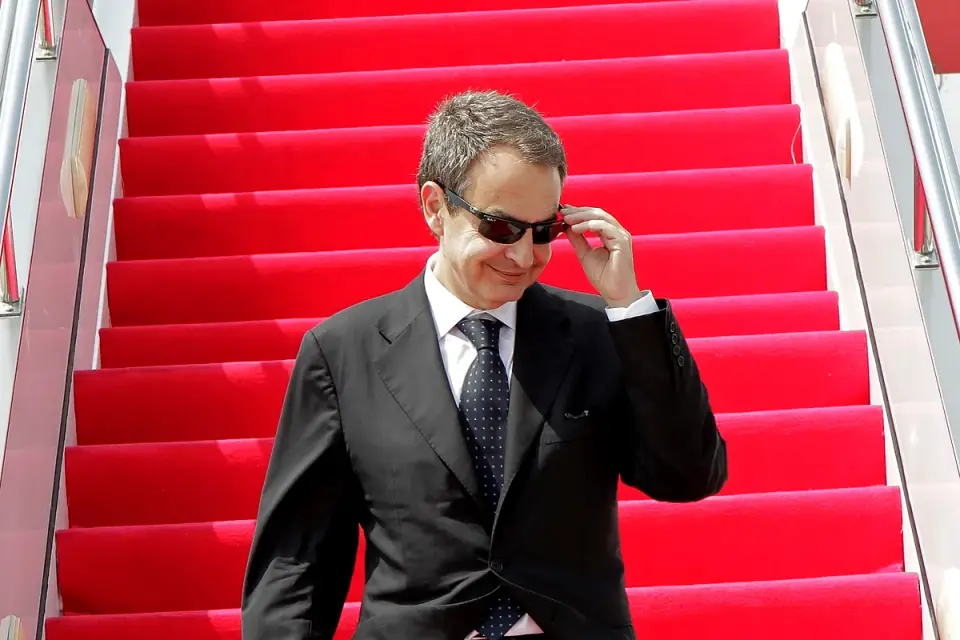
High-value jewellery undeclared places former president Zapatero under scrutiny for alleged tax evasion and smuggling
A collection of jewellery valued at 1,323,915 euros, found in a safe in the office of José Luis Rodríguez Zapatero, has triggered a separate case at the National Audience that points to two serious offences: fraud against the Public Treasury and smuggling. The investigating judge, José Luis Calama, has already notified the former leader of the charges, who will soon have to appear before the court.
The peculiarity of the case lies in the fact that neither the AEAT nor customs authorities possess any record whatsoever of the origin or ownership of those precious stones. According to the ruling, this absence of traceability constitutes in itself a founded indication of criminal activity.
With regard to fraud, the magistrate recalls that the acquisition of luxury items generates inescapable tax obligations: VAT settlement, payment of Transfer Tax on Property, possible obligation in the Inheritance and Gift Tax, and even impact on the taxable base of personal income tax. If the concealed income exceeds 120,000 euros—applying the marginal rate of 46%—the conduct falls squarely within Article 305 of the Penal Code.
Inspector Francisco de la Torre, who was economic spokesperson for Ciudadanos, pointed out to this newspaper that everything depends on when and how the jewels were obtained. If the money came from undeclared income distributed over several years, the criminal configuration could multiply, as happened in the case of Rodrigo Rato.
A tax expert who preferred not to be identified made an estimate: for a taxpayer with tax residence in Madrid, where the top rate is 45%, net income of 1,323,000 euros would generate a debt to the Treasury of around 600,000 euros.
On the smuggling count, the judge proceeds from the premise that goods of such value cannot appear out of nowhere. Their possession without customs documentation points to irregular introduction into EU territory, evading controls and tariffs. The threshold for the offence to be prosecuted criminally is set at 150,000 euros of duties evaded.
De la Torre stressed that if the gems crossed external EU borders without passing through customs, and the duties evaded exceed that amount, "we would have one or several smuggling cases, potentially in continuous form".
The defence strategy is complicated by Article 305.4 of the Penal Code. This provision grants criminal immunity to anyone who voluntarily regularises their situation before the Public Prosecutor or the court initiates proceedings. Once the case is opened, paying the debt only serves as a mitigating factor, not as a wiping out of the offence.
José María Mollinedo, head of Gestha, offered an alternative route: if Zapatero demonstrates when he acquired the pieces, from whom, and that that date does not fall within the 2021-2024 tax years, he could include them in the 2026 personal income tax return without fear of criminal sanction.
His own organisation suggested another way out: the statute of limitations. If the purchase dates back before 11 June 2021, the State's right to prosecute could have expired. Old photographs, gemological certificates or insurance policies would serve to prove it.
But De la Torre introduced a crucial warning: Article 305 bis, relating to qualified tax fraud, provides for a ten-year period when the offence is executed with sophistication. If the court understands that there was planning to conceal assets, the statute of limitations would be far away.
The ruling gives the former president one last opportunity: to prove by documentation that possession of those jewels corresponds to a lawful activity.
Source: El Mundo
Source: El Mundo