Former psychiatrist Sharok Ezazi (59) charged with serious drug crime and organised crime
The 59-year-old Sharok Ezazi is remanded in custody for four weeks after being extradited from Sweden. He denies any knowledge of narcotics.
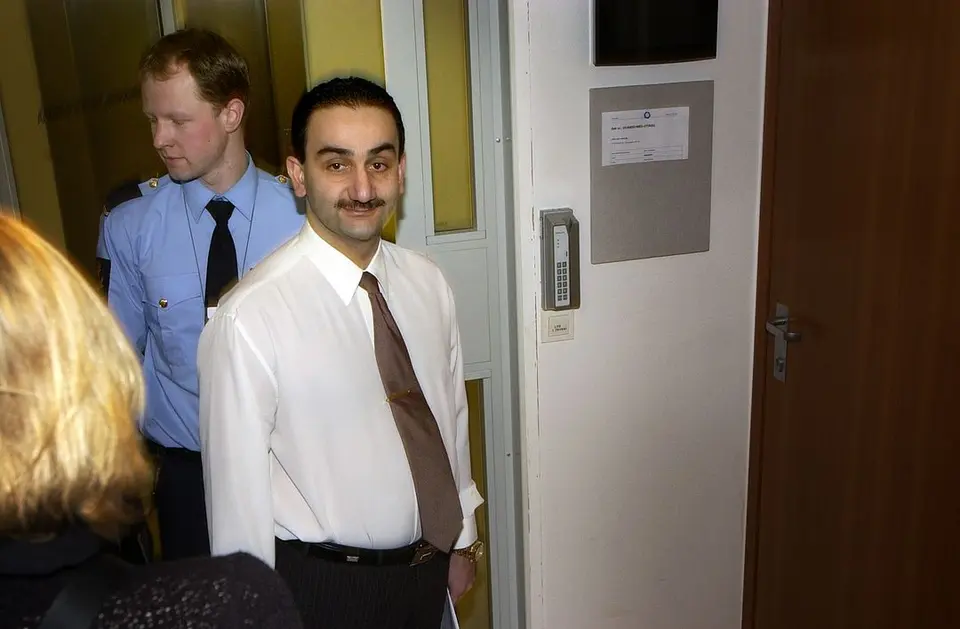
Kripos investigation hits former Lørenskog case suspect Ezazi
According to Google News DK — Crime (da), the 59-year-old former psychiatrist Sharok Ezazi is now charged by Kripos with serious drug crime and with having acted as part of an organised criminal group's activities. He is remanded in custody at Sem prison with restrictions on mail and visits and denies guilt.
On Tuesday evening last week, Ezazi was arrested at Landvetter airport in Gothenburg. On Monday this week, he was extradited to Norwegian police, who had issued a Nordic arrest warrant against him.
International network under investigation
Police prosecutor Ingvild Myrold has stated that Kripos has been investigating over an extended period what they consider to be a network that imports, stores and distributes narcotics in Norway.
"Our assessment is that this is an international network," Myrold told VG on Tuesday.
When Ezazi was remanded in custody for four weeks on the same day, the judge stated the following in the ruling: "The court finds, on the basis of the scope of the seized items, that the accused is part of a larger network consisting of persons over whom the police do not have full oversight."
Ezazi's defence counsel, lawyer Victoria Holmen, emphasises that the client rejects all accusations.
"He denies any knowledge of narcotics and has stated that he wishes to give an account to the police. We await the police taking the initiative for an interview," she says.
Charged in the Lørenskog case
In May this year, Ezazi received notice from the East police district that he had been under covert investigation for years — and he was charged with murder or complicity in the murder of Anne-Elisabeth Hagen, the wife of billionaire Tom Hagen. She disappeared from the couple's home in Sloraveien in Lørenskog on 31 October 2018, and the case has become one of the most extensive police investigations in Norwegian legal history.
On the day of disappearance, Hagen's mobile telephone stopped moving at 10:07. One minute later, base stations registered Ezazi's mobile telephone in the immediate vicinity of the crime scene.
Ezazi denies any knowledge of the Lørenskog case.
"I have never known either Anne-Elisabeth or Tom Hagen, and I have nothing to do with the case," he said in an interview with Dagbladet in June.
He has stated that on that day he drove to a fitness centre in Strømmen, and that the registrations therefore have a natural explanation.
"It is correct that I drove past the place where Anne-Elisabeth Hagen was abducted. But that does not mean that I have anything to do with the case," he told Dagbladet.
The Lucia judgment and revocation of medical licence
Ezazi has a long and extensive criminal record in Norway. In 2005, the then psychiatrist was sentenced to six and a half years' imprisonment in the so-called Lucia case and permanently revoked from the right to practise medicine.
The Lucia Foundation appeared outwardly as a non-profit organisation that offered housing and care to adult psychiatric patients, with Ezazi as leader. From 2003, VG published a series of revelations about the foundation, including connections to persons with serious criminal backgrounds as well as suspicious financial and welfare-related matters. The court established in its judgment that the business operation bore the hallmark of "organised crime", and that Ezazi had exploited his medical practice to obtain unlawful advantages.
Cigarette smuggling in Sweden and the Lime case
After the Lucia judgment, Ezazi had himself registered in the population register in Sweden. In 2010, he was sentenced in a Swedish case concerning smuggling of approximately 10 million cigarettes into Sweden. That judgment was, however, overturned when a co-accused subsequently changed his testimony and admitted to having lied about Ezazi's role. Ezazi was thereafter fully acquitted.
Four years later — autumn 2015 — he was charged in the so-called Lime case, an extensive criminal complex connected to the grocery chain Lime, which has been referred to as Norway's largest human trafficking case. Ezazi was sentenced in the district court for human trafficking, but acquitted of this at the court of appeal in 2021. He was ultimately convicted of breach of the Working Environment Act and fraud.
During the investigation of the Lime complex, a separate economic criminal case against Ezaki was uncovered. In 2019, Borgarting court of appeal sentenced him to four and a half years' imprisonment, forfeiture of 16 million kroner and a lifetime business ban. The judgment specified that the ban encompassed "the right to be managing director or to hold another leading position in any company, and the right to sit on the board of any company".
Iranian background, Norwegian education
Sharok Ezazi originally comes from Iran. In the 1980s, he travelled to Turkey, where he began his medical studies. At the age of 24, he came to Norway as an asylum seeker and completed his medical education at the University of Oslo.
In 2022, Ezazi reported moving back to Norway from Sweden. He is today registered in the population register at an address in Lørenskog — the same municipality where Anne-Elisabeth Hagen disappeared.
Source: Google News DK — Crime (da)