Moroccan suspected of killing Polish soldier on Belarus border
The Warsaw Prosecutor's Office has identified a Moroccan as the perpetrator of the fatal knife stabbing of Sergeant Mateusz Sitek in May 2024 on the Polish-Belarusian border.
Moroccan suspected of killing Polish soldier on Belarus border
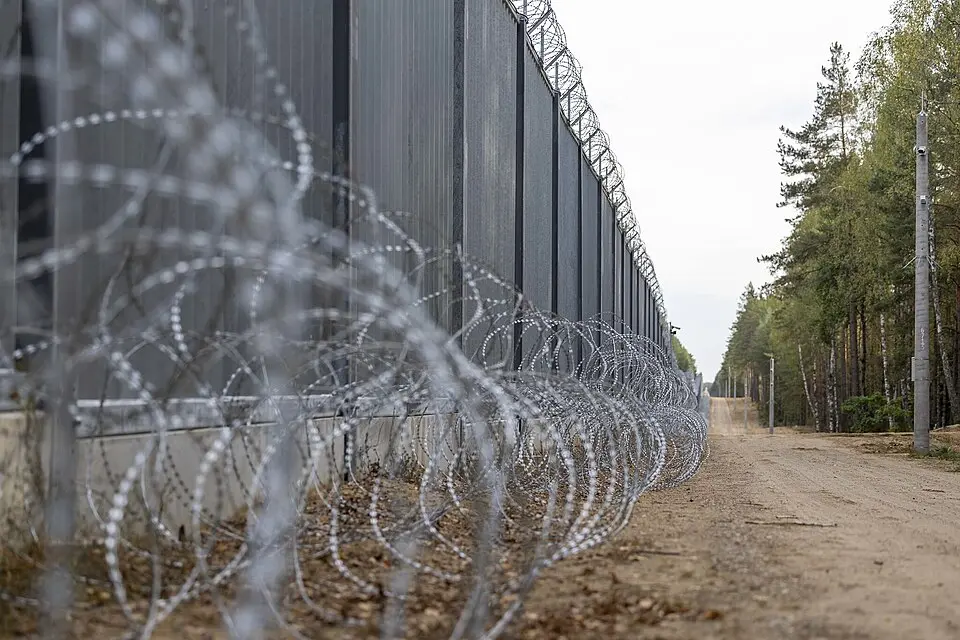
The District Prosecutor's Office in Warsaw released the name of the man suspected of murdering Sergeant Mateusz Sitek. The incident occurred on 28 May 2024 on the Polish-Belarusian border. The victim was stabbed in the chest through the fence and died from his injuries in hospital a week later.
Investigators identified Mohamed Addamrou, a Moroccan citizen, as the perpetrator of the attack. The man has been charged with the murder of a public official, which carries a sentence of up to 15 years imprisonment. However, proceedings in his case have been suspended because the suspect is outside Poland's borders.
The investigation involved interviewing 140 witnesses both in the country and abroad. The evidence gathered made it possible to establish the attacker's identity. In December 2025, an extradition request was sent to Minsk, and a European arrest warrant was issued against Addamrou. Nevertheless, Belarusian authorities have not cooperated with the Polish prosecutor's office to date.
In April 2026, investigators suspended the investigation due to the impossibility of bringing the suspect before the courts. According to RMF FM, citing unofficial sources, Addamrou is hiding in Belarus, and the authorities in Minsk are unlikely to extradite him to Poland.
Sergeant Sitek's death triggered strong reactions in the country. The authorities in Warsaw tightened regulations concerning security on the eastern border, including making it easier for officers to use firearms against migrants attempting to cross the border illegally. In July 2024 the Sejm passed the relevant amendment, which was signed by then President Andrzej Duda.
Since 2021, tens of thousands of migrants, mainly from Asia and Africa, have attempted to enter the European Union via Belarus with the support of the authorities there. Their actions were often associated with aggression towards Polish border guards, including throwing stones, sticks and Molotov cocktails.
The authorities in Warsaw also strengthened physical and electronic security on the border, and also banned asylum applications by people crossing the border illegally. As a result, the number of attempted illegal border crossings fell significantly.
Source: Notes from Poland
Source: Notes From Poland