Tusk: fire at drone factory in Skarżysko-Kamienna is Russian sabotage
Polish Prime Minister Donald Tusk has described the fire at WB Group's plant as deliberate sabotage. A second fire, in Lublin, has affected an aerospace components manufacturer.
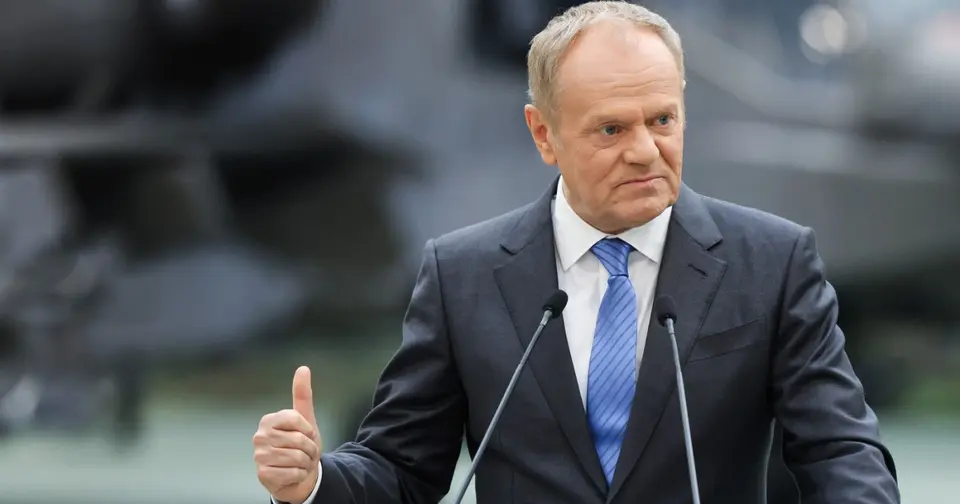
Fire at Polish drone factory described as deliberate sabotage
Polish Prime Minister Donald Tusk stated on Wednesday during a government meeting that the fire at a Polish factory producing components for drones intended for Polish and Ukrainian armed forces was "a deliberately caused fire, an act of sabotage". According to Digi24, the incident is part of an increasingly broad wave of alleged hybrid operations attributed to Russia in Europe.
The fire occurred on the night of Sunday to Monday at a production facility operated by WB Group, one of Poland's largest private defence companies, located in the city of Skarżysko-Kamienna, in the south-central part of the country. The factory's storage facilities were destroyed, with damages amounting to at least 15 million złoty, equivalent to approximately 3.5 million euros. Nobody was injured, and the factory was not operational at the time the fire broke out.
Investigators believe the fire was started by placing a device containing flammable material within the factory premises. Prosecutors had previously stated that they were investigating the case as a possible "terrorist offence" committed on behalf of a foreign intelligence agency. To date, no suspect has been charged.
Second fire at an aerospace components factory in Lublin
Tusk also addressed another fire that on Sunday destroyed a production and storage facility belonging to JFG Composites, a manufacturer of aircraft components, located in the city of Lublin, in eastern Poland. Approximately 60 firefighters intervened for around seven hours to extinguish the flames at the facility, which covers 2,000 square metres. Damages were estimated at 30 million złoty, approximately 6.9 million euros.
"In the Lublin case, we do not have such evidence, but given the nature of the production, we cannot rule out the possibility that this too was a deliberately caused fire," Tusk said. The authorities have not yet established that the Lublin fire was intentional, however the nature of the activity carried out at the facility leads investigators to take this hypothesis into account as well.
European context: accusations of hybrid warfare against Russia
Tusk warned that the coming months of Russia's war against Ukraine will be crucial not only for Kyiv but also for states on NATO's eastern flank, emphasising the threat of destabilisation and possible provocations from Moscow.
In the same context, Germany accused Russia on Tuesday of being behind an attempted attack at Leipzig airport, which took place last month. Close to a Ukrainian Antonov cargo aircraft, used for transporting military supplies, a drone laden with explosives was discovered. "The means employed, such as the configuration of the drone, components, explosives and detonation systems, are known to us from other hybrid operations by Russia and from its war against Ukraine," said German Foreign Minister Johann Wadephul.
In response to alleged Russian involvement, Berlin announced the closure of a Russian consulate and a Russian cultural centre. German media reported on Wednesday that investigators have identified two suspects in connection with the Leipzig incident: a Latvian citizen born in Russia and a Russian citizen from Belarus.
German police also launched an investigation after unexploded incendiary devices were found at a power station located near the border with Poland, an incident classified by authorities as sabotage.
Poland on alert on NATO's eastern flank
Poland, which shares a border with Ukraine and is located on NATO's eastern flank, is paying particular attention to these incidents in the context of substantial support provided to Kyiv. The WB Group factory in Skarżysko-Kamienna is involved in the production of components for drones, a field that has become essential both for the Ukrainian military effort and for the development of Poland's defence capabilities.
Moscow has repeatedly denied accusations that it is behind sabotage operations in Europe, describing such claims as part of an anti-Russian campaign and rejecting any involvement in incidents being investigated by European states.
Source: Digi24