Drug-trafficking network using lorries dismantled by DIICOT: 1.7 tonnes of drugs for Albanian mafia
DIICOT dismantled a network transporting cocaine, cannabis and hashish for Albanian traffickers. Seizures from four European countries are valued at 25 million euros.
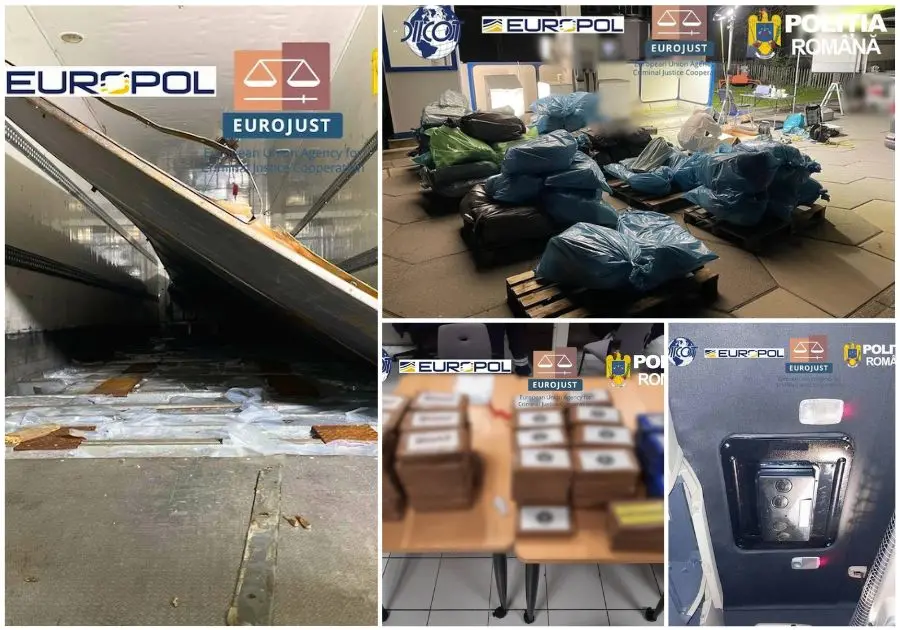
DIICOT operation: "drug-lorry network" dismantled, 1.7 tonnes of narcotics seized
According to ebihoreanul.ro, prosecutors from DIICOT – Central Structure dismantled a network that used heavy-tonnage vehicles to transport cocaine, cannabis and hashish on behalf of Albanian trafficking groups. The drugs seized in four European countries are valued at approximately 25 million euros at retail price.
On Monday, 24 August, DIICOT prosecutors and officers from the Directorate for Combating Organised Crime – Anti-drugs Service executed 16 search warrants at homes and company premises in Oradea, Timișoara, Satu Mare and Câmpulung Moldovenesc, as well as in Maramureș, Timiș and Mehedinți counties. The investigation concerns the establishment of an organised criminal group, trafficking in risk and high-risk drugs on a continuous basis and money laundering.
The prosecutors did not specify how many searches took place in Oradea or the identity of the persons or companies targeted there. However, sources cited by ebihoreanul.ro indicate that among the companies used as fronts were GFB Transport SRL from Oradea, Trial Expres Transport and Kevin Ideal Trans from Satu Mare, TPM Mar Transport from the village of Braniștea, Mehedinți county, and NKS Boom Trans from the village of Șandra, Timiș county.
Structure of the group and identified leaders
The network allegedly was established in September 2023 by four men and a company with an international transport profile. Subsequently, ten more people – nine men and one woman – and four other companies used as fronts joined it.
At the head of the group was Gheorghe Cristian Măhălean, known as "Matrix", who allegedly coordinated activity in Romania without appearing in the documents of the companies or lorries involved, according to sources cited by Adevărul. During 2025, Europol included him, at the request of Romanian authorities, in the category of "High Value Target".
The management core also included, according to the same sources, Vilhelm Stocsek, known as "Vili", responsible for logistical coordination, Ioan Vasile Ionce, who allegedly handled vehicle modification, and Gheorghe Pintea, known as "Moșul" or "Bătrânul". Valentina Ondina Mănescu, Măhălean's partner, is under investigation for complicity and money laundering. Alexandru-Ionuț Mihăesc, Tiberiu Marian Bîzu and Mihaly Attila Tolvaj are suspected of joining the criminal group and complicity in drug trafficking.
Modified vehicles and secret compartments
The preparation of transports took place in Romania, where network members purchased heavy-tonnage vehicle combinations and adapted them to conceal large quantities of narcotics. According to sources cited by Adevărul.ro, modification operations took place in a warehouse in the village of Rușor, Maramureș county. Ioan Vasile Ionce allegedly created secret compartments in the floor of semi-trailers or in the roof of cabs, including by adapting air-conditioning systems.
With documentation corresponding to apparently legitimate journeys, drivers recruited by the group collected drugs from Spain and transported them to various European countries. The narcotics were hidden in secret compartments, among legally transported goods.
"Crime as a service" for Albanian traffickers
The purpose of the network was, according to DIICOT, to obtain and transport "quantities in the hundreds of kilograms of risk and high-risk drugs" – cocaine, cannabis and cannabis resin (hashish). Orders came from Albanian traffickers, and the network leaders determined routes, recruited drivers and provided the vehicles necessary for each journey.
DIICOT describes the mechanism as "crime as a service": the network did not exclusively trade in its own drugs, but made drivers, modified vehicles, front companies and transport monitoring available to other criminal organisations, at a cost. When a transport was intercepted, the leaders ensured that arrested drivers received legal assistance and monitored, through lawyers, whether criminal files contained "evidence leading to leaders", the DIICOT statement shows.
International cooperation and seizures
The investigation took place in the period 2023–2026 and involved extensive judicial cooperation with France, Spain, Italy and Germany, through European investigation orders and with the support of Eurojust. Romanian police also collaborated with relevant structures in countries affected by the network's activity, with involvement of Europol.
Information transmitted by Romanian investigators led to the interception of four transports in France, Germany, Italy and Spain. Authorities seized 114 kilograms of cocaine, 228.219 kilograms of cannabis and 1,376.913 kilograms of hashish — a total of 1,719.132 kilograms of narcotics.
The value of the seizures is estimated at approximately 9.6 million euros at wholesale price and at around 25 million euros at retail price, based on the prices of the European Union Agency for Drugs (EUDA).
Source: Google News RO — Crime (ro)