Constitutional Chamber annuls deprivation of liberty of woman accused of drug trafficking in Caracas
The Constitutional Chamber of the Supreme Court of Justice admitted a habeas corpus petition and ordered review of the detention measure imposed on Desiree Valencia Partidas for alleged drug trafficking.
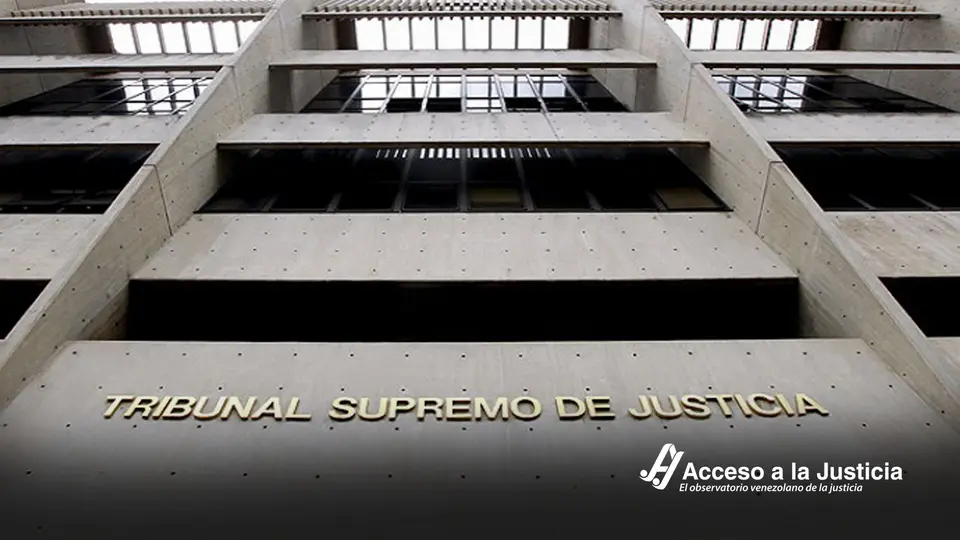
Habeas corpus succeeds before the Supreme Court following revocation of interim measure in drugs case
The Constitutional Chamber of the Supreme Court of Justice (SCJ) declared procedent in limine litis a constitutional remedy action in the form of habeas corpus filed on behalf of Desiree de los Ángeles Valencia Partidas, a citizen charged with alleged commission of the offence of illicit trafficking in narcotic and psychotropic substances in minor quantity. The decision, with the rapporteur magistrate Luis Fernando Damiani Bustillos, was reported by accesoalajusticia.org.
The case originated on 13 July 2021, when the Thirty-Fifth Court of First Instance performing functions of State Control of the Criminal Judicial Circuit of the Metropolitan Area of Caracas agreed on a substitute interim measure of freedom for Valencia Partidas. Six days later, Chamber No. 6 of the Court of Appeals of the same Circuit revoked that decision at the request of prosecutors 157th and 118th with competence in drugs matters, and decreed in its place judicial deprivation of liberty.
In response to that Court of Appeals resolution, lawyer Elio Ramón Pérez Urbina, private defender of the accused and registered with the Social Welfare Institute for Lawyers under No. 206.051, presented on 30 July 2021 before the Constitutional Chamber a constitutional remedy petition challenging the decision of 19 July.
Resolution on pure law without oral hearing
The Constitutional Chamber determined that the matter could be resolved as a question of pure law, without need for an oral adversarial hearing. To support this criterion, the Chamber cited its own judgment No. 993 of 16 July 2013, according to which constitutional remedy requires celerity and immediacy in the restoration of the injured legal situation.
In accordance with that precedent, when the remedy petition is based on reliable evidence that constitutes a grave presumption of constitutional violation, and the controversy is purely legal without requiring new arguments or additional evidence, the constitutional judge may resolve definitively and immediately. Opening the contradiction, the Chamber reasoned, is only justified in the face of doubts or disputed facts.
Decision: remedy procedent and new review ordered
The Constitutional Chamber resolved in the following terms:
- Admit the constitutional remedy petition filed by Valencia Partidas's defender against the judgment of 19 July 2021 of Chamber No. 6 of the Court of Appeals.
- Declare procedent in limine litis such remedy petition.
- Order that another Chamber of the Court of Appeals of the Criminal Judicial Circuit of the Metropolitan Area of Caracas, following distribution, rule on the appeal filed by Prosecutor 157th with competence in drugs matters against the judgment of the Control Court of 13 July 2021.
- Maintain the measure of judicial deprivation of liberty of Desiree de los Ángeles Valencia Partidas pending the pronouncement of that new Chamber and, if procedent, the agreement of its revocation.
- Order the sending of a certified copy of the ruling to the Attorney General of the Republic.
Procedural context
The habeas corpus action is the mechanism provided in Venezuelan law to contest deprivations of liberty that are considered contrary to constitutional guarantees. In this case, the defence contested that the Court of Appeals had revoked an interim measure already granted by the court of first instance and directly decreed deprivation of liberty without, in its view, the sufficient constitutional requirements being met.
The Constitutional Chamber did not resolve the merits of the criminal proceedings nor rule on the guilt or innocence of Valencia Partidas. Its decision was limited to finding that the challenged judgment could have injured constitutional guarantees, and ordering that a different judicial body—a different chamber of the same Court of Appeals—review again the fiscal appeal that gave rise to the deprivation of liberty.
According to accesoalajusticia.org, the type of appeal involved is a habeas corpus remedy action, and the decision falls within the repeated case law of the Constitutional Chamber on the propriety in limine litis in matters of constitutional rights and guarantees. The accused remains deprived of her liberty whilst awaiting the pronouncement of the new Chamber of Appeals designated by distribution.
Source: Google News VE — Caracas