French IS Recruit Sarah Talib on Trial in Paris for Terrorism Charges
Sarah Talib, 31, who left France at 19 to join Islamic State in Syria, faces trial in Paris on charges of participating in a terrorist criminal organization.
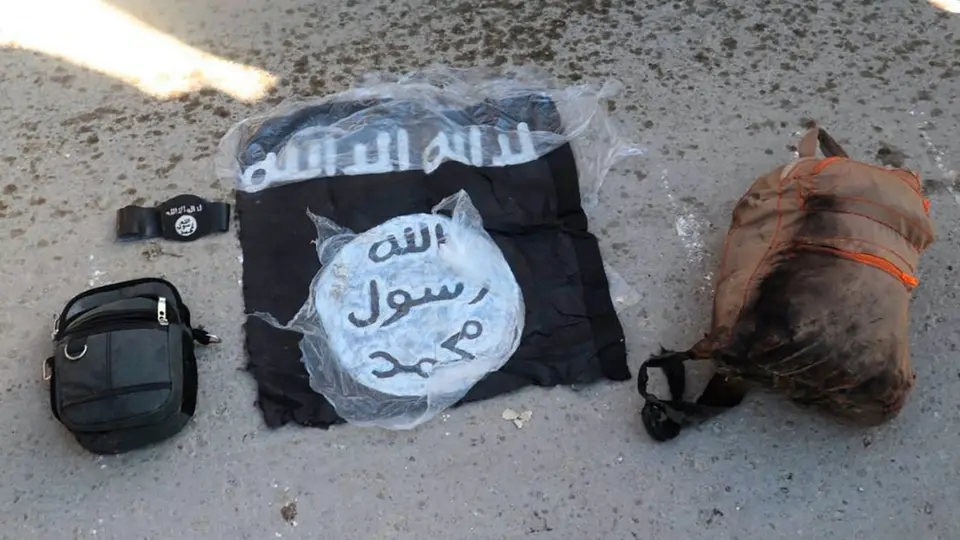
French Woman Who Traveled to Syria for IS Stands Trial in Paris
A 31-year-old Frenchwoman who left her home country at 19 to join the Islamic State in Syria appeared in a Paris terrorism court on Wednesday, charged with participating in a terrorist criminal organization, Courthouse News Service reports.
Sarah Talib stood behind the glass barrier of the dock wearing a black shirt and a zebra-print skirt — she told the court she liked to dress fashionably — while answering questions about how she became radicalized.
"I started praying, I started going to the mosque, I started wearing the veil… and it was a crescendo," Talib told the court Wednesday evening.
A Path Into Radicalization
Talib was born in the Paris region in 1995. Her father was a violent alcoholic who was found dead in the Seine in 2008 with alcohol in his system. After changing schools in middle school, she was harassed over the way she dressed — in heels and makeup.
In high school, a friend persuaded her to begin wearing a veil. What followed, as Talib herself repeatedly described it, was a "crescendo" into radicalization. By age 19 she was married and pregnant, and she and her husband had begun watching IS propaganda videos together.
"For me, what I saw around me, it was a search for identity, also the fact of being in a community, to be part of something," she said Wednesday. "There was self-esteem."
The couple traveled to Turkey in 2014, and smugglers brought them across the border into Syria. The court did not address Talib's time inside Syria on Wednesday; those questions are expected to be taken up during Thursday's hearings. She was arrested in Turkey in 2021.
The Role of Women in Terrorist Organizations
Expert witnesses at the trial shed light on how the role of women within groups such as IS has frequently been misread. Xavier Crettiez, a political science professor at Sciences Po Saint-Germain-en-Laye who specializes in radicalization and political violence, told the court that from a "doctrinal standpoint," both Al-Qaeda and IS formally stipulated that women were not to participate in armed combat. Their assigned role was to support fighters, satisfy their sexual needs, or bear children to replenish the ranks of the caliphate.
Because women represented something of a "blind spot" for state security services, Crettiez said, many began taking on more active roles within those organizations over time.
He also addressed how gender bias has shaped the broader perception of female recruits. For a long time, he explained, a dominant theory held that women turned to violence not out of ideological conviction but because they had been manipulated by their husbands.
"But people didn't really think about women's agency, or rather the fact that women could decide on their own to join the armed struggle," Crettiez said. "It's true that this logic of 'influenced by' also corresponds to a form of anti-intellectualization of women, as if, in the end, women didn't join the armed struggle through ideological attraction or because they are convinced of the need to do so, but purely out of emotion — it goes back to a kind of idea that women are driven by emotions while men are driven by reason."
The presiding judge noted that after reviewing a personality expert's report, the court "had the impression that there wasn't a choice" for Talib to go to Syria. When the judge asked whether that impression was mistaken, the expert was unable to give a clear yes or no.
Courts Still Grapple With Female Returnees
Joana Cook, an assistant professor of terrorism and political violence at Leiden University's Institute of Security and Global Affairs, said courts had largely overlooked women as terrorist actors until the rise of IS. Under the caliphate, women occupied roles ranging from healthcare workers to suicide bombers and front-line militants. Differences in how those women are subsequently charged, however, persist.
"One useful example to illustrate this is the number of charges related to child endangerment or other offences related to their children that women have been charged with in certain countries such as the Netherlands, Germany, Sweden and Finland; I'm not aware of male returnees facing similar charges," Cook said. She added that the disparity may be partly explained by the fact that large numbers of male fighters were killed in combat or remain imprisoned in Iraq and have not yet returned to face prosecution — "but would be a useful trend to watch as they return."
The trial in Paris is scheduled to continue through Friday.
Source: Courthouse News Service