Federal Judges Question Release of Jam Master Jay Murder Suspect Karl Jordan Jr.
A Second Circuit panel grilled attorneys Tuesday over whether Karl Jordan Jr. should remain free after a judge overturned his murder conviction.
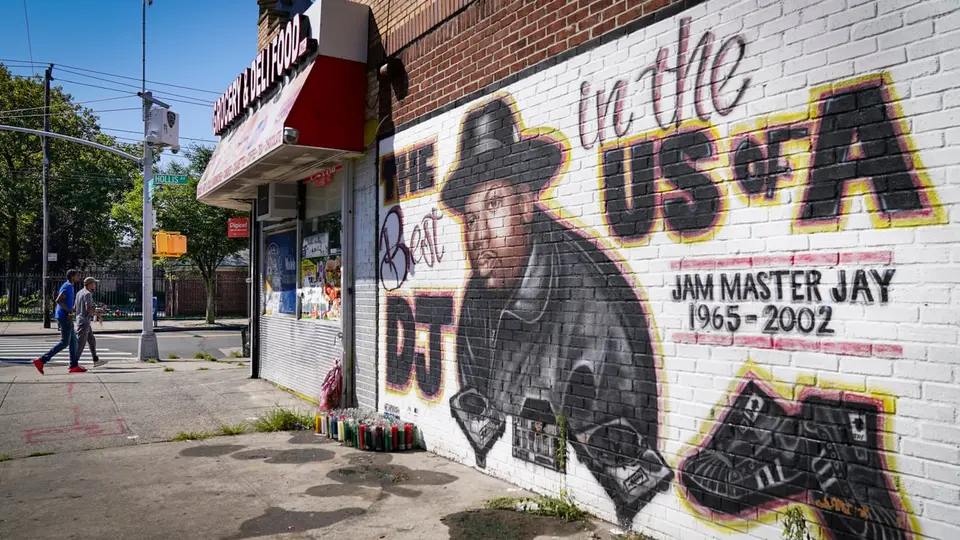
Second Circuit weighs bail for man whose murder conviction was thrown out
A federal appeals panel in Manhattan questioned Tuesday whether Karl Jordan Jr. — whose conviction in the 2002 killing of hip-hop icon Jam Master Jay was overturned by a trial judge — should remain free on bail while cocaine charges against him proceed, Courthouse News Service reports.
Jordan, 42, is the godson of Run-DMC DJ Jason "Jay" Mizell, who was shot dead in his Hollis, Queens, recording studio on Oct. 30, 2002, following a failed drug deal. Prosecutors charged Jordan and two co-defendants decades after the killing. In 2024, a jury found Jordan and co-defendant Ronald Washington guilty of murder committed in the course of narcotics trafficking and of a firearm-related murder charge.
U.S. District Judge LaShann DeArcy Hall, who presided over the five-week trial, subsequently concluded that the government's evidence linking the killing to drug trafficking was too thin to sustain the verdict. She vacated Jordan's murder conviction late last year and, in April, granted him a $1 million bail package secured by 17 friends and family members, while separate cocaine charges severed from the murder counts await trial.
The government appealed both of Hall's rulings to the Second Circuit. A stay kept Jordan held at the Metropolitan Detention Center pending the appeal.
Tuesday's panel focused solely on whether Hall erred in her April 6 bail ruling. In that decision, the judge wrote that Jordan's "nearly five and a half years" in custody had "blunted" the danger associated with the alleged ongoing drug trafficking conspiracy.
Assistant U.S. Attorney Miranda Gonzalez argued that Hall had improperly set aside Jordan's alleged role in the murder when assessing his dangerousness, and had arbitrarily dismissed two nonlethal shootings attributed to Jordan in 2003 as too remote in time to pose a current risk to the community.
Senior U.S. Circuit Judge Reena Raggi, a George W. Bush appointee, pressed defense attorney Michael Hueston on where that reasoning leads.
"Do you want us to take judicial notice of how many people, after release from incarceration … managed to go back to drug trafficking, precisely because they have few options at that point?" Raggi asked.
Hueston pushed back. "You're damned if you do, and you're damned if you don't, respectfully, Your Honor," he said. "It's not so much to say that there's not a possibility of that happening, but it's in the weight in terms of looking at this individual defendant, where he stands now, as opposed to where he stood."
U.S. Circuit Judge Denny Chin, an Obama appointee, clarified the court's framing of the argument. "You're not saying that's the only factor," Chin said. "You're saying that's one factor, along with others."
Before the panel reserved its ruling on the bail question, U.S. Circuit Judge William Nardini urged both sides to move swiftly on the more consequential appeal — Hall's decision acquitting Jordan of murder — which has not yet been scheduled for oral argument.
"I hope you're all aware, as experienced practitioners, that you can move to expedite consideration of the appeal, particularly in criminal cases where liberty is at stake," said Nardini, a Donald Trump appointee. "You don't want it just sitting in the pile."
The panel did not indicate when it would rule on the bail issue.
Source: Courthouse News Service