Fourth Circuit Reviews Dismissal of Indictments Against Comey and James
A federal appeals panel weighed whether Trump's appointment of Lindsey Halligan as a U.S. attorney was lawful. The indictments against James Comey and Letitia James were dismissed in November 2025.
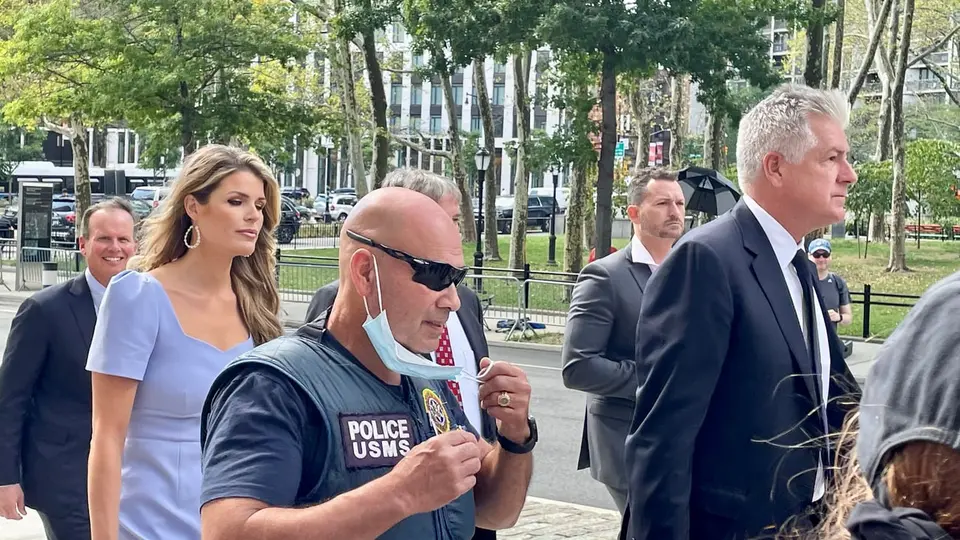
Fourth Circuit Weighs Legality of Indictments Against Comey and Letitia James
A Fourth Circuit panel on Tuesday reviewed the dismissal of federal indictments against two prominent Trump critics — former FBI Director James Comey and New York Attorney General Letitia James — stemming from the contested appointment of Lindsey Halligan as a federal prosecutor. Courthouse News Service reports the case marks the fourth time a federal appellate court has been asked to rule on the Trump administration's practice of installing U.S. attorneys without Senate confirmation.
The standard appointment process begins with a presidential nomination, followed by Senate advice and consent. When confirmation is unavailable, federal law permits the attorney general to place an interim U.S. attorney for up to 120 days. The legal dispute turns on what authority exists once those 120 days expire.
Senior U.S. District Judge Cameron McGowan Currie, a Bill Clinton appointee, ruled that federal district courts assume the power to fill vacancies after that period. The government counters that the attorney general retains authority to appoint successive individuals to 120-day temporary terms — indefinitely — without requiring Senate or court approval.
Halligan's appointment and the indictments
Halligan, who previously served as Trump's special assistant, replaced Erik Siebert as interim U.S. attorney for the Eastern District of Virginia after Siebert declined to pursue criminal charges against James — the attorney general who successfully sued the president for fraud. Working quickly, Halligan obtained indictments against both Comey and James in the fall of 2025.
Comey was charged with lying during a Senate committee hearing and obstruction of a congressional proceeding, just five days before the five-year statute of limitations was set to expire on September 25, 2025. In a separate indictment secured on October 9, 2025, James was charged with bank fraud related to the purchase of a home in Virginia.
Currie dismissed both indictments in November 2025, finding that appointing authority shifts to the relevant federal court once a position remains vacant past 120 days, "where it remains until the president's nominee is confirmed by the Senate."
Appellate arguments on Tuesday
At the appellate hearing, Senior U.S. Circuit Judge Henry Floyd, a Barack Obama appointee, questioned the practical value of the 120-day limit if the attorney general could simply continue reappointing the same interim prosecutor without restriction. Government attorney Henry Whitaker sought to minimize the concern, telling the panel that the Trump administration welcomes collaboration with district courts and views repeated temporary appointments as impractical.
Carl Tobias, a law professor at the University of Richmond, was skeptical of that framing. "He made it out to be as if the president and the attorney general were working with these district courts, and I just don't think that's the case," Tobias said. "The government lawyer was painting a picture that wasn't really true in terms of what the White House and what DOJ were doing."
Chief U.S. Circuit Judge Albert Diaz, also an Obama appointee, pushed back sharply on Whitaker's argument that the executive branch is incentivized to follow the standard procedures.
"Having an incentive is different from complying with the statute," Diaz said. "You're suggesting that an executive would and should act in good faith to work the district court; one may wonder whether that happened here. You may have a view of that, but that's different from your reading of the statute, which relies on incentives as opposed to the plain language of the statute."
Attorneys for the defendants push back
Abbe Lowell, representing James, disputed the government's assertion that structural safeguards make abuse unlikely. "I think what's wrong about the government's position is that it ignores what Judge Currie pointed out, which is that this stands against what is a 250-year imperative," Lowell said. "The government's position over and over again is going to be to find loopholes and circumvention around that imperative."
Lowell also challenged the government's attempt to salvage the indictments through ratification. Attorney General Pam Bondi subsequently ratified the indictments in an effort to cure any procedural defects. Floyd questioned where that ratification authority ends, asking whether the attorney general could retroactively validate the actions of any individual — or only those serving as U.S. attorneys.
"If there was an error here, it was simply an error in the title Ms. Halligan was given," Whitaker said, arguing that grand juries would not have attached significance to her precise designation.
Lowell rejected that characterization. "There could be no more structural error in this case than putting a private person in a grand jury with the full power of the government to indict somebody," he said. "How could it possibly be that something as important as a grand jury indictment can be ratified when it was brought by somebody who had no business to be there at all?"
Broader legal landscape
The Third Circuit panel was completed by U.S. Circuit Judge Julius Richardson, a Trump appointee who appeared more receptive to the government's arguments than his colleagues. The case arrives as the Second Circuit last month became the third circuit court to rule against the administration's appointment approach.
Comey and James maintain that the appointment method employed — bypassing the Senate — departs from practices observed by previous administrations, including Trump's own first term, and risks placing political allies rather than independent legal officers in prosecutorial roles. Attorneys for all parties did not respond to requests for comment following the hearing.
Source: Courthouse News Service