NH Supreme Court Chief Justice MacDonald resigns over $50,000 staffer payout
Gordon J. MacDonald has stepped down as chief justice of the New Hampshire Supreme Court, admitting he violated the judicial code of conduct.
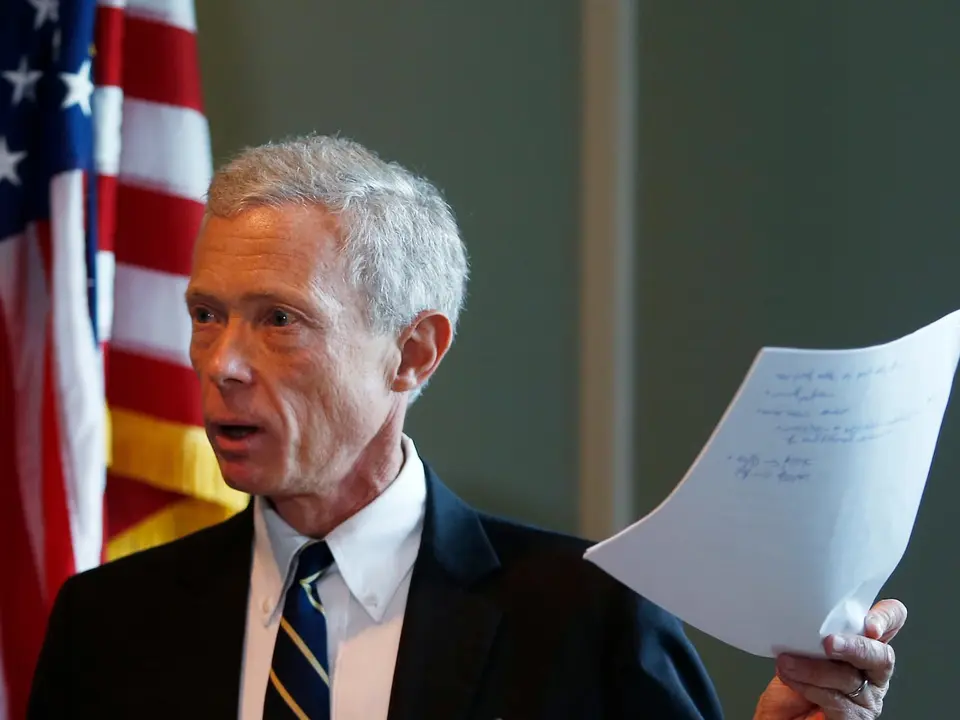
New Hampshire's top judge quits over misconduct findings tied to staffer arrangement
Gordon J. MacDonald, 64, resigned as chief justice of the New Hampshire Supreme Court on Tuesday, acknowledging he had violated the judicial code of conduct in a matter involving a nearly $50,000 payout to one of his senior staffers. According to bostonglobe.com, MacDonald had been on unexplained medical leave for more than a month before sending his resignation letter to Governor Kelly Ayotte.
The letter referenced a stipulation and agreement reached with the court's Judicial Conduct Committee. "I believe this is in the best interests of the New Hampshire Judicial Branch," MacDonald wrote. "I accept responsibility and accountability for my conduct."
Three violations admitted
Rather than contest the allegations at a public hearing, MacDonald admitted to three specific violations. He acknowledged failing to promote public confidence in the judiciary's impartiality, failing to avoid the appearance of impropriety, failing to perform his administrative duties competently and diligently in relation to the staffer's employment, and failing to avoid favoritism.
The misconduct centred on Dianne H. Martin, a longtime aide who had previously served as his chief of staff when MacDonald was New Hampshire's attorney general. Martin was hired in 2021 as director of the Administrative Office of the Courts. In April 2025, she was laid off from that role and rehired just days later as general counsel for the Office of Bar Admission. The layoff entitled her to the nearly $50,000 payout, covering unused vacation and sick leave plus other benefits.
New Hampshire Public Radio first reported the arrangement in October 2025. The state attorney general's office subsequently conducted a preliminary review that confirmed the timeline of events outlined by the broadcaster.
Court collectively implicated, inquiry launched
Three fellow justices joined MacDonald in a joint statement asserting that personnel decisions regarding Martin had been made collectively by the court, not by any individual justice. They acknowledged Martin began her new position "several months" before her predecessor retired, resulting in two people being paid simultaneously for the same role — at a time when MacDonald had publicly warned of broader layoffs due to budget pressures.
At least one employee within the judicial branch raised ethical concerns about the personnel manoeuvres internally, describing them as "the chief's idea."
The New Hampshire Department of Justice concluded in late November 2025 that prosecutors would be unlikely to find actionable criminal conduct and declined to investigate further. The Judicial Conduct Committee had opened its own inquiry in mid-November 2025, citing concerns about the accuracy of representations made in a Supreme Court press release.
Investigation records released
Hundreds of pages of supporting documents were released Tuesday in conjunction with MacDonald's resignation. Those records summarise interviews with several current and former justices and court staff. They reveal that justices had unsuccessfully sought to have the committee's investigator, Philip Waystack, disqualified from the investigation. MacDonald had separately and unsuccessfully sought to have all sitting judges disqualified from the committee itself.
A summary report of the investigation's findings concluded that MacDonald failed to follow established personnel rules in relation to Martin's employment. It also found that a press release the justices distributed in October 2025 offered an inaccurate portrayal of what had occurred. "It created the misimpression that her removal and rehire was part of a routine administrative reorganisation of the Administrative Office of the Courts," the report stated. "The evidence established that there were long-standing and serious concerns about Martin's management of the AOC."
The Judicial Conduct Committee filed its report on 9 September with the Supreme Court, which issued an order Tuesday concluding the committee's findings are supported by the evidentiary record. The judges who issued that order were substitutes specially assigned to fill in for the Supreme Court justices who had recused themselves.
Turbulent period for the court
MacDonald's departure caps a particularly difficult stretch for New Hampshire's five-member Supreme Court. Days before news of the Martin payout became public, associate justice Anna Barbara Hantz Marconi — who had herself been on leave for months — was criminally convicted over an improper conversation she had in 2024 with then-Governor Chris Sununu. That matter appears unrelated to the conduct that led to MacDonald's resignation.
MacDonald had served as New Hampshire's attorney general before his 2021 appointment to the court by former Governor Sununu. He was one of three remaining justices appointed by Sununu; the other two on the court were nominated by Governor Ayotte.
The Judicial Conduct Committee would have been unable to recommend MacDonald's immediate removal even had the inquiry proceeded to a full hearing. Under New Hampshire law, involuntary removal from office would have required impeachment proceedings before the state legislature.
Source: Google News MT — Crime (en)