Patrick Clancy's 60 Minutes debut divides viewers after Lindsay Clancy mistrial
Patrick Clancy sat for his first interview since the mistrial in his ex-wife's murder trial, but the 60 Minutes segment left audiences more entrenched than ever.
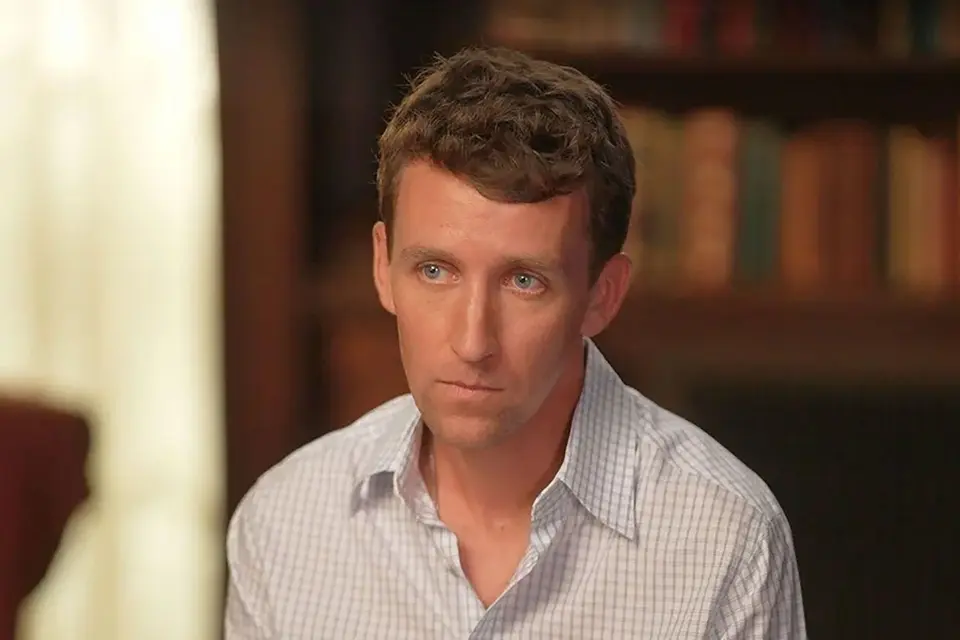
Patrick Clancy's first interview since mistrial fails to shift public opinion
Patrick Clancy, the ex-husband of Lindsay Clancy — who stood trial for killing her three children in what she has described as a state of postpartum psychosis — gave his first public interview since the case ended in a mistrial. According to slate.com, the appearance on 60 Minutes left virtually no one's mind changed.
Clancy sat down with his second wife, Dr. Rachel Danis, who is currently pregnant, and was interviewed by Ross Douthat. The roughly 15-minute segment aired as the show's second episode under its new editor in chief, Bari Weiss, the former New York Times columnist and Free Press founder who took over as CBS editor in chief in 2025.
A programme under new management
The transition at 60 Minutes has been marked by significant internal change. Veteran correspondents Scott Pelley and Sharyn Alfonsi were dismissed after executives began exerting greater editorial control. Nick Bilton, a former Times columnist with no prior television news production experience, was appointed as the show's executive producer.
Slate.com argues that these changes have left the programme ill-equipped to handle a high-stakes interview of this nature. What should have been a compelling hour of television — a father speaking publicly for the first time about the deaths of his three children — emerged instead as a cautious, thinly probing segment that generated more frustration than clarity.
Online audiences split sharply
The interview did little to bridge the deep divide among those who have followed the case closely online. On the Reddit community r/DuxburyDeathsFreeTalk, which draws close to half a million visitors per week, supporters of Clancy praised his composure. "He takes care of himself, which is what we all should learn to do more of," one user wrote shortly after the episode aired.
On TikTok, those already sceptical of Clancy were equally unmoved. The Crime Junkie podcast posted a response on the platform stating that "literally every question that you guys would have for Patrick Clancy was not asked and was not answered." The podcast described watching the interview as difficult, arguing that the questions lacked substance.
Others online focused on the body language of Danis, replaying footage frame by frame in search of inconsistencies. Discrepancies between a promotional teaser and the final broadcast — specifically around details of how Clancy and Danis met — were subjected to extended scrutiny. Clancy has not been charged with or accused of any wrongdoing by investigators or by the defence in his ex-wife's trial.
What Clancy said — and what he did not
Clancy spoke in general terms about the impact of online speculation on his daily life. "It is a huge distraction from what really matters here, which is perinatal mental health," he said. "It's painful to see. And it makes it difficult to be in public, and it's possible that some of those people, after seeing lie after lie after lie, they start to believe it."
He offered limited detail about warning signs he may have missed before the deaths, and was not pressed on the specifics of his ex-wife's reported struggles in the period leading up to the incident. The interview did not address what support, if any, Lindsay Clancy received for postpartum depression prior to the killings.
Douthat did not ask Clancy about the juror whose conduct has drawn legal scrutiny following the mistrial, a significant omission given that the post-trial developments had by then attracted considerable media attention.
Defence attorney raises concerns over lone holdout juror
On the day the 60 Minutes interview aired, Lindsay Clancy's defence attorney filed a request asking the presiding judge to investigate the lone holdout juror — the individual whose refusal to convict resulted in the mistrial. The attorney alleged that the juror completed his forms inaccurately and raised concerns about an alleged history of domestic violence, as well as reports that he used his mobile phone during deliberations.
The question of whether any of these allegations affected the fairness of the proceedings has not yet been resolved. Whether Lindsay Clancy will face a retrial also remains undetermined.
Broader questions left unanswered
Slate.com notes that the episode raised, but did not engage with, the broader policy questions that the case has brought into focus: whether pregnant people and new mothers have adequate access to mental health care when they report symptoms of postpartum depression, and what responsibility, if any, falls on partners or medical professionals when warning signs are reported and not adequately addressed.
These questions, the outlet observes, are likely to persist regardless of whether Clancy returns to private life — as he is expected to do — or whether a retrial goes ahead. The interview, in its final cut, addressed none of them directly.
For those following the case in the hope of fresh insight, the segment instead reinforced the divisions already present. Viewers who believed Clancy bore some responsibility before the broadcast continued to hold that view afterwards. Those who supported him throughout remained supportive. The 60 Minutes platform, once regarded as a venue for consequential and searching journalism, produced, on this occasion, a result that satisfied neither camp.
Source: Google News MT