São Paulo prosecutors charge 19 over PCC crime bank linked to Lava Jato operatives
São Paulo's Public Ministry accused 19 people of establishing a clandestine financial structure to launder PCC money, involving operatives already convicted in the Lava Jato operation.
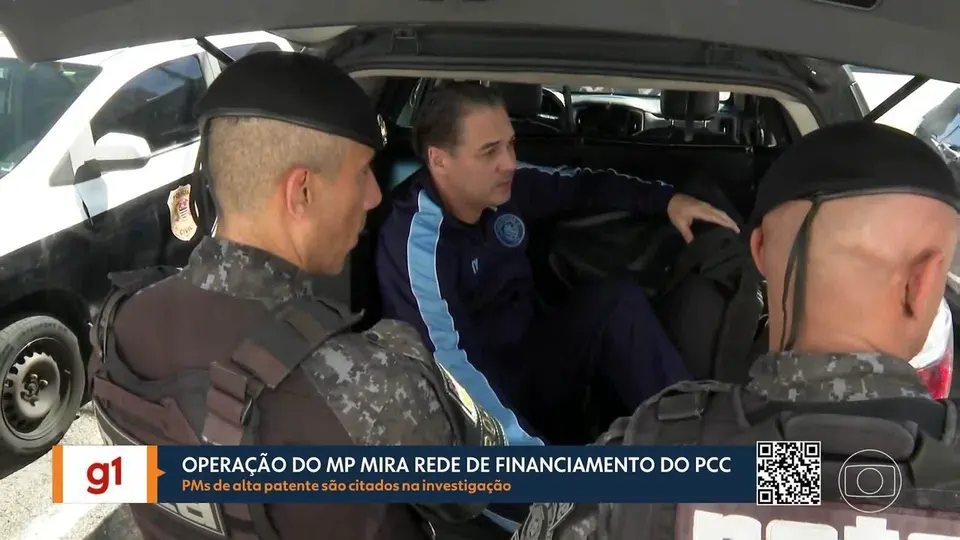
Lava Jato operatives charged over multibillion-dollar money laundering scheme for PCC in São Paulo
The Public Ministry of São Paulo charged 19 people with establishing a clandestine financial structure that operated as a "crime bank" serving the Primeiro Comando da Capital (PCC), according to g1.globo.com. Among the accused are financial operatives with ties to Operation Lava Jato, including Leonardo Meirelles, Raphael Flores Rodriguez — known as "Batata" — and accountant Meire Bonfim da Silva Poza.
The Special Task Force for Combating Organised Crime (Gaeco) indicates that Cléber Azevedo dos Santos, Leonardo Meirelles and Paulo Rogério Silva, known as "Paulo Barão", occupied the centre of the structure. All three are under investigation in separate criminal proceedings and allegedly moved "multibillion-dollar sums" throughout their activities, according to the charges.
According to the Public Ministry, the organisation functioned as a centre of illicit financial services — a "true Crime Bank" — placed at the disposal of PCC members to conceal the origin of proceeds from drug trafficking and other crimes. The accused face charges of criminal organisation and money laundering, among other offences, depending on their individual involvement. The Public Ministry also seeks minimum compensation of R$ 10 million for collective and social moral damages, to be paid jointly by the defendants.
Cash became bank transfer
The structure allegedly operated between 2019 and 2025, according to the charges, using shell companies, third-party accounts and money mules to hinder tracing of the funds.
One of the main services offered was the so-called "TED for cash swap": the group received cash of illicit origin and, in exchange for a commission, carried out bank transfers of equivalent value through their own accounts, money mules' accounts or shell companies. The process also worked in reverse — funds received through the banking system could be converted to cash.
Messages obtained from mobile phones seized during Operations Recidere and Bazaar indicate, according to Gaeco, that those involved were aware of the illicit origin of the funds. Knowledge of the money's origin was even taken into account when determining the "discount" charged for the operation.
For the Public Ministry, the case represents a "criminal convergence": operatives specialised in concealing illicit assets began providing the same financial structure to PCC members.
The accountant's and "Batata's" role
The charges describe Meire Bonfim da Silva Poza as an essential piece of the scheme. With her role already revealed in Lava Jato, she allegedly prepared tax returns, analysed tax documents and provided accountancy advice to give the operations a veneer of legality. According to the Public Ministry, she also directly participated in cash-for-transfer exchanges. A February 2023 message, acknowledged by the accountant herself, suggests she received a monthly fee of R$ 70,000 from Cléber Azevedo for exclusive provision of her services.
Raphael Flores Rodriguez, "Batata", already convicted as part of Lava Jato, allegedly went beyond his role as a client in the new scheme. Gaeco states that he purchased properties in partnership with other operatives, negotiated vehicles, shared accounts holding proceeds from criminal activities and participated in situations involving police corruption.
Structure in direct service to the PCC
Among those identified as users of the structure is Leonardo Monteiro Moja, "Léo do Moinho", and Alexandre Salles Brito, "Buiú" — already previously charged in Operation Fim da Linha on suspicion of criminal organisation and money laundering connected to the PCC and bus company UpBus. The Public Ministry states that at least ten operations, totalling R$ 232,000, were carried out to Buiú's benefit through this structure.
For the prosecutors, the relationship between the financial operatives and the PCC was not limited to occasional service provision. The charges maintain that the accused were familiar with the faction's internal terminology, participated in sessions of the so-called "crime tribunal" and even resorted to the organisation's coercive power to resolve their own property disputes.
Police corruption supporting the scheme
The charges further state that the structure relied on corruption of public officials to ensure its activities continued. According to Gaeco, Marlon Antonio Fontana intermediated and operationalised payments of improper advantages to civil police officers. These episodes are the subject of Operation Bazaar, which identified, according to the Public Ministry, a practice of "systemic corruption" on the part of the financial operatives.
The 19 charged are: Cléber Azevedo dos Santos, Paulo Rogério Silva ("Paulo Barão"), Leonardo Meirelles (at large), Meire Bomfim da Silva Poza, Robson Martins de Souza, Antônio Carlos Ubaldo Júnior, Bruno Ramos Fernandes, Odair Alves da Silveira Filho, Alexandre Viriato da Silva ("Gordão"), André de Souza Haddad ("Minhoca"), Antônio Carlos Sampaio ("Kaká" or "Compadre", at large), Danillo Vinícius da Silva Rosário ("Brigadeiro"), Leonardo Monteiro Moja ("Léo do Moinho"), Alexandre Salles Brito ("Buiú"), Raphael Flores Rodriguez ("Batata", at large), Amjad Ahmad ("Amin", at large), Jacqueline Cavalcante Brito, Marcelo de Morais Oliveira and Marlon Antonio Fontana.
Source: Google News BR — São Paulo