Chilean prosecutor names Diosdado Cabello as author of Ronald Ojeda murder contract
Prosecutor Héctor Barros says that investigation points to Cabello as the person who ordered the Tren de Aragua to kill former Venezuelan lieutenant Ronald Ojeda in Santiago.
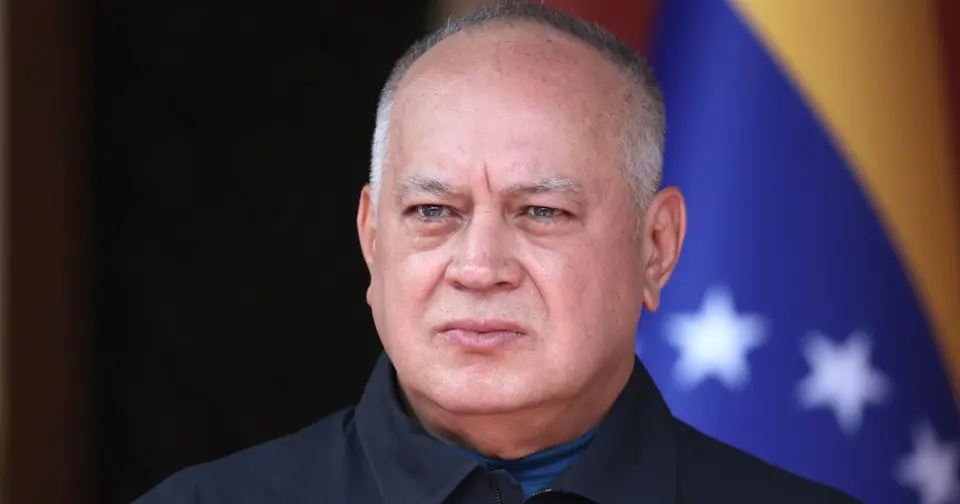
Chilean prosecutor links Diosdado Cabello to Ronald Ojeda murder in Santiago
Chilean prosecutor Héctor Barros stated on Monday that evidence gathered during the investigation into the kidnapping and murder of former Venezuelan lieutenant Ronald Ojeda directly points to Diosdado Cabello as the person who allegedly ordered the Tren de Aragua to carry out the crime on Chilean soil. According to diariolasamericas.com, Barros made these statements in an exclusive interview with the Investigative Unit of Noticias Caracol.
"Which member of the Venezuelan government? Based on the evidence we have in the investigation, it is Diosdado Cabello," the prosecutor affirmed.
Barros clarified that this conclusion did not emerge immediately, but rather after a lengthy investigation that allowed the chain of events to be reconstructed from the material executors to those who allegedly ordered the operation. The investigations established that the kidnapping and subsequent homicide of Ojeda constituted a "concerted act" carried out by members of the Tren de Aragua, with origins in the Venezuelan regime and specifically in Cabello, considered the number two figure in chavismo.
A persecution that began in Colombia
According to the reconstruction disseminated by Noticias Caracol, Ojeda's case is part of a broader operation of persecution against deserter military officers and Venezuelan opponents. In December 2023, a group of former military personnel and opponents met in Cúcuta to plan an action aimed at confronting the Nicolás Maduro regime. Among the participants were former captain Ángelo Heredia, student leader Paulo Parada and Ronald Ojeda himself.
According to the journalistic investigation, Venezuelan military counter-intelligence infiltrated the group and then used criminal and guerrilla structures to pursue its members. Heredia was kidnapped in Colombia by members of the ELN and subsequently handed over to Venezuelan authorities. Parada managed to escape by not having attended the meeting.
Ojeda managed to flee and travelled by land from Colombia to Chile, where he remained in asylum. Two months later, in February 2024, he was kidnapped from his residence in Santiago by members of the Tren de Aragua. His body was found buried in an area of Maipú.
The concealment of the body
Barros explained how those responsible attempted to conceal the body to prevent its discovery. The body was placed in a suitcase, covered with lime and buried at approximately 1.40 metres deep within a basic construction. Subsequently, a concrete floor was placed over the site.
"These actions had the objective of preventing the body from being found," the prosecutor stated.
Payment and contradictions among those implicated
When asked whether the Prosecutor's Office had evidence that Cabello had given the order and paid for the execution of the crime, Barros answered affirmatively, although he acknowledged that some aspects of the payment mechanism have still not been established with precision.
According to the evidence presented, there would have been an agreement with the upper levels of the Tren de Aragua. Part of the money would have been delivered initially, while the rest would remain subject to the completion of the operation. However, there are contradictory accounts regarding the final payment: some of those involved claim that the money was delivered to the leadership of the organisation, whilst others assert that it was not completed because those responsible considered that the operation had not been executed correctly.
The prosecutor also recounted that, a few days after the murder, several of the participants were reprimanded during a videoconference and received instructions to leave Chile due to the public impact the case had acquired.
Investigation advancing from bottom to top
Barros highlighted as one of the particularities of the case the fact that the investigation had begun with members of the lowest level of the criminal structure and then progressed towards those responsible at higher ranks.
The Chilean Prosecutor's Office maintains an open investigative line to determine not only the possible responsibility of Cabello, but also that of any other person who might have participated politically in ordering the crime.
"In the case of Diosdado Cabello, we are pursuing an investigative line that is open, and not only with respect to him, but with respect to anyone who could be responsible," Barros explained.
Extraditions and collaboration with the United States
The Prosecutor's Office hopes that newly charged individuals extradited to Chile will be able to provide information during trials. Barros acknowledged that it is difficult to anticipate whether any of them will decide to collaborate with the investigation, although he noted that this possibility remains open.
The United States has also collaborated with the Chilean investigation. Barros confirmed that the Prosecutor's Office requested from United States authorities the possibility of taking a statement from former Venezuelan dictator Nicolás Maduro in the context of the case.
Source: Google News CL — Crime