Drug trafficking in northern ports: Antofagasta prosecutor warns of biocean corridor
Regional prosecutor Juan Castro Bekios warns that Antofagasta and Mejillones ports could attract organised crime. A proposed law aims to strengthen port security.
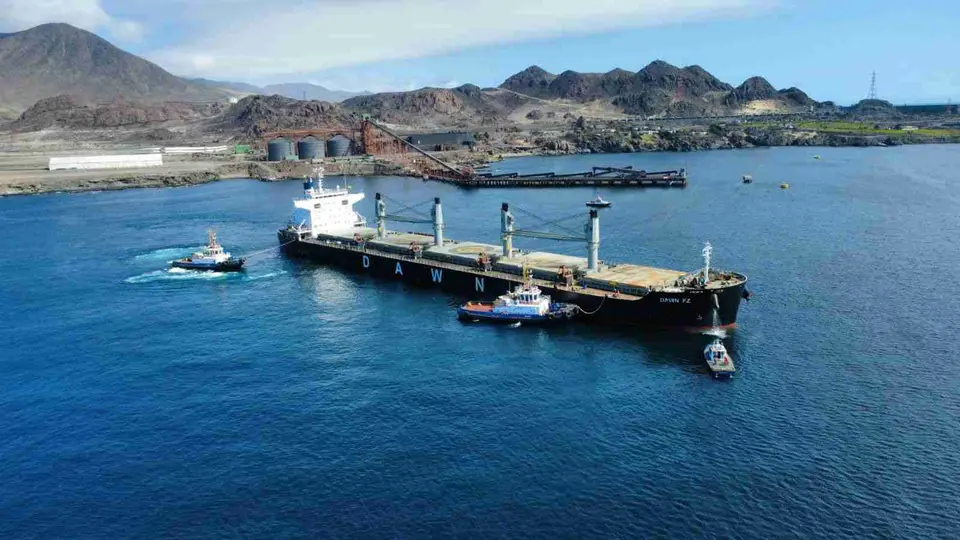
Northern Chilean ports in the crosshairs of drug trafficking as biocean corridor advances
The regional prosecutor of Antofagasta, Juan Castro Bekios, warned that the ports of Antofagasta and Mejillones could become points of interest for criminal organisations seeking to transport drugs to Asia-Pacific markets. According to a report by madero.cl, the warning was raised in an interview with Emol in the context of the progress of the biocean corridor, the project that seeks to connect Brazil with the terminals of northern Pacific Chile.
Castro Bekios noted that one of the main logistical advantages of the corridor—the reduction in transport times and costs—could simultaneously become an incentive for drug trafficking. According to the prosecutor, the connection would make it possible to save around ten days of travel, avoid transit through the Panama Canal and reduce costs by around 30%.
Port reputation as a risk factor
The prosecutor paid special attention to the reputation of Chilean ports. Castro Bekios explained that these terminals could prove attractive for drug trafficking precisely because they would operate with lower alert levels than other ports in the region, which would make them a more discreet alternative for moving illicit cargo.
The warning does not suggest that organisations such as the Primeiro Comando da Capital (PCC) seek to establish themselves in Chile, but that they could exploit existing infrastructure and transport routes to move illicit goods towards Asia-Pacific destinations.
Bill in the Senate
The prosecutor's proposal coincides with a legislative initiative that the senator for Antofagasta, Paulina Núñez, has promoted during this year in Congress. In June 2026, Núñez submitted a bill to the Senate alongside senators Iván Flores, Carlos Kuschel, Iván Moreira and Cristián Vial, with the aim of strengthening port security against organised crime. The proposal is in the first constitutional proceeding.
In August, the Senate chamber approved the bill in general and unanimously, which now continues its review in committee to receive amendments before advancing in its particular discussion.
During the debate, Núñez argued that the maritime border should be considered within the country's security priorities and stressed the strategic role of ports. Her proposal goes beyond the physical inspection of containers: it contemplates traceability measures, prevention, access control, risk management and coordination between public bodies and private actors in the logistics chain.
Prosecution anticipates risks before corridor matures
The Regional Prosecution Office of Antofagasta has insisted throughout this year that organised crime does not only observe land borders, but also the logistics chain and the movement of goods. In August, Castro Bekios proposed that the development of the corridor will make it necessary to strengthen institutional coordination, cargo traceability, technology and financial intelligence.
In May, the same prosecutor had pointed out the need to increase technological detection capabilities and human resources allocated to port security, with specific mention of the terminals in the northern part of the country.
A paradox for the region
The debate takes on a particular dimension for Antofagasta and Mejillones, both terminals of relevance in mining activity and foreign trade. The scenario presents a paradox for the region: the same corridor that seeks to position the north as an international logistics platform could also increase the interest of criminal organisations in that infrastructure.
The discussion on port security thus becomes established as one of the conditions that must accompany growth in trade, before the corridor reaches its full potential. The proposal driven by Núñez aims for the various actors in the logistics chain to incorporate prevention tools, whilst the Public Prosecution Service insists on anticipating the possible criminal phenomena associated with the new flow of goods.
Source: Google News CL — Crime