Nineties Arms Dealer Pernička Faces Charges of Concealing Assets
Liberec businessman Petr Pernička, a former arms middleman, faces charges of obstructing justice and attempted creditor fraud. According to police, he attempted to conceal assets through back-dated contracts.
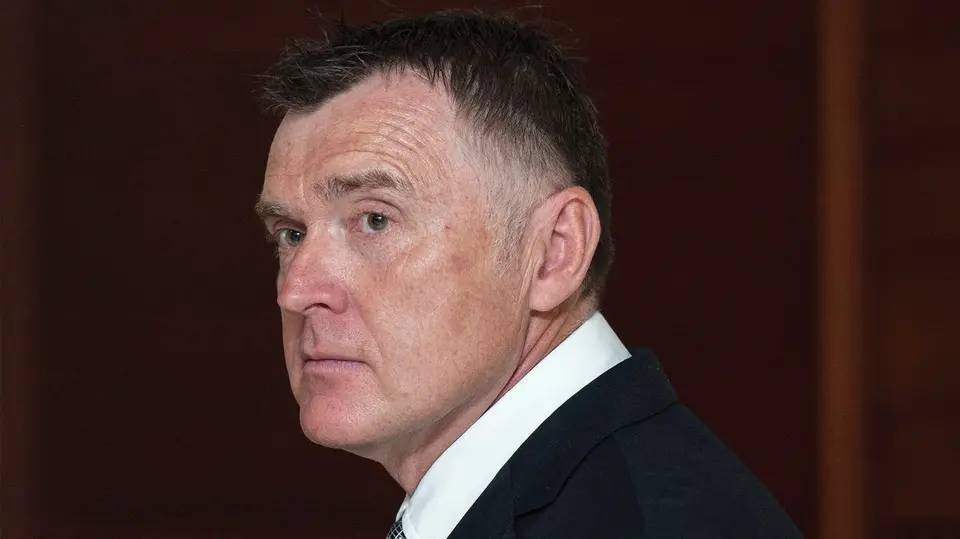
Nineties Businessman Pernička Charged: Back-dated Contracts and 260 Million from Friends
Liberec businessman Petr Pernička, who in the nineties ranked among the biggest arms middlemen in Czechia, faces criminal prosecution for concealing assets from creditors. Prague's Economic Crime Squad charged him in June last year with obstructing justice, attempted creditor fraud and falsifying public documents, according to Novinky.cz.
According to police, Pernička attempted to conceal assets with the help of lawyers and forged, back-dated contracts so that his creditors could not reach them. If convicted, he faces a sentence of three to ten years' imprisonment, as the damage is said to be of large scale. Pernička himself did not respond to questions from the editorial staff.
From MiG-21 Fighter Jets to Insolvency
In the nineties, thanks to his connections to the former Soviet Union, Pernička was able to acquire dozens of MiG-21 fighter jets and an S-300 missile system. He supplied military equipment even through the embargo to then war-torn Yugoslavia. The American government placed him on a sanctions list at the turn of the millennium due to an attempted illegal sale of aircraft to North Korea. Czech courts ultimately acquitted him of the charges.
From a former businessman with enormous wealth, he became, at least officially, an impoverished pensioner cared for by his family. He faces bankruptcy. Among his creditors are his Liberec friends, who had lent him more than 260 million crowns in the past. He needed the money for legal disputes with the Croatian Ministry of Defence — he was claiming payment of 200 million dollars for the delivery of an S-300 missile system in 1995. According to today's exchange rate, the claim would amount to over four billion crowns.
The disputes dragged on for over twenty years. In 2024, Pernička and his friend, Croatian arms dealer Zvonko Zubak, to whom he had transferred the claim, lost the court battle at the appellate court. The Regional Court in Zagreb dismissed the lawsuit; they can only claim the return of the delivered portion of the missile system or its replacement in its then-current value.
At the centre of police and creditors' attention now stands Pernička's company Winsley Finance Ltd. based in the British Virgin Islands, which he used for the business at that time. Without performance from the Croatian state, the company is worthless, but in the event of a change in circumstances it would have significant assets.
"I considered him my long-time friend. All along he insisted it was just a matter of time before the Croatian court case would conclude and he would be able to pay us back," Novinky.cz quotes one of the creditors.
The Shadow of a Man Named Veselý
Two independent statements, which the editorial staff reviewed, suggest that the real driving force behind the possible obstruction of justice could have been someone else. "He organised the whole thing, financed it and forced others to carry it out," said one witness. Both identified a man named Vladimír Stratil — who today goes by the name Vladimír Veselý.
Years ago, Stratil was charged along with two other men with the murder of Martin Říha, who was sentenced to eleven years in prison for embezzling the First Prague Credit Union. Savers lost 276 million crowns at the time, which were never found. Říha disappeared after his release from custody in 2003. The state prosecutor argued that the three men had abducted and tortured him — a witness testified to burning with a gas lamp and drilling his knees with a drill. The man allegedly did not survive the torture, but his body has never been found to this day. In 2019, the court definitively acquitted the trio, ruling that the act did not take place. Two years later, Stratil changed his name to Veselý.
Veselý has accompanied Pernička over the past five years. In 2021, according to his own account, he purchased the Czech company Ligranit from his family for 15.5 million crowns, which owns a granite quarry in Liberec. He dismissed his alleged role in obstructing justice as nonsense. According to him, both witnesses who testify against him have business disputes with him. "There is testimony from a person who owes me a lot of money, and with his testimony against me he is trying to get out of prison," he said.
Incident at the Court and CCTV Footage
Veselý moves in the circles of Tomáš Horáček, who five years ago admitted in exchange for a lighter sentence to manipulating hospital contracts and subsequently established himself as a collaborator of businessman with underworld contacts Tomáš Pitra. Veselý allegedly brandishes his purported good contacts with the police and secret services when intimidating people.
It is remarkable that as recently as three years ago Horáček publicly claimed he feared for his own life and that of his family because of Veselý. Today their relationship looks different — Veselý admitted to police that they have known each other for about four years and their relationship is "fine".
Both met last October at the District Court for Prague 10, which was hearing charges against Nina Rydlová, Horáček's former company lawyer. Horáček is convinced she robbed him of assets and came to testify. In the court hallway, Rydlová's lawyers filed a criminal complaint against Horáček for vulgar insults and threats. According to their testimony, Veselý was standing beside Horáček at the time together with three other men who looked like bodyguards.
Horáček denied this, saying he arrived only with two lawyers and an assistant. CCTV footage, which the Novinky editorial staff obtained, however, shows a group of five men walking down the court hallway — Veselý walks in front, Horáček behind him in the middle.
Veselý said that he had not arranged to meet with Horáček beforehand and they met there because of a shared interest — Rydlová allegedly stole money from him as well. He denied intimidation. "I didn't come there to threaten anyone either," he emphasised. Police closed the lawyers' criminal complaint, ruling that the criminal act did not take place, and referred the matter to misdemeanour proceedings. Horáček thus faces a maximum fine of ten thousand crowns.
Source: Novinky.cz