Jan Masaryk exhumed in Lány to solve his 1948 death: murder or suicide?
The remains of former Czechoslovak foreign minister Jan Masaryk will be analysed using modern technology to clarify his death in 1948, which remains unsolved.
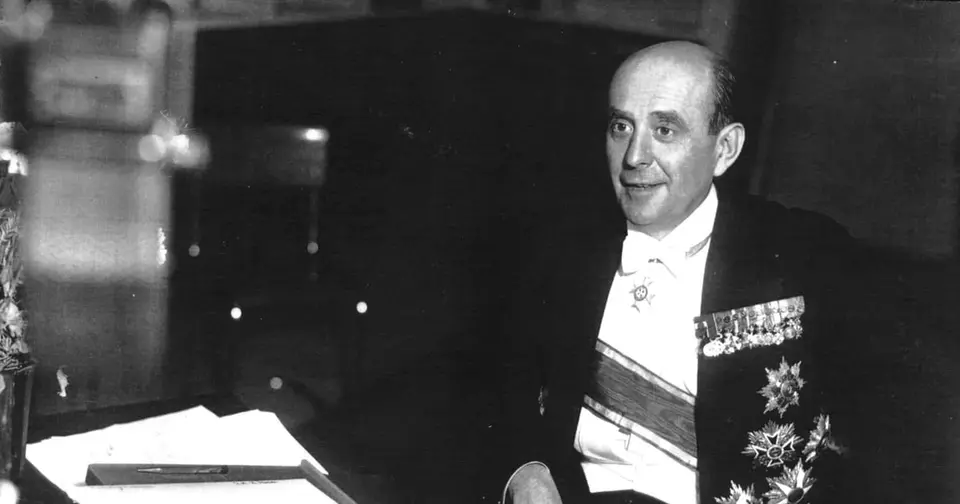
Jan Masaryk's death returns to the agenda: exhumation at Lány cemetery
Almost 80 years later, the death of former Czechoslovak Foreign Minister Jan Masaryk remains without a definitive answer. According to espanol.radio.cz, a team of experts began this week the exhumation of his remains at the family cemetery in Lány with the aim of analysing them using state-of-the-art forensic technology.
In the early hours of 10 March 1948, Masaryk was found dead in the gardens of Prague's Czernin Palace—the seat of the Foreign Ministry—dressed in his pyjamas, below the bathroom window. The communist authorities issued a terse statement that same day: "The Minister of Foreign Affairs, Dr Jan Masaryk, is no longer with us. To the sorrow of the entire Czech and Slovak nation and his family, he has voluntarily taken his own life this early morning".
The public never believed that official version. Popular belief held that Masaryk did not commit suicide, but was pushed from the window by the newly established communist regime.
Prague Prosecution reopens the case
The Prague Prosecution reopened the investigation in January of this year. Investigator and writer Václava Jandečková, who has been studying the circumstances of the death for years, believes that the exhumation could be decisive.
"It can be determined whether it was a gunshot wound or an unusual hole behind the right ear. There was also a laceration on the right temple. If there was a gunshot wound or some type of lesion behind the right ear, there could also be a bullet in the head," she said to Radiožurnál.
Jandečková is the author of the book The Masaryk Case and is convinced that the politician—son of the first Czechoslovak president Tomáš Garrigue Masaryk—was murdered.
Historians divided
Not all specialists share that conclusion. Historian Jan Kalous, from the Institute for the Study of Totalitarian Regimes, leans towards the suicide hypothesis. In his view, Masaryk's death was not convenient for the old regime.
"They needed him in that government at that time because he represented a certain degree of legitimacy for the newly established power. It was very good for the communists to be able to say: look, even Jan Masaryk, as the son of the founder of this state, agrees with us and is part of the government," Kalous argues.
The historian also notes that Russian archives—then Soviet—could contain answers, although they have not been declassified to date.
Three versions, one body
Over the decades, at least three theories about the cause of death have circulated: the official version of suicide; the hypothesis of being pushed from the window, in some cases accompanied by a prior gunshot to the head; and the possibility of a fortuitous accident. Historical testimonies have diverged for nearly eight decades without any clearly prevailing conclusively.
Lány cemetery closed for two days
On Wednesday morning, the team of experts began the exhumation work at the statesman's family grave. Lány cemetery, along with the adjacent car park, will remain closed to the public for two days. Police were deployed from early morning around the white wall of the grounds, and the small municipal cemetery was surrounded by vehicles. The bus stop located in front of the cemetery continues to operate.
The analysis of the remains seeks to identify material evidence that will allow the cause of death to be determined and, with it, close one of the most debated cases in contemporary Czech history.
Source: Google News ES — Crime (es)