'Chulco' in Ecuador becomes a tool for organised crime to control territory
'Chulco' has evolved from informal loan-sharking to extortion and criminal governance, with 16,130 cases in 2025, according to OECO. Extortion has increased by 898% since 2019.
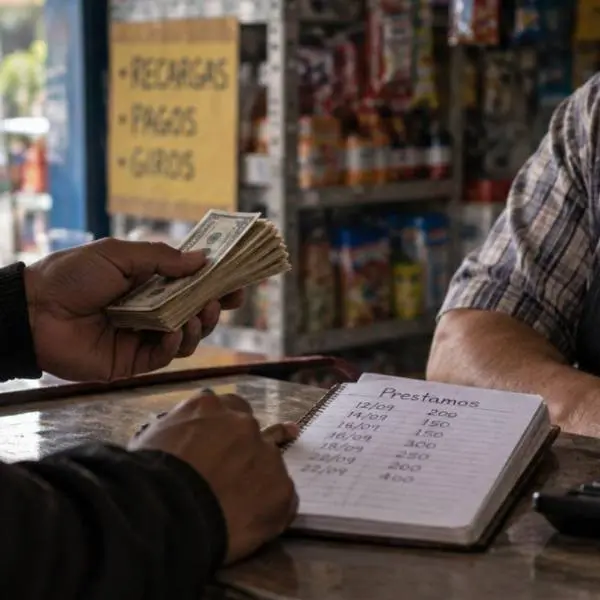
From informal loan to territorial control: how 'chulco' fuels organised crime in Ecuador
The informal loan known as 'chulco' or 'gota a gota' has ceased to be a simple usury mechanism and has become a strategic tool for territorial control at the service of organised crime in Ecuador, according to a report by the Ecuadorian Observatory of Organised Crime (OECO) released by vistazo.com.
The analysis recorded 1,933 crime reports (NDD) for usury between 2019 and 2025. In that same period, extortion increased by 898%, reaching 16,130 cases in 2025, equivalent to 89 per 100,000 inhabitants.
Geography of crime: two different maps
At provincial level, Tungurahua leads the national rate of 'chulco', followed by Chimborazo, Loja, Bolívar, Cañar, Orellana and Imbabura. Extortion, by contrast, predominates in Guayas, El Oro, Esmeraldas and Santa Elena.
In areas such as Latacunga, the rise in extortion coincides with a decline in usury reports, which—according to the report—"would point to a transition from informal loan collection towards territorial control".
A financial mechanism of crime
The OECO explains that illicit financing schemes operate as an element that "nourishes and strengthens the financial mechanism of organised crime, being important sources of income for its structure". They operate in two directions: as a destination for capital from illegal activities and as generators of new illicit funds.
"Organised crime groups accumulate vast amounts of cash from their criminal activities, which they aim to channel into the formal economy; and, at the same time, it represents an economic opportunity for them to generate returns on those resources", the report states.
The analysis identifies three types of usury in operation. In all schemes, failure to meet instalments activates the criminal structure behind the illicit financing, transforming the debt into a direct threat to the victim's physical integrity. Furthermore, 'chulco' itself can function as a trigger that pushes the victim to resort to further illegal financing to pay the extortion.
"They used to take their belongings, now they directly kill them"
Following several interviews conducted by the OECO, the organisation documented a drastic change in collection methods. "People no longer dare to report these crimes because they will be killed; previously they would take their belongings, now they directly kill them", stated a source consulted by the Observatory.
This behaviour demonstrates that 'chulco' not only serves to circulate illicit capital, but—according to the report—"as a strategic tool to establish a potential criminal governance".
Why victims fall into these networks
The analysis points to two main causes: the still limited use of formal financial services and the need to access credit immediately. Unlike banks, loan-sharks demand minimal bureaucratic conditions to disburse a loan; they typically request only a promissory note or a bill of exchange.
"It costs 50 cents at a stationery shop and can complicate your life forever", warned a source to the OECO.
The most vulnerable profiles are people in informal employment, female heads of household and older adults, who frequently are unaware of the real cost of the debt. However, the report also records cases of people with average incomes or consolidated economic activities who resort to 'chulco' to meet urgent liquidity needs.
OECO recommendations
The Ecuadorian Observatory of Organised Crime puts forward several recommendations to tackle the phenomenon, although the full report details four priority measures without all their details having been included in the reviewed publication.
Source: Google News EC — Crime