Police alarm in Málaga over rise in military-grade weapons and shootings on the Costa del Sol
The chief superintendent of Eastern Andalusia warns of a "time bomb" amid proliferation of military armaments among criminal gangs in Málaga.
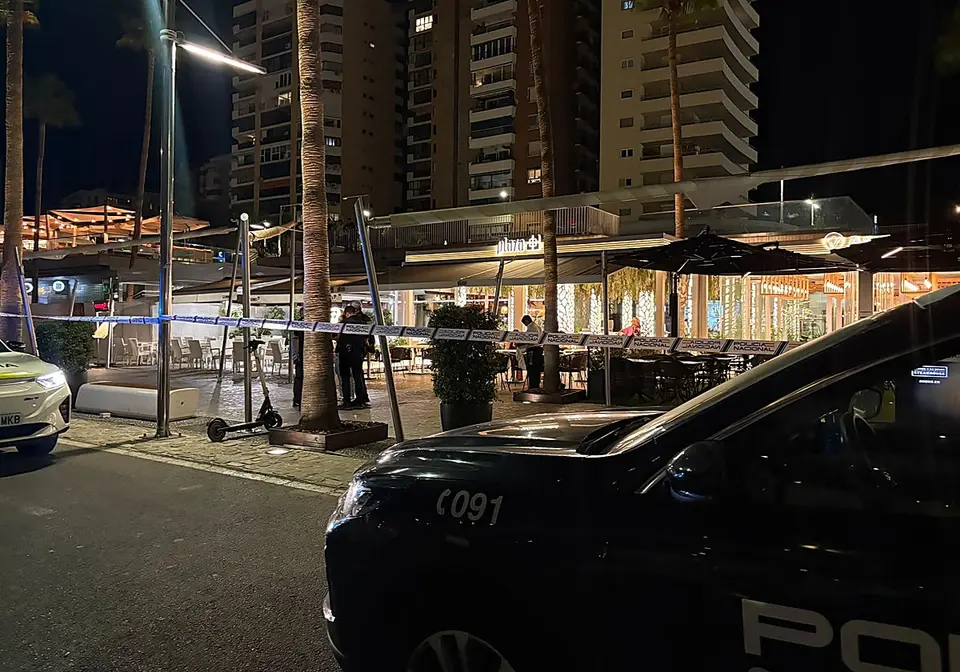
"A time bomb": police alert over military-grade weaponry in the hands of organised crime in Málaga
Diariosur.es reports that police commanders in Málaga have raised the alarm level over the proliferation of military-grade weapons among criminal organisations based on the Costa del Sol, a phenomenon that has transformed the area into a scenario of shootings with innocent victims.
"We have a time bomb under our feet," stated chief superintendent Luis Esteban, chief superior of Eastern Andalusia—with jurisdiction over Málaga, Granada, Almería and Jaén—during his visit to Málaga this week to hand over command to the new head of the National Police in the province, fellow chief superintendent Roberto Rodríguez. Esteban also demanded "more material and technical resources" to confront the threat.
Official statistics show that in the first six months of 2026, five fewer murders were recorded than in the same period of the previous year, and that 100% of homicides committed in the province over the last three years have been solved. However, the summer has been particularly violent and the perception of public insecurity has intensified markedly.
A criminal ecosystem without parallel
The Costa del Sol has established itself, according to police sources consulted by the newspaper, as a "unique ecosystem in the world" for organised crime. The strategic position of the territory for drug trafficking has attracted the main criminal groups from across the planet. "The heart of organised crime is on the Costa del Sol and if you don't have a presence here you're nobody," stated in an earlier interview with the same media a National Police officer with extensive experience in the fight against major criminals. Even the latest organisation to enter the criminal landscape of the province, of French origin, has already been detected in the area.
Specialist organised crime units have been warning for years that drug trafficking has transformed its internal logic, mainly due to the emergence of so-called "vuelcos": robberies of drugs or money between rival gangs. This dynamic has generated a spiral of violence that forces groups to arm themselves increasingly to defend their stashes and settle scores with those who steal from them.
Wars in Europe, weapons on Spain's streets
Police chiefs point to armed conflicts as the principal source of weapons supply for criminal organisations. The mechanism is well known: weapons used or recovered in war zones end up on the black market and circulate across Europe hidden in secret compartments of vehicles, taking advantage of free movement in the Schengen area. It happened with the Balkans war and is happening again with current conflicts.
The result is the appearance of military-grade weaponry in previously unimaginable contexts. In May last, a dispute between families in Cuevas Bajas—a municipality in Málaga province of 1,300 inhabitants—ended with dozens of submachine-gun shots fired at the facade of a house. In Huelva, an affray between clans has accumulated five shooting deaths since 2024, one of them uninvolved in the conflict, and hand grenades have even been used as a warning. In Seville, a projectile fired with a Kalashnikov during a brawl in the Las Tres Mil neighbourhood travelled three kilometres before striking in the heart of the city.
Innocent victims, the core of concern
The fear that police chiefs acknowledge privately does not focus on statistics, but on civilians caught in the middle of shootings. Nacho, a 20-year-old young man from Málaga with no connection to the criminal world, was murdered because criminals perceived him as a threat. A shooting at a restaurant on Muelle Uno in Málaga took place in front of dozens of customers who simply wanted to dine peacefully.
The list of innocent victims extends through time: Mateo Vallecillos, a 74-year-old pensioner, died in February 2020 in his flat in La Palmilla when struck by a stray bullet from a Kalashnikov whilst resting alongside his wife. In 2004, hairdresser Cóssimo Pizzi and José Manuel, a 7-year-old boy from Seville who had travelled with his family to Marbella for the Constitution Day weekend, died in a settling of scores to which they were completely unconnected. That crime remains unsolved two decades on.
Criminals increasingly young and increasingly armed
Police also detect in recent years a worrying trend: mafias resort to increasingly younger criminals, sometimes minors, taking advantage of greater leniency in the legislation affecting them. "They are expendable for the organisations and more easily replaceable," states one of the officers consulted. Criminal groups do not hesitate to train them in their countries of origin and place long-barrelled weapons—including assault rifles—in their hands for the execution of specific tasks.
The combination of greater financing, access to military-grade armaments and the use of young hitmen configures, according to police sources, a scenario whose danger exceeds the usual parameters of organised crime in Spain.
Source: Google News ES — Crime (es)