Former Plus Ultra CEO alleges SEPI pressure to relinquish shareholder control
Julio Martínez Sola claims SEPI demanded he surrender his rights in the company holding 51% of the airline. The state-owned entity has linked him to a money-laundering investigation.
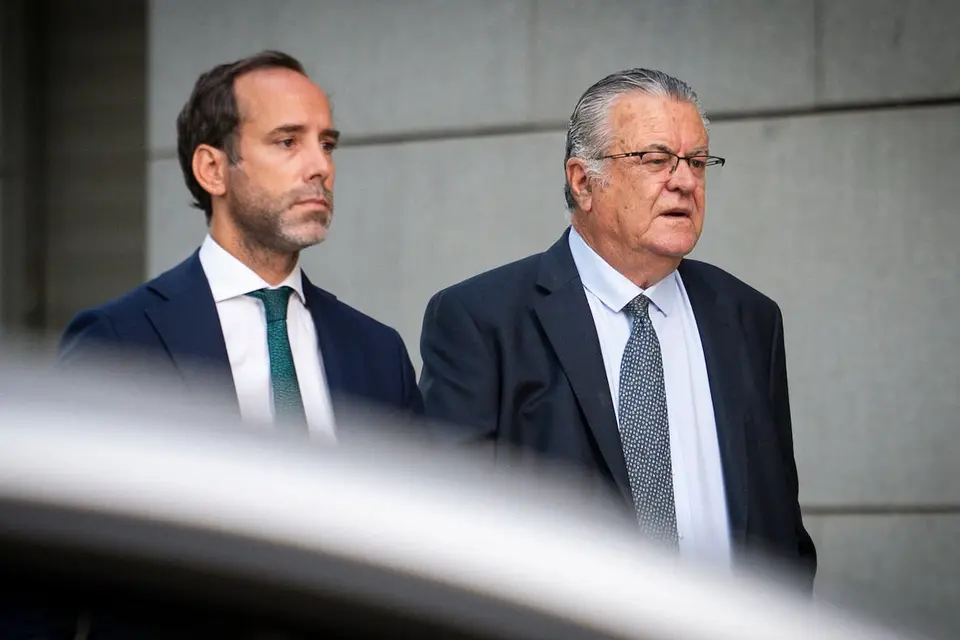
Former Plus Ultra CEO accuses SEPI of demanding airline control as condition for rescue
The former chief executive of Plus Ultra, Julio Martínez Sola, has filed a submission with judge José Luis Calama of the National Court in which he alleges that representatives of the State Industrial Holdings Company (SEPI) demanded his "irrevocable renunciation" of his shareholder rights in Sky Solutions SL, the company owning 51% of the airline's shares, according to El País.
Martínez Sola attributes this demand to his "collaboration with the judicial investigation" initiated in July by the former executive himself. In his submission, he asserts that SEPI made fulfilment of the commitments under the financial assistance contract—the €53 million rescue routed through the Strategic Companies Solvency Support Fund (FASEE)—conditional upon his surrendering his position in the shareholding.
"In order to protect the company, as well as its workers, clients and suppliers," Martínez Sola agreed to sign the deed by which he ceded control to businessman Jorge Hugo Castaño Vega, according to the defence submission. The deed, submitted by the investigated party himself to the case, makes no mention of the alleged reasons for his decision.
SEPI cites defence of reputation and viability
Sources close to negotiations between SEPI and the former Plus Ultra CEO indicate that the disassociation—both from management and shareholding—was requested in June. Those same sources note that the state-owned entity acted in defence of the reputation and viability of a company whose top executives had already been identified in December as part of an investigation into alleged money laundering.
SEPI's objective, which oversees FASEE, was to guarantee that the airline would remain operational and in a position to repay the participatory and ordinary credits. It should be recalled that Plus Ultra requested in March a postponement on the first repayment milestone due to the collapse of its results following the oil crisis. FASEE and the company are currently negotiating a new payment schedule subject to a viability plan.
Other sources consulted by El País point, however, to a different catalyst: relations between the parties became untenable when the founder of Plus Ultra acknowledged the payment of commissions to the circle of former prime minister José Luis Rodríguez Zapatero.
Shift in defence strategy: admission of commissions
In July, Martínez Sola and the airline's former financial director, Roberto Roselli, shifted their legal strategy by submitting separate statements in which they admitted the alleged payment of a commission exceeding half a million euros. Both had refused to testify at their first appearance before the judge in December. In early September, when they appeared before the National Court for a second time, they ratified those statements.
In them, the two former executives set out a detailed chronology: from the severe financial crisis that Plus Ultra faced in 2020, caused by mobility restrictions during the covid-19 pandemic, to obtaining state aid for survival. Both justified their decision to hire the consultancy Análisis Relevante, administered by businessman Julio Martínez Martínez, a friend of former president Zapatero, as stemming from a "desperate" situation.
According to the statements, in the Plus Ultra management it "was assumed that the company should contract with Mr Martínez Martínez for this purpose, aware that he had the relationship with Mr Rodríguez Zapatero, and also assuming payment of large sums of money—1%—for such work which, euphemistically, they called 'accompanying activities'".
First contact with Zapatero, at instigation of a Venezuelan businessman
Martínez Sola detailed in his statement that the first contact with the former socialist leader occurred at the instigation of Venezuelan businessman Manuel Fajardo, whom he describes as Zapatero's man in that country. According to his account, Fajardo conveyed to him that "the former prime minister José Luis Rodríguez Zapatero could help him" obtain financing to save the airline.
The next day, 30 April 2020, Martínez Sola received a call from a hidden number. It was Zapatero. In a conversation lasting around ten minutes, the then Plus Ultra president explained the company's difficult financial situation to him. Always according to the businessman's account, Zapatero responded that "his intervention could be helpful and that he would make the appropriate steps", and that from that moment on communications would be channelled through a person "of his trust": Martínez Martínez, the administrator of Análisis Relevante, the company at the centre of suspicions about the network of influence.
The case remains open at the National Court under the supervision of judge Calama, who is investigating the conditions under which Plus Ultra obtained the €53 million public credit during the pandemic.
Source: El País