Huesca Court releases suspect in Las Peñas de Riglos fire citing insufficient evidence
The Huesca Provincial Court ordered the release of the 28-year-old Colombian worker detained in connection with the largest fire in Aragon's history, considering the evidence against him insufficient.
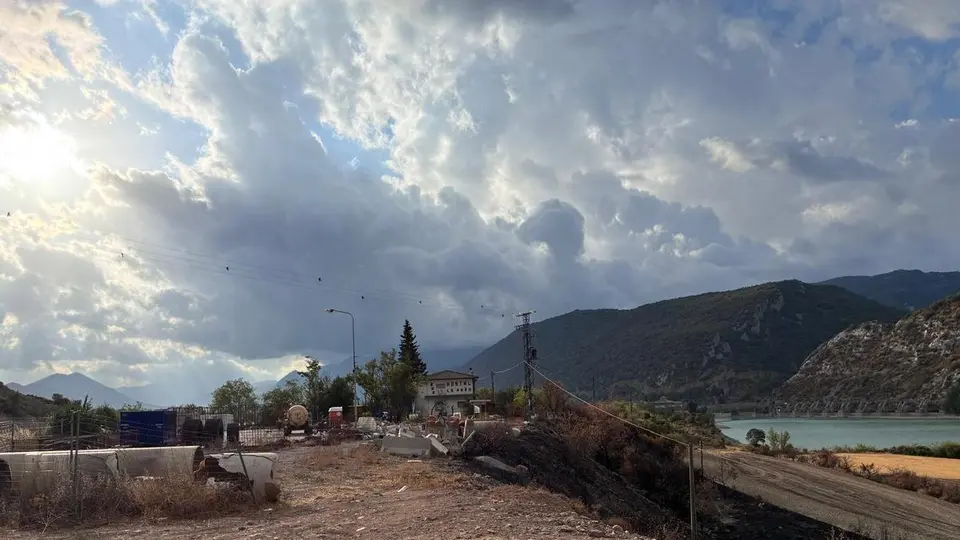
Release with precautionary measures for suspect in Riglos fire
The Huesca Provincial Court decided on Wednesday to release the worker under investigation as the alleged perpetrator of the Las Peñas de Riglos fire, the most devastating blaze recorded in Aragon's history, which burned 14,500 hectares and affected a further 4,000. According to Google News ES — Crime, the tribunal found that the evidence provided against the detainee is "insufficient" to justify his imprisonment.
The suspect, identified as P. A. M. U., is a 28-year-old young Colombian who had been in Spain for "a few weeks" at the time of the incident. The fire originated in a materials storage area of the A-132 road reform works and advanced uncontrollably for several days, reaching into the heart of the Kingdom of Aragon and the vicinity of Peña Oroel.
Presence at the scene, but without direct proof
The release order, drafted by magistrate Iván Oliver, acknowledges that P. A. M. U. is "the person who was closest to the location where the fire started". Security camera footage also corroborates that "he was loitering" in that area "very close to the point where the first flames appeared one minute before".
However, the Court emphasises that in these images "it is not observed that the appellant set any fire". The tribunal also points out that the place where the suspect was filmed crouching does not exactly match the point where the first flames were detected, and that at that initial moment the suspect "is several metres away". This is compounded by the absence of direct witnesses.
Regarding the probative value of the footage, the magistrates regret that "they are not continuous", as the cameras are activated by motion sensors, which in their view prevents demonstrating either his "passivity" or his "failure to act".
The tribunal does not rule out that he attempted to raise the alarm
The order also notes that in the images, the suspect is observed using his mobile telephone, and therefore the Court does not rule out that "he was trying to raise the alarm about the fire, as he stated". Less than a minute after the first flames appeared, a truck with two work colleagues arrived, and from that point onwards, the personnel, including P. A. M. U. himself, searched for fire extinguishers and attempted to extinguish the fire.
The cause of the fire is also not "sufficiently" established, according to the tribunal. The only available report is described as "quite brief" and merely indicates that the origin of the fire is compatible "with the direct application of flame to the fuel". The magistrates furthermore criticise the fact that this report does not take into account "the possible alteration of the scene", given that several workers intervened from the very beginning. The suspect himself stated that, together with two supervisors, they removed an aerosol from the site; a claim that the tribunal acknowledges is "not proven", but which it also does not consider "far-fetched".
"It appears as something reasonably probable that the work personnel could have been able to remove items that might have been inconvenient," the Court reflects in the order.
Precautionary measures whilst investigation continues
Despite the release, the Huesca Provincial Court imposed a series of precautionary measures on the young Colombian. He is prohibited from leaving Spanish territory and must surrender his passport, establish a fixed address, and provide a telephone number so he can be contacted. Additionally, he must appear and sign in at the Court of Guard every Monday, Wednesday, and Friday, given his lack of ties in Spain.
The investigation continues in a preliminary phase. The defence counsel, Marco Antonio Navarro, had argued to the tribunal the insufficiency of the evidence to maintain the detention, a position which the Court has ultimately shared.
Source: Google News ES — Crime (es)