Moroccan migrant alleges abduction and torture by Spanish soldiers in Ceuta
A Moroccan migrant accuses Spanish soldiers of abducting and torturing him for hours in Ceuta. The Moroccan Human Rights Association published his testimony.
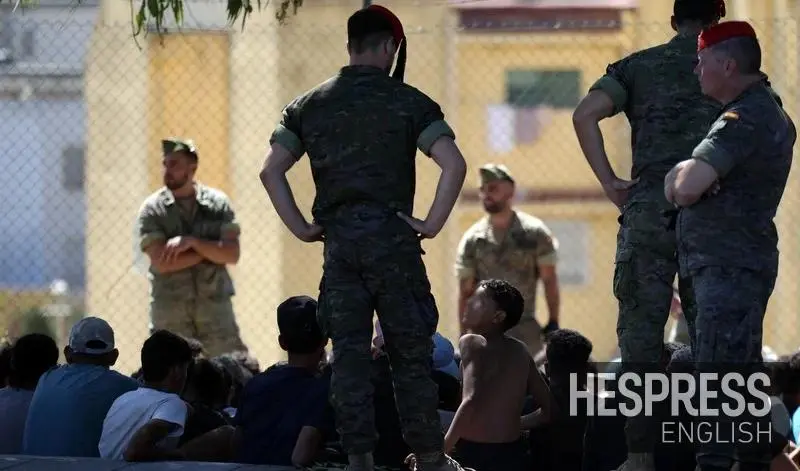
Moroccan migrant recounts alleged torture by Spanish soldiers in Ceuta
The Nador branch of the Moroccan Human Rights Association published a recorded testimony from a Moroccan migrant in which he claims that Spanish soldiers abducted and tortured him for hours in the city of Ceuta, according to Hespress.
The man, whose identity was not disclosed, said the incident occurred on 12 September at approximately 8 p.m., when four soldiers approached him in a public street and asked him to accompany them to an isolated location on the pretext of speaking with him.
After he refused, the man claims that the officers bound him and forced him to the ground, then transported him in a military vehicle to a deserted area where they began beating him. According to his testimony, they directed repeated blows to his head, face, eyes and stomach.
The migrant added that one of the soldiers threatened to take him to the forest and rape him, while another soldier threatened to shoot him and kill him. The alleged assault continued for approximately two hours, with the man claiming that one of them used a sharp object to injure his back, as well as burning his hand four times and his leg once with cigarettes they had in their possession.
The migrant was later taken to a forest, where he asserts that the assault continued and included kicking and beating to his limbs and threats to break his limbs. He also pointed out that the soldiers threatened to kill him if he reported the incident, claiming they had the ability to reach him in Morocco through criminal contacts they had connections with.
The Moroccan Human Rights Association affirmed that publishing this testimony is part of its efforts to document alleged violations against Moroccan migrants in Ceuta, in the context of wider concerns raised by migrant rights organisations regarding their situation in the city.
It was not possible to independently verify the identity of those accused or to corroborate the migrant's account, as the matter remains contingent on any investigation conducted by the competent Spanish authorities to determine whether violations actually took place.
Source: Hespress