Orio honours the memory of Lourdes del Hoyo, killed by her ex-partner in 2023
The Gipuzkoan municipality held a summer course on community reparation following the gender-based murder. More than 300 people received psychological support in the first 15 days.
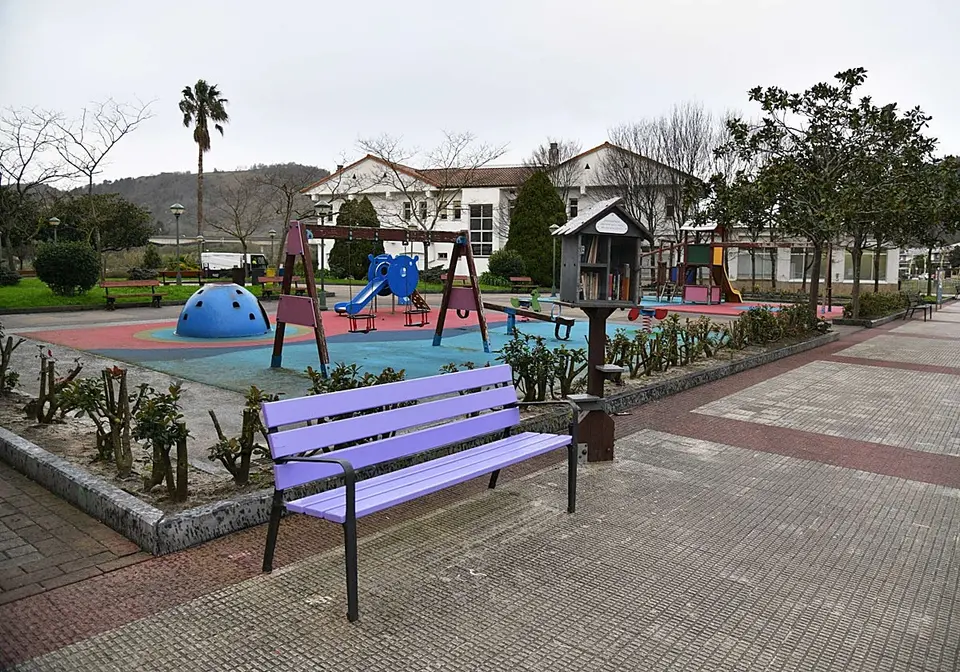
Three years of grief and reparation in Orio following Lourdes's gender-based murder
On 16 May 2023, at 17:00, Alberto Casado fired at Lourdes del Hoyo whilst she was reading on a bench next to a park in central Orio. The murder, committed in broad daylight by the victim's ex-partner, shocked the Gipuzkoan municipality and left scars that persist to this day. According to diariovasco.com, three years after the crime, the Palacio de Miramar hosted a Summer Course organised by the UPV/EHU by Emakunde, focused on the new challenges of gender-based violence and the local reparation processes promoted by the Orio town council.
The mayor of Orio, Anuska Esnal, and Saioa Iraola, equality officer for the town council, participated as speakers. Esnal acknowledged that "this subject has rarely been discussed in such an open way". Both appeared visibly moved when recalling what had happened. "It was a tremendous shock for everyone, immense pain," said the mayor, who stressed that one of the council's first measures was to offer psychological support to anyone who needed it.
"It was a very difficult process. And it still is, because it has marked us as a community," Esnal said. The impact of the crime was not limited to those close to the victim or the perpetrator. "We are talking about two local people, both victim and killer, and their families, their friends, all the witnesses who witnessed that horrible event," the mayor noted. This was compounded by the rapid spread of very graphic images of the incident, which according to the speakers proved "very difficult to digest".
More than 300 people attended in 15 days
Experts Norma Vázquez and Sheila Malcon, from the gender-based violence consultancy Sortzen, explained how they responded from the first hours. Hours after the murder, they answered the mayor's call and launched a crisis support service. In just fifteen days, "we supported more than 300 people," they stated. Each case presented "its own pain, its traumas, its concerns," but all those people needed to be heard.
The situations they described reflected the breadth of collective harm. There were children asking their mothers whether their fathers would also kill them. Teachers who did not know how to respond to a pupil playing in the park next to the bench where Lourdes was murdered. Direct witnesses to the crime. Relatives and friends of the perpetrator who did not understand how they had not detected signs of what would eventually happen. For all these people, the speakers agreed, "the most important thing is to talk about what has happened, to name it and to listen to each other".
The bench painted purple, a symbol of memory
The town council rejected from the start requests to remove the bench where Lourdes was murdered. Some residents argued that passing by that place reminded them of the crime. For Esnal, that was precisely the reason not to remove it: "Removing the bench would be trying to erase what happened and trying to forget it. On the contrary, what we must do as a community is keep Lourdes's memory alive and continue fighting against gender-based violence."
The final decision, taken together with the victim's family, was to keep the bench in its original location and paint it purple. The everyday object has become a permanent symbol of the crime and a reminder to anyone passing by that a neighbour was murdered there by her ex-partner. Three years later, the bench remains in the same spot.
A farewell charged with emotion
The speakers closed the event visibly moved whilst "Respirar" by Eva Sierra played, a song about facing pain and embracing it in order to overcome it. Emotion was also evident among those present. A resident of Orio who had also witnessed the murder spoke to thank those involved in the work carried out in those days. "The work you did during those horrible days deserves gratitude. All of Orio is grateful," she said before embracing the four speakers.
The event underlined that community reparation following a gender-based murder does not end with the judicial process, but rather requires listening, memory and sustained collective action over time.
Source: Google News ES — Crime (es)