Melitón Manzanas: Francoist torturer, first person killed by ETA and his connections with the Gestapo
Manzanas was chief inspector in San Sebastián, a recognised torturer and ETA's first fatal victim in 1968. Declassified documents reveal his connections with the Third Reich.
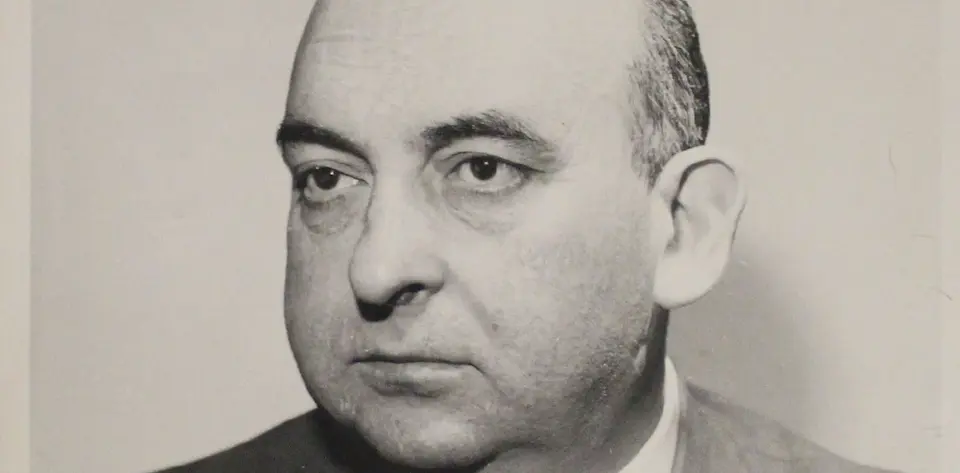
The Francoist police officer between legend and OSS documents
According to theconversation.com, Melitón Manzanas (1909–1968), chief inspector of the Social Investigation Brigade in San Sebastián, occupies a singular place in recent Spanish history: he was a recognised torturer and, at the same time, ETA's first premeditated fatal victim. Decades before the terrorist organisation brought him down at his front door on 2 August 1968, his career had been intertwined with agents and collaborators of the Third Reich.
Police career and interrogation methods
Manzanas joined the Investigation and Surveillance Corps in 1939—renamed the General Police Corps in 1941. His first significant posting was to the Irún police station, a key point on the Spanish-French border during the Second World War. With the rank of third-class agent, he was responsible for intelligence work at customs, combating smuggling, and surveillance of people's movements.
Agent Juan García Herrero (alias T-12), from the Intelligence Service of the Republican Government in exile, noted in the nineteen-forties that Manzanas collaborated with Segunda Bis—Francoist military intelligence—, providing information about goods and individuals crossing the border.
During that same decade he combated organised black-market trading by passeurs such as Timoteo Plaza and Florentino Goikoetxea, collaborators in evasion networks and Republican intelligence organisations. Segunda Bis, aware of those movements, set up surveillance groups at various border points; Irún was one of them, and Manzanas participated in several raids there.
One of the most documented took place on 19 April 1942 and resulted in the capture of Manuel Iturrioz, a smuggler linked to the Comète Network—the Franco-Belgian organisation that evacuated allied combatants pursued by the Nazis. According to the sources consulted, Manzanas and police officer José Bazán interrogated and tortured Iturrioz over three days.
In July that year he was promoted to second-class agent. A dossier from the Intelligence Service of the Republican Government, dated April 1946, described him as "one of the officials most notable for his cruelty and persecutions", and identified him as "the trusted man of Julio Ortega Tercero and the visible leader of Segunda Bis". The Basque Intelligence Service (SVI), an espionage organisation of the Basque Government in exile, issued assessments along the same lines.
The final years and ETA's assassination
In the final stage of his life, Manzanas directed an intense campaign of arrests and repression against activists of Workers' Commissions, Euzko Gaztedi—the youth wing of the PNV—and ETA. The terrorist organisation responded by assassinating him on 2 August 1968 in front of his house.
To justify the attack, publications from radical Basque nationalism such as Gudari and Zutik disseminated testimonies about his degrading methods and emphasised his alleged links with Nazi Germany. That narrative was amplified during the Burgos Trial of 1970, in which those responsible for his death were judged. Lawyer Gisèle Halimi worked on projecting the trial internationally and edited Le Procès de Burgos (1971), with a preface by Jean-Paul Sartre. Advised by ETA member José Antonio Etxebarrieta, they introduced into the narrative the accusation that Manzanas had collaborated with the Gestapo in "hunting operations" of Spanish republicans in southern France.
Those assertions passed into collective memory. Different authors reproduced them without providing evidence, even going so far as to equate him with Pedro Urraca Rendueles, nicknamed "the hunter of reds".
Declassified documents and the connection with the Third Reich
The periodic declassification of documents by the United States Department of State in the National Archives (NARA) has made it possible to access reports that do link Manzanas with agents of the Third Reich, although with important nuances regarding the legend constructed around him.
These are dossiers prepared by the SVI for the Office of Strategic Services (OSS)—the forerunner of the CIA—within the framework of Operation Safehaven (1944–1948), launched by the Allies to track goods and persons associated with the Nazi regime.
One of those reports indicates that Manzanas, together with agents Máximo Palenciano, José Bazán and Juan Marcos, worked "with special fervour on behalf of the Germans, following orders from the Gestapo" and provided "substantial services" during the occupation of France. The information is sparse, but significant: it fits within the mechanisms used by Nazi Germany to evade Allied economic warfare, mechanisms in which—out of convenience, ideological affinity or obligation—officials, businessmen and a considerable part of the Francoist apparatus participated.
Another document elaborates on Manzanas's role, identified as the "trusted man" of agent Heinrich Bauer. This was the alias of Belgian collaborator Georges-Henri Delfanne, known as Masuy, a prominent figure in the networks of collaboration with the Nazi occupation in France.
Between myth and documentary evidence
An analysis of the available sources depicts Manzanas as a police officer who employed brutal methods systematically and who maintained contacts with structures linked to the Third Reich on the Spanish-French border. However, the image of an active Gestapo agent dedicated to hunting republicans in France—as ETA and its defenders disseminated in the nineteen-seventies—finds no support in concrete documentation.
What is confirmed is his participation in raids that affected Allied evasion networks, his collaboration with Francoist intelligence, and his violent interrogation methods, recognised by multiple contemporary sources. The distinction between these proven facts and the unproven accusations is what separates historical reality from the legend constructed to justify his assassination.
Source: Google News ES — Crime (es)