Journalist paid 1,400 euros and crossed the English Channel on a migrant boat: accusations against French police
British journalist Christian Drogan infiltrated a smuggling network and crossed the English Channel on a migrant boat. Večernji list reports that Drogan accused French police of helping smugglers return to shore.
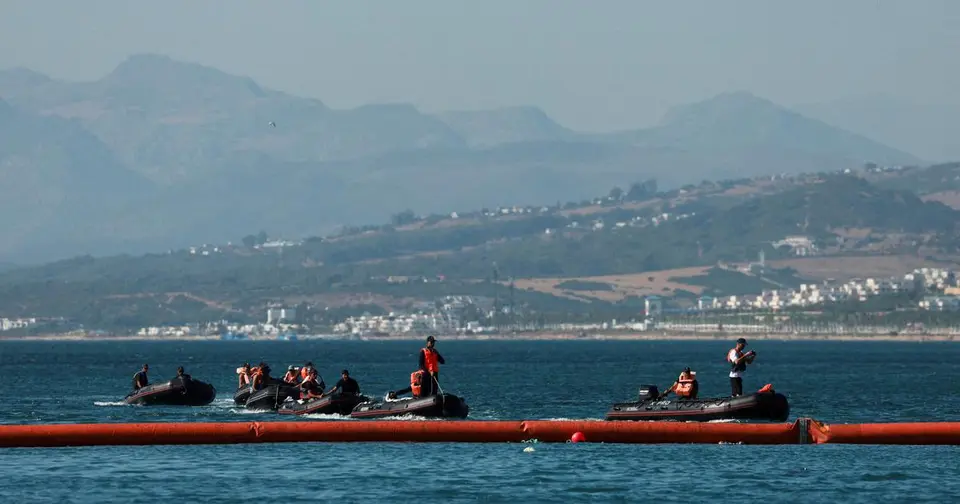
Journalist crossed the Channel on a migrant boat and accused French police of collaborating with smugglers
British journalist Christian Drogan from Watchman Media boarded a migrant rubber dinghy that departed from France towards the United Kingdom, having spent nearly a year investigating smuggling routes across the English Channel. He published his experience in The Telegraph on 25 August, with Večernji list reporting key details from that investigation.
Drogan paid a smuggler 1,400 euros for the crossing. As he describes it, initially he used various identities when communicating with the smugglers, but eventually told them he was a Briton who had been hiding in Spain and needed to return to the UK. "In the end, I found an agent who was willing to take a risk with an English 'brother'," the journalist wrote, noting that he subsequently received contact details for a person who was to direct him to the departure point.
A week's walk and nights in forests
The journey to the coast was marked by multiple transfers between locations. Together with other migrants, Drogan travelled by bus and train, walked kilometres through sand dunes, and slept in forests and parks. On one day, he claims to have taken 42,000 steps.
After receiving notice that the crossing would take place the following day, he was directed to a camp in the forest. In the morning, the smugglers gave the signal to depart. On the beach, according to his account, chaos ensued — migrants ran towards the boat. Carrying a waterproof bag and Meta glasses with a built-in camera, Drogan managed to board. In the crush, a woman fell and was nearly trampled. "I heard her screaming and found her hand, shouting at the men to move while I pulled her up," he states.
Boat punctured, second attempt succeeds
But the voyage barely started: the motor broke down, and according to Drogan's account, a French police officer entered the water and punctured the vessel with a sharp object. On the shore, other police officers, he claims, held weapons pointed at the boat. The passengers returned to shore. "Somewhere amid the chaos, I saw a smuggler being demonstratively arrested. Desperately wanting to avoid authorities stopping and searching me, I ran for cover. Once I was out of sight of the authorities, I collapsed on the sand. Completely exhausted, I fell asleep," he recalls.
Already the next day, he got another opportunity. The second boat had a more powerful motor, and there were 36 people in it, including the journalist. During the crossing, several people attempted to leave the boat, which Drogan initially interpreted as seasickness. But he soon concluded that these were smugglers who had boarded to check the passengers. "Among all the long brown limbs, my pale white leg gave away the outsider, but as far as my fellow travellers were concerned, I was one of them. Connected by a shared purpose, we had developed a strong spirit of community. Because now we were literally in the same boat — 36 exhausted but cheerful brothers setting out for a new life in the UK," he wrote.
Accusation: French police made it easier for smugglers to return
The most serious claim in Drogan's article concerns the behaviour of French authorities. According to his account, smugglers who were in organisational roles called a nearby search and rescue vessel by radio, after which a police boat reached them and took them back to shore. The Telegraph notes that this is Drogan's personal observation, not an independently verified claim.
"What I witnessed as we moved towards the open sea bordered on the absurd: French police had apparently made the job easier for them by returning them to shore. As we sailed towards the English Channel, I watched in disbelief as individuals who were openly running the show on our dinghy used the radio to call a nearby search and rescue vessel and request to be landed. A minute or two later, a police boat pulled up alongside our dinghy, and the smugglers nimbly jumped on to it. After a cursory check, they were sent back to dry land. If I — an ordinary passenger — could see what was happening, why on earth couldn't the responsible authorities?" the journalist writes.
In his year-long investigation, Drogan also described a pattern of behaviour he observed: smugglers board dinghies together with migrants to check that no unauthorised person has slipped on board, and then abandon the vessel while it is still in shallow water, feigning exhaustion and hypothermia and staggering on to shore to avoid police searches. "I saw them feigning exhaustion and hypothermia while staggering on to shore, only to scamper off laughing once the gendarmes turned their backs. Their theatrics would be funny if all of this were not so serious," he recounts.
Reception in Dover
They spent approximately seven hours at sea. Upon arrival in Dover, officers from the British Border Force quickly recognised that Drogan was different from the other passengers. One official, according to his account, called out to him: "You're on the wrong boat, mate!"
Source: Večernji list