Dati trial: ex-MEP defends dual role amid lobbying suspicions for Renault
Rachida Dati was questioned for more than four hours at Paris's correctional court on her activities as a lawyer for Renault during her European parliamentary mandate.
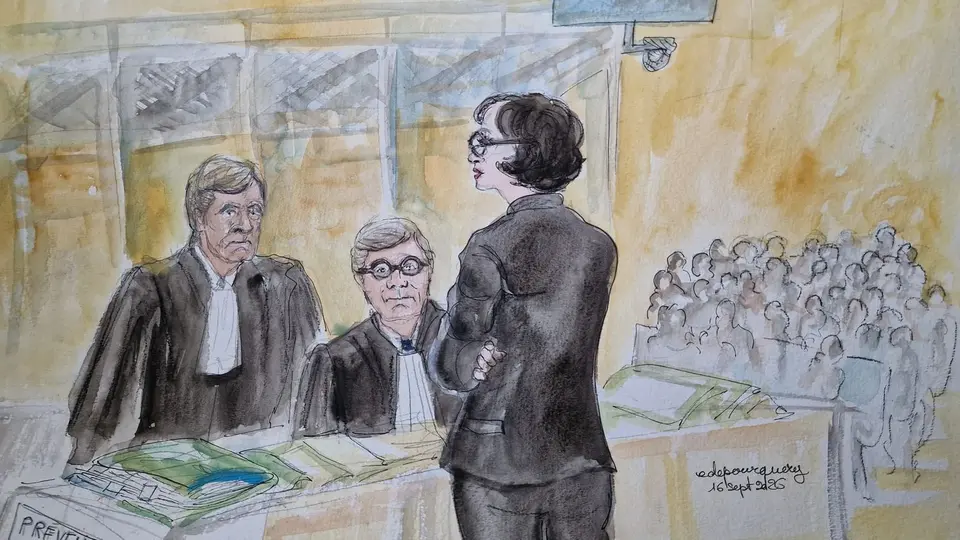
Dati takes the stand: "I was never in a situation of conflict of interest"
Rachida Dati appeared on Monday 21 September before the correctional court in Paris for the third day of her trial on corruption charges. According to France Info, the former MEP was questioned for just over four hours on how she simultaneously exercised her European parliamentary mandate and a remunerated legal practice for Renault-Nissan.
The court president, Claire Saas, centred her questions on Rachida Dati's first term in the European Parliament, between 2009 and 2014. The prosecution suspects the former elected official of having served, in the words of the investigating judges, as a "Trojan horse for Carlos Ghosn and Renault within the European Parliament", in exchange for 900,000 euros paid over three years in legal fees.
Dual activity acknowledged, late declaration
Rachida Dati began her legal practice on behalf of the car manufacturer in February 2010, a year and a half after taking her oath as an MEP. She did not notify the European Parliament of this activity until 19 months after taking office. "Nothing was done too late or omitted," she replied to the court president. Her declarations "were regular" and "respected the rules of the European Parliament," she maintained.
Claire Saas recalled that the code of conduct in force at the time was already explicit: MEPs were prohibited from concluding any agreement leading them to "act or vote in the interest of a third party, whether natural or legal person" and were required to "avoid any situation of corruption". In case of doubt, the text provided for the possibility of consulting the Advisory Committee on the Conduct of Members.
When asked about her failure to use this committee, Rachida Dati maintained her position: "I was never in a situation of conflict of interest. All the acts of my office were carried out in line with my mandate, and without any link with my client, which was Renault-Nissan." She added: "No one ever asked me to take any lobbying action within the European Parliament."
Seventy-two written questions, three on the automotive sector
The court president noted that Rachida Dati had written 72 written questions during the 7th legislative term, three of which concerned the automotive sector. These three questions constitute, according to the magistrates, the counterparties to the alleged corruption pact with the former CEO of Renault.
The defendant contested any direct involvement: these questions were, according to her, drafted by her parliamentary assistants, who "identified a subject linked to current events". She also stated that she had "never met any member of the lobbying office, never met a representative of the alliance, or of Renault, on these parliamentary questions". Rachida Dati moreover acknowledged that she had been "rarely present" in Strasbourg and Brussels: "I did not live there, I did not sleep there."
The question of vehicle noise levels
The court president then asked Rachida Dati why she had transmitted to Carlos Ghosn a written question concerning vehicle noise levels, and whether this question had been addressed to all car manufacturers. The former MEP did not answer directly.
The hearing took a more delicate turn when Claire Saas mentioned a "white note" found in a blue folder bearing the initials of Carlos Ghosn. Documents were projected onto the screen in the courtroom. An email dated 8 February 2013 showed a parliamentary assistant of Rachida Dati submitting to her a handwritten note: "We achieved a great victory this week in Strasbourg on the text concerning vehicle noise levels."
Rachida Dati disputed the term "white note", preferring to speak of a "handwritten message addressed to the entire sector". She stated that it was a draft of her newsletter, fed with information collected "from open sources". But when the newsletter in question was displayed on screen, the word "automobile" did not appear in it a single time.
Foreign missions with no documentary evidence
The court president also questioned Rachida Dati on her activities in Morocco, Turkey, Iran and Algeria, conducted under the terms of her legal practice agreement with the company RNVB. The defendant stated that she had retained no documents relating to these missions. She referred to a personal notebook on which she recorded the progress of her cases, without being able to present its contents to the court.
Throughout the hearing, Rachida Dati maintained an assured pace of speech, although sometimes accelerated—a sign, according to France Info, of discomfort with the president's questions. Claire Saas, for her part, continued her questioning in an even tone, without easing the pressure on the dark areas of the case.
Source: France Info