Renault-Nissan trial: Rachida Dati denies conflict of interest after four hours of questioning
On the third day of her trial for corruption, Rachida Dati defended her role as lawyer for Renault-Nissan, invoking attorney-client privilege in response to questions from the court.
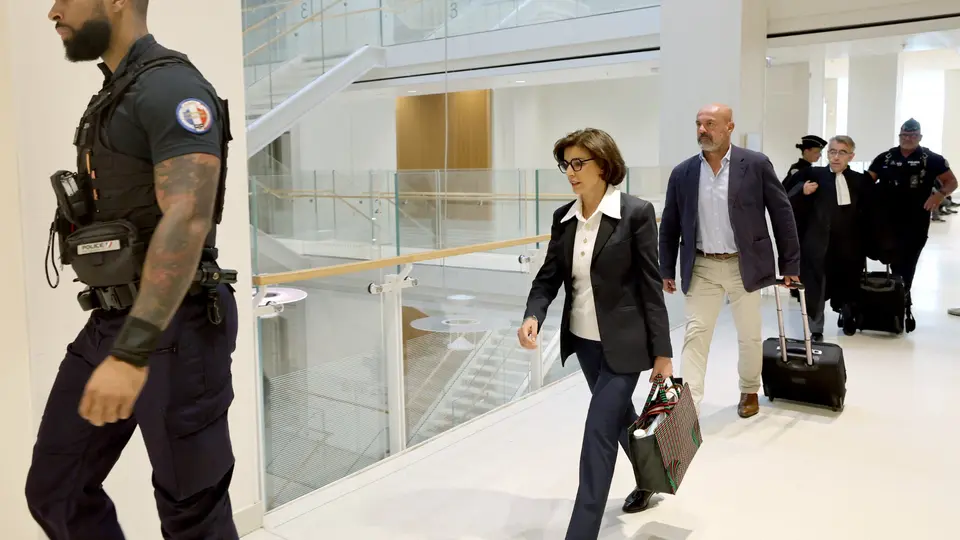
Rachida Dati before the court: four hours of questioning on her ties with Renault-Nissan
According to BFM TV, Rachida Dati appeared on Monday 21 September for the third day of her trial before the Paris correctional court, prosecuted for "passive corruption" and "passive trafficking of influence" in the Renault-Nissan affair. The questioning, conducted by the presiding judge, lasted more than four hours.
Sitting rigidly in the witness box, the former keeper of the seals answered questions in a weak voice about her position and role within the European Parliament. The judge reviewed the institution's internal regulations article by article, notably the provisions relating to conflicts of interest.
Attorney-client privilege as a shield
The presiding judge noted that Rachida Dati had not declared to the European Parliament that she was receiving 25,000 euros per month from a Renault-Nissan subsidiary. The former minister defended herself against charges of breaching the rules, invoking attorney-client privilege to justify the absence of the group's name from her declarations. "For lawyers, you cannot declare the names of clients. You are subject to professional secrecy," she said.
The presiding judge continued her questioning methodically: why did her first questions to Parliament concern the automotive industry? Why had one of them been transmitted to Carlos Ghosn before it was even published on the Parliament website? Each time, Rachida Dati denied having acted in Renault's favour within the parliamentary chamber.
A "fine victory" at Parliament screened by the court
The court decided to screen a "white note" drafted by Rachida Dati's assistant, in which mention was made of "the fine victory obtained at Parliament" on the matter of sound levels for electric vehicles. This document was intended for Carlos Ghosn.
Faced with this document, the former minister maintained her line of defence: her intervention for Renault was limited to the Middle East and the Maghreb, not Europe.
A role claimed in Morocco, Iran and Turkey
On the geographical aspect, Rachida Dati stated that she had participated in a "high-level" working group in Morocco, which would have facilitated the establishment of the Tangier factory, representing an investment of 1.1 billion euros. The presiding judge noted that she was the only Renault representative in this group, that the meetings were held at the Moroccan embassy in Paris, and that she had not attended the factory's opening.
On Iran, Turkey and Algeria, she stated she had played "a major role". "I identified the key people to maintain Renault's investments in Iran. When I intervene, the decision-makers in Iran had closed Renault's factories in the country," she explained. She added that she had kept no record of these activities, citing the sensitivity of the subjects. The court found itself unable to verify these claims.
"I am not an amateur"
At the end of questioning, Rachida Dati rejected the hypothesis of a misunderstanding with Carlos Ghosn about the scope of her mission. "No, we are talking clearly about the Maghreb. If it had been something else, obviously I would have refused. At no point do we mention Europe. I am not an amateur. I have had other clients, including at the same time," she assured.
She also questioned the logic of corruption for three parliamentary questions. "Carlos Ghosn transformed Renault. He had expectations, they were results. All the factories in the world, they inaugurated them with heads of state. He did not need me for three questions in Parliament," she stated.
Source: BFM TV