"They treated me like a worm" – exhibition opens on forced sterilisation of Romani women
At a roundtable discussion in Budapest, Katalin recounted that she claims she had her fallopian tubes removed without her consent in 2004. According to an account presented by HVG, the phenomenon has not ceased in the 21st century.
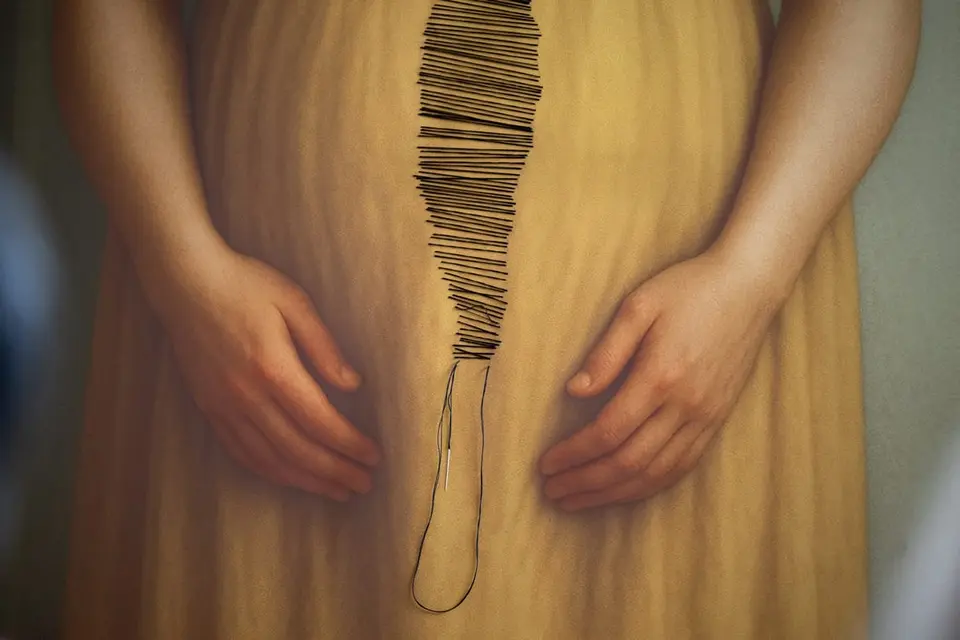
Exhibition and roundtable for forced sterilisation victims
According to HVG, a roundtable discussion on the forced sterilisation of Romani women was held at the Europa Pont in Budapest, accompanied by a presentation of a fine arts project. At the event, Katalin, a Roma woman from Borsod county, spoke, claiming that her fallopian tubes were removed without her consent or knowledge in 2004.
"They treated me like a worm, even though I was orderly like everyone else," Katalin said at the roundtable.
According to Katalin's account, she was admitted to hospital due to an ectopic pregnancy, where she agreed with her doctor on a laparoscopic procedure – a minor surgical intervention performed with a camera through a small incision, which allows for faster recovery. The doctor promised to spare the remaining fallopian tube, as the other had already been removed previously. Nevertheless, according to Katalin's claim, the second fallopian tube was also cut, but she was not informed about this.
For six years she tried to become pregnant again, then changed doctors. From the new doctor she learned that both her fallopian tubes were missing. She then underwent three unsuccessful in vitro fertilisation programmes.
"They ruined my life, I cannot process it to this day," she said.
She took legal action only after the case had been time-barred – there would have been a five-year window for filing a complaint. Katalin also spoke of hearing about similar cases from other Romani women, and of regularly experiencing discriminatory treatment during healthcare screenings. She and her supportive husband struggled for 17 years to have a child.
According to Katalin's own account, she would not have willingly undertaken public appearances, yet she participated in the event to draw attention to discrimination affecting Romani women. "We deserve normal care, we are just like anyone else," she said.
Rigová's project and broader context
The fine arts project associated with the event was created by Emília Rigová, a Slovak Roma artist, who was born as the last child of her mother – her mother was forcibly sterilised after giving birth. In her work Unregistered Cases, Rigová processed this personal and collective trauma.
HVG recalls that the tying of fallopian tubes without consent is not solely linked to the legacy of Nazi Germany. Similar cases have been documented in Czechia and Slovakia, and such procedures may have occurred in a hospital in Borsod county as recently as the 2010s. Slovakia formally apologised to affected Romani women in 2021.
Victims often remain silent about what happened even before their own families, so as not to have to relive the pain, according to HVG's report.
Source: HVG