Lawyer for Ukraine's Money Couriers Demands Resignation of Chief Prosecutor Bálint Nagy
According to the law firm, the chief prosecutor bears personal responsibility for the preparation and execution of the March raid. According to Telex, the operation against the convoy was ordered for political reasons.
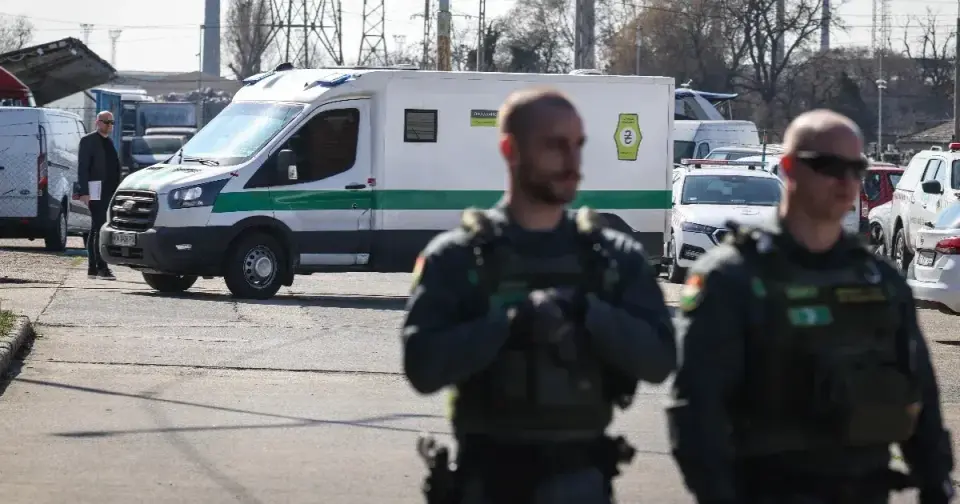
Lawyer for Ukrainian Money Couriers Calls for Resignation
The Dr. Horváth Lóránt Law Office – which represents the Ukrainian money couriers – has issued a statement demanding the immediate resignation of Chief Prosecutor Dr. Bálint Nagy Gábor. According to Telex, the statement responds to information that Prime Minister Viktor Orbán himself ordered the raid against the Ukrainian "gold convoy", and that the government determined the timing of the operation.
"In our assessment, given the developments surrounding the seizure of the Ukrainian cash shipment, the position of Chief Prosecutor Dr. Bálint Nagy Gábor has become untenable" – states the law firm's communiqué. The statement says that in order to restore public confidence, the chief prosecutor must immediately resign from office and allow for an independent, transparent and comprehensive investigation to be conducted.
Three Agencies, One Political Order
According to the law firm, the operation against the Ukrainian convoy was prepared by three organisations, allegedly on political orders. The listed bodies are: the Constitutional Protection Office (whose director general is Dr. Szabolcs Bárdos), the Chief Prosecutor's Office (headed by Dr. Bálint Nagy Gábor) and the Counter-Terrorism Centre (TEK, previously under the direction of János Hajdú).
The firm recalled that on 4 March 2025, Prime Minister Viktor Orbán spoke in detail in Egon Rónai's television programme about Ukraine's security and financial risks, and stated that Hungary was monitoring financial transactions that might be connected to the financing of terrorism.
The Chief Prosecutor's Role: "Personal Responsibility"
The law firm considers Chief Prosecutor Bálint Nagy's personal involvement particularly serious. As they write, he "bears personal responsibility for the preparation, execution and oversight of the operation, which continued right up to the elections." They emphasise that whilst the Constitutional Protection Office and the TEK are bodies under government control, the prosecutor's office has the constitutional duty to ensure legality – and this was the only institution that could have prevented "this seriously unlawful and politically motivated campaign activity."
According to the firm's documents, the Constitutional Protection Office submitted a motion to the chief prosecutor on the morning of 5 March – the day of the operation. That same day, the Chief Prosecutor's Office designated the National Tax and Customs Authority (NAV) as the investigating authority, and forwarded the report without the annex containing evidence. According to the firm, the investigation of the money laundering offence would otherwise have fallen within the remit of the police – however, the Standby Police Force had an existing contractual relationship with the injured party Oschadbank.
The Circumstances of the Raid and Coercive Measures
On 5 March, the TEK detained seven Ukrainian citizens and seized gold and foreign currency worth more than 27 billion forints from their armoured vehicles. According to the prosecutor's office statement, they acted on the basis of a report. However, the lawyer for the Ukrainian money couriers stated at a press conference that, to their knowledge – contrary to official documents – only TEK personnel were present during the operation, with the NAV only becoming involved later in the proceedings.
The law firm characterises the application of coercive measures as plainly unlawful. "The use of handcuffs, hoods, deprivation of clothing, ill-treatment and other measures against the Ukrainian citizens was manifestly unlawful; however, investigations into these matters are hampered by deliberately made omissions in the recorded data" – states the communiqué.
The firm also noted that the interrogations were initiated and coordinated by the Constitutional Protection Office, but the identity of the interrogators remained unknown, and no minutes or other documentation were produced of the proceedings – they can only be reconstructed on the basis of witness statements.
Nothing Extraordinary in the Shipment
The recipient of the money, the Ukrainian Oschadbank, and the Austrian Raiffeisen Bank that sent it both confirmed that there was nothing unusual in the shipment heading from Austria to Ukraine. Contrary to claims made by the Orbán government and its propaganda apparatus – which alluded to money laundering and possible connections to financing the Tisza Party – no evidence has so far emerged to support these allegations. On 10 March, a decree stated that "the legal basis of the assets found in the seized vehicles could not be clarified on site."
Zelenski: Ukraine Recovered the Shipment
Ukrainian President Volodymyr Zelenski announced in early May that Hungary had returned the seized valuables. "I am grateful to Hungary for its constructive approach and civilised conduct" – he said at the time. According to Ukrainian Foreign Minister Andrij Sybiha, the return of the cash shipment was a positive sign of the new Hungarian government's approach.
According to the law firm's communiqué, the Chief Prosecutor's Office is nevertheless currently actively seeking to influence the ongoing investigations.
Source: Telex