Elena Tuniz acquitted in Udine: no impairment while driving, THC case dismissed by court
The Udine Court has acquitted Elena Tuniz of the charge of driving under the influence of drugs with an unqualified acquittal. The case had become a symbol of the problems with the new Road Code.
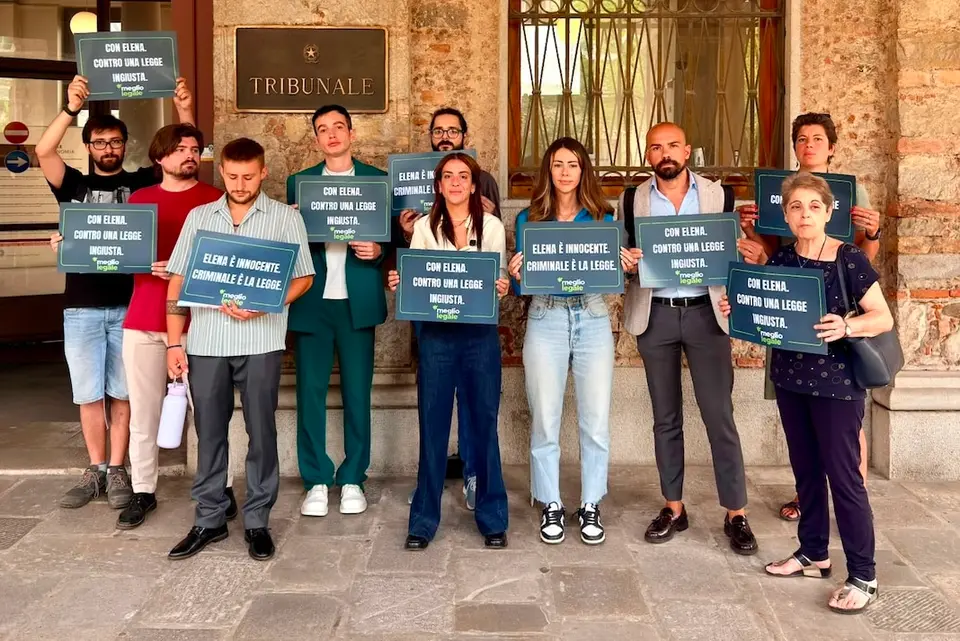
Udine, full acquittal for Elena Tuniz: court rules out psychophysical impairment
The Udine Court has acquitted Elena Tuniz with the formula "because the fact does not exist", closing a criminal proceeding that in recent months had become one of the most cited cases in the debate on the reform of the Road Code. As reported by ilsalvagente.it, which had already followed the story in April 2025 with a video testimony from Tuniz herself, the woman had been investigated after a positive THC test was detected following a traffic accident caused, as established only later, by an epileptic seizure.
January 2025: the accident and the positive THC test
The facts date back to 7 January 2025. Elena Tuniz, a 32-year-old teacher from Friuli, loses control of her car whilst driving, struck by a sudden illness. Taken to hospital, tests revealed a positive THC result: it was that result that triggered the immediate withdrawal of her driving licence and the opening of both an administrative and criminal proceeding.
Only subsequently did clinical investigations clarify the real cause of the accident: Tuniz had had her first epileptic seizure. "I had never had one before," the teacher declared in a video released by Meglio Legale, the association that assisted her. According to Tuniz, the positive THC result was "questionable" and had ended up shifting attention away from the true cause of the accident, delaying the identification of the condition.
The case took on further symbolic value because of another circumstance: following the epilepsy diagnosis, the drugs prescribed for treatment turned out to be based on cannabinoids, highlighting one of the contradictions in current regulations.
The turning point: the prosecutor requests acquittal
The request for acquittal came from the prosecutor herself. During the hearing she argued that, in light of the Constitutional Court's judgment from last January, there were missing elements to prove that Tuniz, at the time of the accident, was in a state of psychophysical impairment — an indispensable requirement to constitute the offence provided for in article 187 of the Road Code.
The judge agreed with this position, pronouncing the acquittal with the broadest possible formula. The decision represents one of the first concrete effects of the interpretation provided by the Constitutional Court, which maintained the reform in force but imposed a restrictive reading of it: a simple positive result on a drug test is insufficient. It is necessary to demonstrate a temporal connection between the intake of the substance and the driving, and to establish that the substance was concretely capable of compromising the psychophysical conditions of the driver at the time of the incident.
One year as a defendant: job lost, licence withdrawn
The consequences for Elena Tuniz had arrived well before the verdict. Because of the criminal proceeding she had lost her permanent teaching position and had had to face for months the risk of a conviction that, in case of an accident, could have entailed up to two years' imprisonment and a fine of up to 12,000 euros. Without a licence, she could not travel the approximately 70 kilometres that separated her home from her workplace.
In the preceding months, lawyers Raffaele Minieri and Vincenzo Marino had already challenged the licence suspension order before the Justice of the Peace in Udine, also raising a constitutional legality question on the new article 187 of the Road Code.
Meglio Legale: "The problem is the law, not Elena"
Satisfaction was expressed by Antonella Soldo, president of Meglio Legale. "This verdict restores justice to Elena, but does not erase what she had to endure in these months. She lost her permanent teaching position, was dragged into a criminal proceeding in which she risked up to two years in prison and a fine of up to 12,000 euros, whilst posing no danger to road safety. The Court has established that the fact does not exist. It is confirmation that the problem was not Elena: the problem is a law that continues to punish the wrong people."
For Soldo, the acquittal also constitutes "a warning for the legislator", so that the new article 187 is modified before other citizens find themselves in the same circumstances.
The problems with the new Road Code
Elena Tuniz's case has become an emblematic example of the objections to the Road Code reform that came into force on 14 December 2024. The changes to article 187 provide for heavy penalties for those who test positive on drug tests, without expressly requiring proof of impairment whilst driving — a substantial difference compared to regulations on alcohol, for which a quantitative limit continues to be set (0.5 g/l in most cases).
For cannabinoids, THC metabolites can remain detectable several days after consumption, when the psychotropic effects have ceased. Cases of false positives caused by certain drugs or products containing cannabis derivatives are also not ruled out.
On this point, the Constitutional Court intervened, establishing that the rule must be applied only after establishing the temporal connection between the intake of the substance and driving, and verifying that the substance was still capable of compromising the driver's abilities. The Udine Court's acquittal represents one of the first applications of this principle and could constitute an important precedent for other proceedings still pending relating to the new article 187.
Source: Google News IT — Crime (it)