Purchase of 31,000 pistols for Peru's national police under suspicion of overpricing and lack of public procurement
Peru's Interior Ministry paid nearly 30 million dollars for weapons before receiving a single pistol, without public tender. Experts warn of possible collusion.
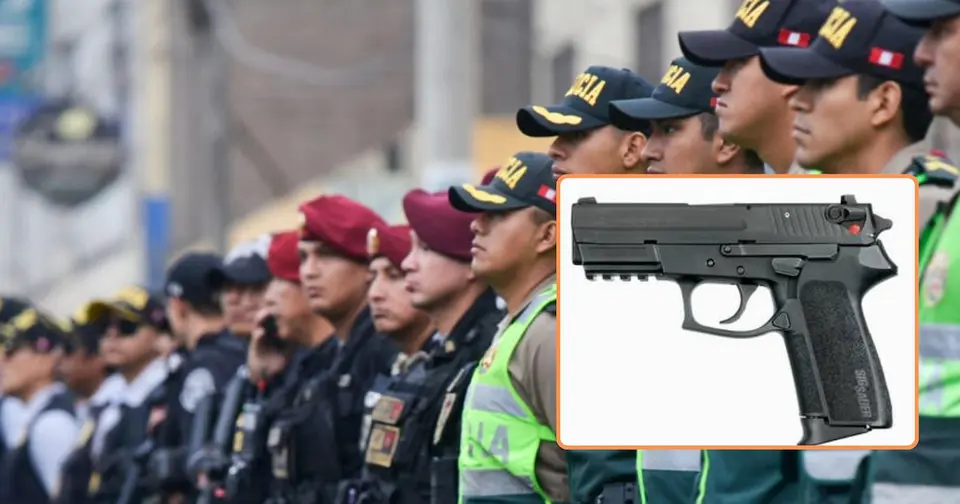
Weapons contract for national police triggers scandal over millions in irregularities
According to infobae.com, days after former Interior Minister José María Balcázar left office, Peru's Interior Ministry found itself at the centre of a serious public complaint: the acquisition of 31,045 pistols for Peru's National Police (PNP) for nearly 29.5 million dollars, paid in full before receiving the first weapon.
The report, originally broadcast by the programme Cuarto Poder, revealed that the contract was signed without public tender and with 100% advance payment of the total value, when standard practice in Peru's public administration permits advances of up to 30%.
Israeli supplier selected without real competition
The purchase was channelled through FAME, the Army's Weapons and Ammunition Factory, a state-run company under the Defence Ministry, using the contracting method covered by law 3168-4. The selected supplier was IWI, an Israeli firm partnered with FAME, with no competitive bidding process of any kind.
The agreed price for each Jericho model pistol, 9mm calibre, was 949 dollars per unit. In a previous process—suspended and subsequently cancelled by the Interior Ministry itself—companies such as Beretta, Sig Sauer and Tanfoglio had submitted offers of less than 560 dollars per unit, with shorter delivery times.
Thirteen million dollar difference without technical justification
Gonzalo Gil, lawyer for Armería Unidas del Perú, stated that the gap of thirteen million dollars between the price paid and the lowest offers was inexplicable. Gil indicated that the decision to pay a notably higher price in exchange for later delivery lacked technical or financial justification.
Marco Montoya, an expert in state contracting, warned that the process could constitute a case of collusion. Contracts signed hastily and without complying with the principles of competition and transparency are typically indicative of illicit practices, according to Montoya.
The State guaranteed its own risk
Another questioned aspect is the wording of the guarantee letter, the document that should protect the State against eventual non-fulfilment. In this case, it was drawn up by two state entities: the Interior Ministry and FAME, which means that the State itself assumes the risk of a transaction between public actors.
The report also exposed details of previous meetings between representatives of FAME, IWI and persons close to the presidential circle, which fuels suspicions about the transparency of the process.
Tender cancelled, assignment approved in 48 hours
During Balcázar's tenure, the purchasing process accumulated repeated postponements and changes in the leadership of the responsible administrative office, until the international tender was declared void due to alleged defects in the bases and technical specifications.
The day after that annulment, the government reactivated the purchase under the assignment contracting method, allowing FAME to select the supplier directly. Official records indicate that the call was published on 30 June and the contract award was granted just 48 hours later, without any real competition involved.
Source: Google News PE — Crime