Peru's Constitutional Court annuls 15-year sentence against Ollanta Humala
Former Peruvian president Ollanta Humala has been released from prison following the annulment of his conviction for money laundering. The Constitutional Court found that a criminal provision that did not exist when the facts occurred was applied retroactively.
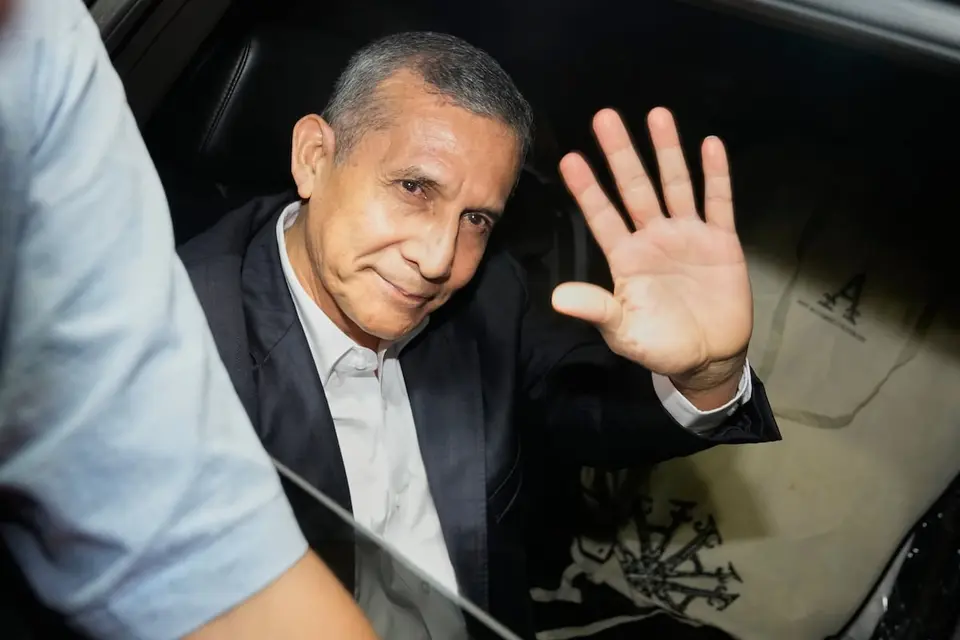
Humala leaves Barbadillo prison following Constitutional Court ruling
Former Peruvian president Ollanta Humala (2011–2016) left his cell at Barbadillo prison on Friday, the prison built east of Lima exclusively for former heads of state. According to Google News ES — Crime, the Constitutional Court annulled the criminal process that had kept him detained for the alleged crime of aggravated money laundering, ordered the filing of the preliminary investigation and declared the writ of habeas corpus presented by his defence to be well-founded.
"We have been victims of political and judicial persecution," Humala declared upon leaving prison. "On 15 April 2025 I was kidnapped by the State, and afterwards the hired assassins of that time regularised an illegal situation. We have never committed any crime whatsoever. I have never received campaign contributions from Venezuela or Brazil," he stated.
The conviction that became void
In April 2025, the Judiciary had sentenced Humala, 64, and his wife, former first lady Nadine Heredia, to 15 years' effective imprisonment. The court found them guilty of having received illicit contributions from the Brazilian construction company Odebrecht and from the Venezuelan government of Hugo Chávez to finance the presidential campaigns of 2006 and 2011. In the first of these, Humala was defeated in the second round by Alan García; five years later he reached the presidency by defeating Keiko Fujimori, now head of state.
Humala served fifteen months of imprisonment at Barbadillo. Heredia, by contrast, never served the sentence: she obtained political asylum from the Lula government, with the consent of the Dina Boluarte executive, and currently resides in São Paulo with the couple's youngest son. Her departure from the country generated intense controversy, with various sectors questioning whether she had been considered a political persecutee. It was not the first time that both had faced deprivation of liberty: between July 2017 and May 2018 they remained in preventive detention for the same investigation.
The Constitutional Court's argument
The highest interpreter of the Constitution concluded that in the process against Humala, the "principles of legality and typicality, connected to the right to personal liberty" were violated. In its ruling it argues that it was not established that the former president knew, nor could even presume, the illicit origin of the funds received for his campaigns.
The judgment adds a substantive argument: the conduct for which he was convicted did not constitute a crime when the facts occurred. The modality of asset reception within the crime of money laundering was incorporated into Peruvian legislation in 2016, several years after the contributions under investigation. The Court accordingly considered that a criminal provision that did not exist at the time the facts would have been committed was applied retroactively.
The precedent of the Cocktails case
The criterion employed by the Constitutional Court is the same that led to the acquittal of president Keiko Fujimori in the so-called Cocktails case. Last month, the Judiciary ordered the filing of the criminal process against her for the alleged crime of money laundering, accused of having received money of illicit origin in her presidential campaigns of 2011 and 2016 under the guise of meetings or cocktails.
"It is a logical consequence of the pronouncement made by the Constitutional Court in the Cocktails case, which ended up favouring Ms Keiko Fujimori and the other accused. By an application of similar criteria, this Constitutional Court has also considered annulling the entire process that was followed against former president Ollanta Humala and the other defendants," declared José Domingo Pérez, the former prosecutor who was in charge of Keiko Fujimori's case.
Criticisms of the judicial system
Lawyer César Nakasaki called for self-criticism from both the Judiciary and the Public Prosecutor's Office. "Preventive detention, seizure of his home, conviction sentence, unconstitutional. Why so many years refusing to recognise that electoral donations do not constitute the crime of money laundering? How many years is it since I asked for a distinction to be made between campaign contributions and bribes? By not doing so, grave personal and family damage was arbitrarily caused, as well as to the weakened political system," Nakasaki stated.
Source: Google News ES — Crime (es)