US removes Venezuela from drugs blacklist following Maduro's arrest
Washington has removed Venezuela from its list of drug-trafficking non-compliant countries. Colombia could follow the same path in 2027 if its new government advances against narcotics.
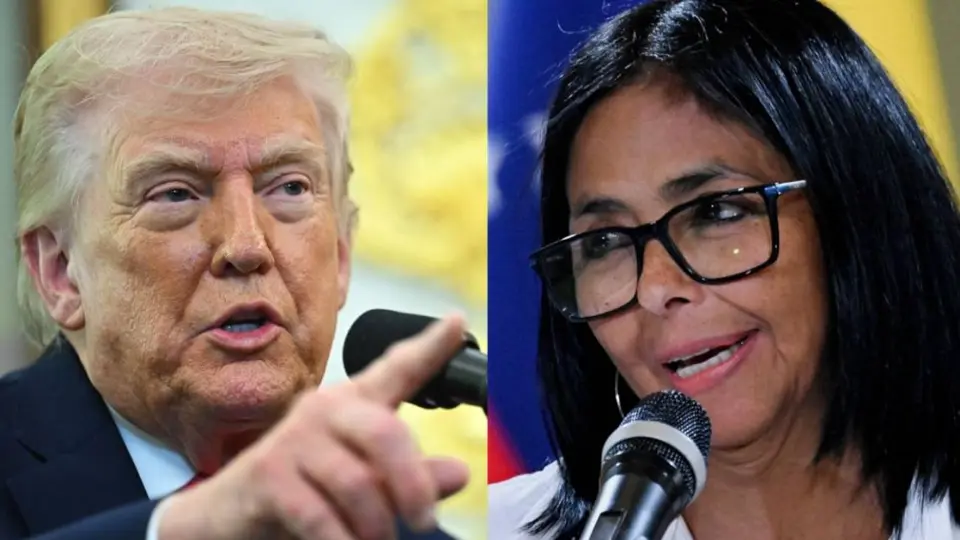
Venezuela removed from US drugs list; Colombia faces pressure until 2027
According to perfil.com, Washington has removed Venezuela from the group of countries that, in the United States' view, have failed to fulfil their commitments on drug control. The decision was communicated to Congress on 15 September through a statement by President Donald Trump.
"Given the positive measures taken under the interim presidency of Delcy Rodríguez, I have determined that Venezuela should no longer be designated as a country that has demonstrably failed to fulfil its commitments on drug control," Trump stated in the document.
The president highlighted Venezuelan cooperation against cartels since US forces captured Nicolás Maduro in January, and included among the advances the death of "Niño Guerrero", leader of Tren de Aragua. Trump indicated that he expects Venezuela to achieve additional progress in dismantling narco-terrorist groups and containing the trafficking of narcotic drugs into US territory.
Colombia, by contrast, remains on the list for the moment. Trump attributed record cocaine production to former president Gustavo Petro, although he praised the new government that took office in August. The promise by President Abelardo de la Espriella to drive an aggressive campaign against coca cultivation and cocaine production could remove the country from the list next year, Trump said.
"I will consider lifting the country's rating of 'demonstrable failure', which is maintained solely due to the incompetence and chaos generated by the previous far-left government that was in power for most of last year," the US president stated.
Trump added that Colombia is in a position to resume its role as Washington's "principal security partner in the hemisphere".
Colombian Ambassador to the US María Consuelo Araújo stated that her country would apply a comprehensive strategy to eradicate illicit crops using all available legal methods. Araújo clarified that the objective is to confront the entire drug-trafficking chain, "from illicit crops, laboratories and chemical precursors to trafficking routes, crime finances, command structures and international networks".
Colombia's Constitutional Court imposed strict conditions on any resumption of aerial spraying with glyphosate, citing possible risks to health and the environment. De la Espriella's government has also explored alternative herbicides, although a pilot project with glufosinate ammonium was suspended for legal reasons.
The decision reflects, according to perfil.com, how Washington's relationships on fighting drug trafficking in Latin America are being redefined as a result of conservative leaders' victories in several recent regional elections.
Source: Google News VE — Crime