Russian assassination plot on US soil: two Cubans and Venezuelan indicted
The US Department of Justice unsealed indictments against five individuals allegedly working for Russian intelligence to kill a dissident in Washington DC. The $40,000 murder-for-hire plot has alarmed exiled Russians who once viewed the US as safe ground.
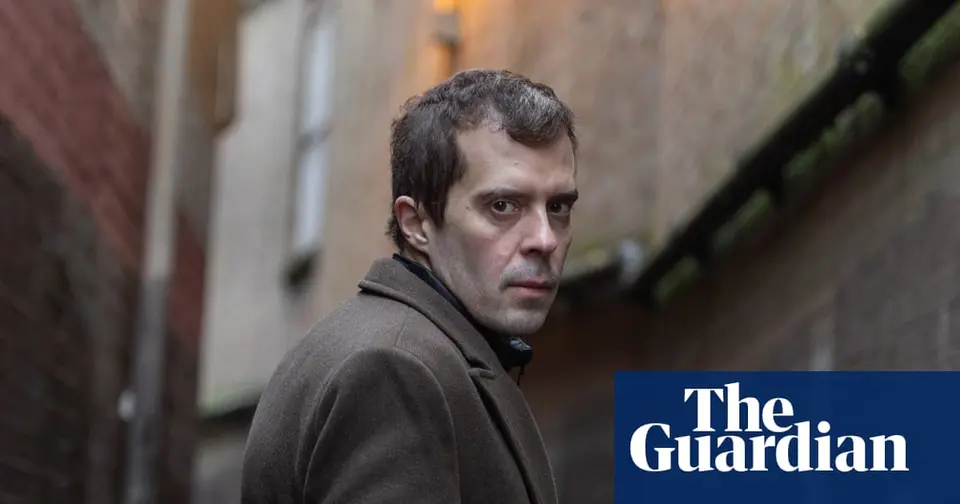
Russian spy ring allegedly commissioned $40,000 murder of dissident in Washington DC
A US Department of Justice indictment unsealed this week has accused five individuals of conspiring on behalf of Russian intelligence to surveil and kill a prominent Russian dissident living in Washington DC, theguardian.com reports. The case, described by former intelligence officials as a crossing of a longstanding cold-war red line, has shaken the community of exiled Russians who had long regarded American soil as a sanctuary beyond the Kremlin's reach.
Among those indicted in absentia are Kirill Khrameev, 27, a serving officer of Russia's Federal Security Service (FSB), and his father Yuri Khrameev, 63, a former FSB colonel. Also named are two Cuban nationals, Oemis Romagoza Durruthy and Yaidel Delgado Suarez — known as "the Viking" — both 35, and a 22-year-old Venezuelan, Angel Eduardo Castro.
The FBI uncovered encrypted messages, written in Spanish and clumsily disguised in spy jargon, commissioning what one alleged ring member called "gravely serious work": a $40,000 (approximately £30,000) contract to surveil and then kill a target the Russian state wanted to "disappear". The indictment refers to the killing using the word "construction". Assassins were initially sought from Mexico, but were "delayed", prompting the network to look for a local operative instead.
The identity of the intended victim was not disclosed by authorities. Speculation has centred on Vladimir Kara-Murza, the opposition figure freed from a Siberian prison and brought to the United States in a 2024 prisoner swap involving Russian intelligence operatives. Kara-Murza declined to comment when approached by the Guardian.
"Nowhere is safe"
The announcement overshadowed a conference on Russian affairs held at the offices of the National Endowment for Democracy, a short walk from the White House. Among the attendees was Roman Dobrokhotov, 43, a dissident Russian journalist previously named during a London trial last year as a target of a Russian spy ring. A message recovered in that case had discussed plans for Dobrokhotov in Britain in explicit terms: "Maybe burn him alive on the street, spray him with some super-strong acid, VX, like the North Koreans, or the ricin."
Despite that threat, Dobrokhotov had felt comfortable enough to have his Washington appearance publicised — something he said he would not normally do in Europe. After the indictment became public, his confidence evaporated.
"It looks like starting from today, the rules have changed in America," Dobrokhotov said. "We will have to change how we behave there. Nowhere is safe."
A broken gentleman's agreement
For decades, an informal understanding existed between Moscow and Washington that neither side would conduct lethal operations on the other's territory. Chris Costa, a former US intelligence official now serving as executive director of the International Spy Museum in Washington DC, described it as "an unwritten set of cold-war rules of the road".
"The US and Soviet Union conducted aggressive espionage against one another, but there were understood limits, particularly around physically targeting each other's intelligence personnel and families," Costa said. "If these allegations are proved, directing surveillance and murder on US soil crosses a very different line from traditional espionage."
The indictment itself catalogued a history of Russian state killings carried out abroad, implicitly underlining how rare any such activity on American territory has been. The list includes Paul Klebnikov, an American journalist murdered in Moscow in 2004; Alexander Litvinenko, a former FSB officer killed in London in 2006 when two Russian agents laced his tea with radioactive material; Sergei Skripal and his daughter, who survived a military-grade nerve agent attack in Salisbury, UK, in 2018, while a local woman, Dawn Sturgess, died after being contaminated; Zelimkhan Khangoshvili, assassinated in Berlin in 2019 on the order of the Russian state according to a German court ruling; and Alexei Navalny, the Russian opposition leader who died in custody in 2024 after having previously been poisoned with the nerve agent Novichok.
The indictment also noted that European governments have accused Russia of a broader pattern of sabotage and extrajudicial targeting, citing a German investigation reportedly linking Russian military intelligence to a drone attack at Leipzig/Halle airport in September 2026. No comparable incidents on US soil were referenced in the document.
Why cross the line now?
Jack Devine, a former associate director of operations at the CIA, suggested the Kremlin may have grown complacent about the consequences of its actions — and that the current alleged plot could prove to be a strategic miscalculation.
"The Russians today put far less weight on political criticism internationally," Devine said, adding that the willingness to contemplate an operation on US soil reflected a shift in how Moscow calculates risk and diplomatic blowback.
The unsealing of the indictments represents one of the most direct US government allegations of Russian-directed lethal intent inside the country's borders. Whether it signals a durable change in Kremlin operational doctrine or an isolated act of overreach remains, for now, an open question among intelligence analysts and the dissident community alike.
For those gathered at the Washington Dialogue conference, the theoretical had abruptly become immediate. The assumption that American geography offered meaningful protection — however imperfect — from the FSB's longer reach had, in the course of a single Tuesday morning announcement, become considerably harder to sustain.
Source: Google News MT