Tupac Shakur murder conviction: Indiana lawyers weigh unusual defence tactic
Duane "Keffe D" Davis was convicted on 31 August for the 1996 killing of rapper Tupac Shakur. Indiana defence attorneys say his team's strategy — arguing their own client was a liar — was rare but understandable.
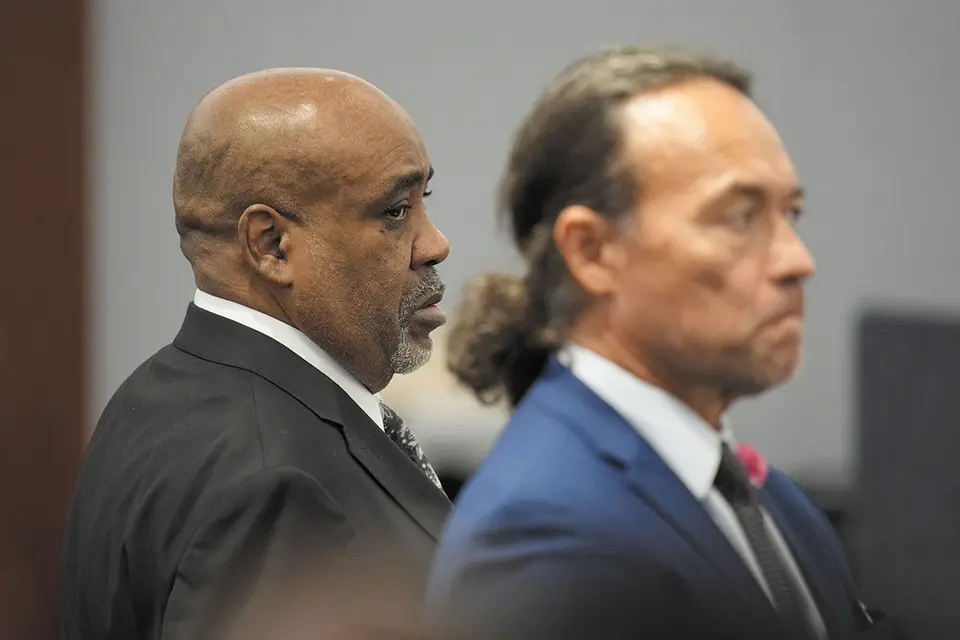
Indiana defence lawyers assess the Tupac Shakur trial strategy
Thirty years after Tupac Shakur was shot in a vehicle travelling near the Las Vegas Strip, a Nevada jury on 31 August convicted the only person ever to stand trial for his murder. Duane "Keffe D" Davis, 63, now faces a life sentence. As theindianalawyer.com reports, the verdict has prompted Indiana criminal defence attorneys to reflect on the unusual courtroom strategy his lawyers employed.
Davis was a former leader of the South Side Compton Crips, a Los Angeles gang that had a long and often violent rivalry with Mob Piru — the gang-affiliated circle connected to Death Row Records, Shakur's label, according to the Associated Press. Shortly before the September 1996 shooting, Shakur was involved in a physical altercation at the MGM Grand in Las Vegas with Orlando Anderson, Davis's nephew. Prosecutors argued that Davis sought revenge, drawing on Davis's own words from interviews and his memoir, Compton Street Legend, to support that claim, the Washington Post reported.
Witnesses and Davis himself had placed him in the white Cadillac from which shots were fired at Shakur's vehicle. He stated publicly over the years that he had even passed a gun to someone in the backseat when he could not get a clear shot. In 2008, Davis provided further details to detectives investigating the separate killing of rapper Biggie Smalls — details he had immunity for in that interview, but not for statements he made in later documentaries, podcasts, and his memoir, the AP noted.
The 16-member jury deliberated for three hours before returning a guilty verdict.
A defence built on discrediting the client
What drew particular attention from Indiana attorneys was the approach Davis's lawyers took: rather than contest the prosecution's version of events head-on, the defence argued that Davis was an unreliable narrator of his own life. His account of the night had shifted over the years, they said, and his memoir even carried a disclaimer stating that some facts in the book had been altered. Davis embellished the story for money and notoriety, his lawyers contended, meaning his words could not be treated as a confession.
Andrew Baldwin, a defence attorney at Baldwin Perry & Wiley P.C. in Indianapolis — who represented Richard Allen, convicted of killing two teenage girls in Delphi in 2017 — told theindianalawyer.com that such a strategy, while rare, reflects the reality of difficult cases.
"Sometimes their hands are tied as to how to defend a case," Baldwin said. "Getting creative and trying to figure out the best way to deal with the bad facts becomes kind of the focal point of how you defend the person."
Baldwin, who has practised as a defence trial lawyer for 32 years, said the absence of physical evidence and Davis's extensive public statements before his arrest left the defence team in a difficult position. He did not criticise the approach, but identified one potential gap: Davis did not testify.
"I think if you're going to go with that dangerous defence of saying my client's a liar and you shouldn't believe him, which is essentially what they did, you might need him to get up and explain that to the jury," Baldwin said.
He also emphasised the importance of confronting damaging facts directly rather than hoping they go unnoticed.
"As a defence trial lawyer of 32 years, the one thing I have learned and gotten better at is, you have to deal with those bad facts head on," he said. "You cannot bury your head in the sand and act as if they don't exist or hope that the prosecutor does not bring these bad facts up."
Rap lyrics as courtroom evidence
Brad Banks, a defence attorney at Banks & Brower in Indianapolis, also described the strategy as unusual, and drew a broader parallel to a growing trend in criminal litigation: cases in which rap lyrics are introduced as evidence against artists.
Banks noted that prosecutors are increasingly using songs in which artists allude to criminal acts as the basis for charges. Defence attorneys, he said, counter by arguing that such lyrics are artistic expression rather than admissions of guilt — a dynamic that echoes the Keffe D case, where the prosecution relied on a memoir to construct a narrative of involvement rather than on forensic or witness evidence.
Nevada law allows a person to be charged with murder for assisting another in committing the act. Prosecutors argued that Davis's consistent placement of himself in the Cadillac — regardless of how the rest of his account evolved — was sufficient for a conviction. The jury agreed.
Davis is the only individual to have faced charges in the case. The killing of Shakur on 13 September 1996 — one week after he was shot — and the still-unsolved murder of Biggie Smalls months later in 1997 remain among the most scrutinised crimes in the history of American popular music.
Source: Google News MT — Crime (en)