Vermont man convicted of attempted murder in shooting of 3 Palestinian students
A jury convicted Jason Eaton, 51, of attempted murder for shooting three Palestinian college students near his Burlington home in November 2023. He faces up to life in prison.
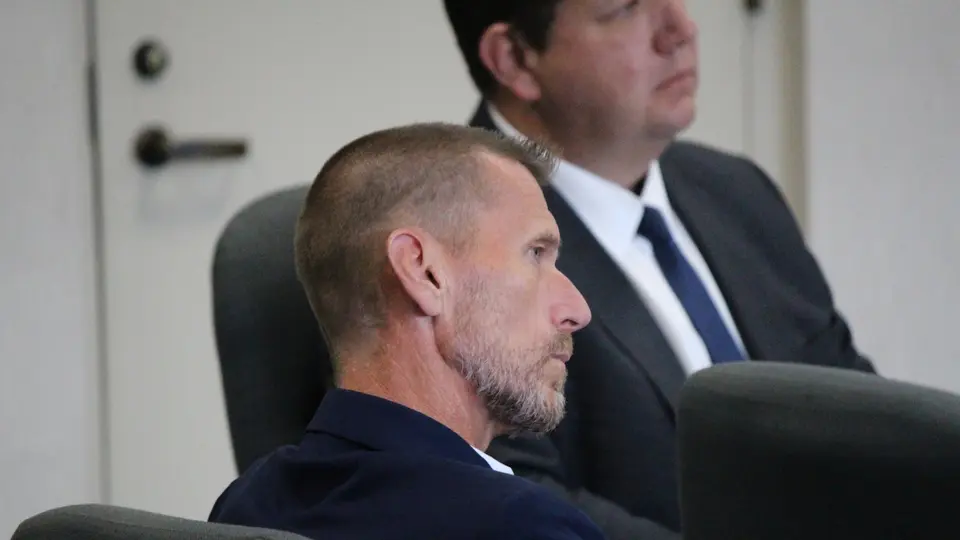
Vermont jury rejects insanity defense, convicts man in shooting of three Palestinian students
A jury on Monday convicted Jason Eaton, 51, of attempted murder for shooting three Palestinian college students who were walking near his Burlington, Vermont home in November 2023, ABC News US reports. The jury rejected his insanity defense, in which he claimed the CIA and Mossad had transmitted orders to shoot the men to him via FM radio.
Eaton faces up to life in prison for the attack near the University of Vermont campus, which left Hisham Awartani paralyzed from the waist down and wounded his friends Tahseen Aliahmad and Kinnan Abdalhamid. The three men, all now 23, were 20 years old at the time of the shooting.
The jury deliberated for several hours following a weeklong trial that included testimony from all three victims as well as psychiatric experts called by both the defense and prosecution. Eaton stared ahead blankly as the verdict was read. Awartani and Aliahmad, seated in the front row of the courtroom gallery, smiled and embraced those around them.
Eaton did not dispute that he was the shooter. His defense lawyers argued he should be found not guilty by reason of insanity, citing his belief that U.S. and Israeli intelligence agencies had sent him orders through FM radio transmissions and that God was commanding him to protect his Jewish neighbors. Had the jury accepted that argument, he could have been ordered into mental health treatment rather than prison. He was remanded to custody pending sentencing, which has yet to be scheduled.
Defense attorney Joshua O'Hara told jurors that Eaton had lost his job at a credit union two weeks before the shooting and, while listening to a local NPR affiliate, began hearing messages he attributed to the CIA. At first those messages were encouraging, O'Hara said, but they eventually turned dark, insisting that Eaton "has to go out and shoot somebody."
Prosecutor Sally Adams told the jury that authorities found three shotguns in Eaton's apartment alongside a Ruger .380-caliber handgun that crime lab testing identified as the weapon used in the attack. Eaton had purchased the handgun seven months before the shooting at a Vermont gun store.
The three victims testified about the evening the attack took place. They had spent the holiday weekend visiting Awartani's grandmother and had gone to a bowling alley to celebrate his twin cousins' birthday. After dusk, they took a walk near the University of Vermont campus. Awartani, who was studying at Brown University in Rhode Island at the time, said two of them were wearing keffiyehs — traditional Palestinian scarves — and that they were speaking a mix of English and Arabic when he first noticed Eaton standing on a porch.
Within seconds, Awartani said, Eaton stepped off the porch and walked toward them with an expressionless face, saying nothing. When he was roughly five to ten feet away, "he pulled out a handgun and started shooting at us," Awartani testified. The bullet struck him in the chest, ricocheted off his scapula and caused paraplegia. Aliahmad was struck in the collarbone, and Abdalhamid was shot in the right buttock.
Abdalhamid, a student at Haverford College near Philadelphia, said he fled and hid behind a nearby home after seeing Aliahmad fall to the ground, only realizing later that he too had been wounded.
A neighbor, Jacob Pyne, who lived in a different apartment in the same building as Eaton, testified that he heard four to six gunshots followed by footsteps on the stairs. He ran outside and heard one of the men yelling that he had been shot and needed help. Pyne brought blankets and called 911.
The three victims grew up in Ramallah in the West Bank, where they became friends as schoolmates before moving to the United States for college. The shooting occurred a few days after Thanksgiving, weeks into the Israel-Hamas war, and prompted calls for a hate crime investigation. No hate crime charges were ultimately filed, as questions persisted about whether anti-Palestinian animus, a psychotic episode or some combination of factors had driven Eaton to open fire.
Source: ABC News US