Ottawa orders appeal review for Saskatchewan sisters' murder convictions after 30 years
Federal Justice Minister Sean Fraser has ordered an Appeal Court to reopen the case of Odelia and Neressa Quewezance, convicted of second-degree murder in 1994.
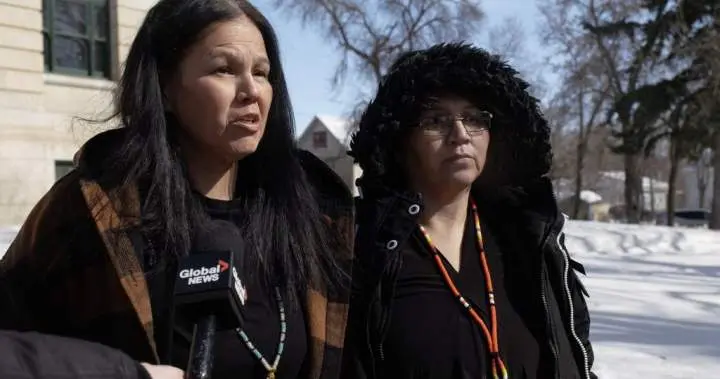
Federal minister orders appeal for Quewezance sisters after nearly three decades behind bars
Federal Justice Minister Sean Fraser has ordered the courts to reopen the murder convictions of two Saskatchewan sisters who spent close to three decades in prison, Global News Crime reports.
Fraser announced Thursday that he is sending the case of Odelia and Neressa Quewezance back to an Appeal Court for a full review, citing reasonable grounds to conclude a miscarriage of justice occurred in the 1994 convictions.
"My decision does not decide guilt or innocence, as that will rest with the courts," Fraser said in a statement. "Our responsibility is to make sure Canadians can trust their justice system, and that means, in rare cases, returning cases to the courts."
Fraser noted that new information had come to light that was not before the courts during the original trial or subsequent appeal.
New evidence centres on conduct in custody
Their lawyer, James Lockyer, said the fresh information relates specifically to the sisters' time in custody following their arrest. The two women were held at an RCMP detachment in Kamsack, Saskatchewan — approximately 270 kilometres northeast of Saskatoon — where they were questioned by white male police officers for several days, in violation of a court order requiring them to be transferred to the local jail.
"We've discovered some more information in that regard that I don't feel free to talk about at the moment, but will certainly be presented to the Court of Appeal," Lockyer said in a phone interview Thursday.
Lockyer argued the women were particularly vulnerable to police pressure because of their time spent in residential schools, and that their alleged incriminating statements were never recorded. He said the conditions of their custody increase the likelihood that any confessions were false.
Court documents confirm both sisters attended St. Philips Indian Residential School and Qu'Appelle Indian Residential School. Their mother and stepmother both died from drug overdoses.
A conviction dating to a 1993 killing
The Quewezance sisters, members of the Keeseekoose First Nation, were convicted of second-degree murder in the 1993 stabbing death of Anthony Joseph Dolff, a 70-year-old farmer whose body was found in his bedroom near Kamsack. Court records show Dolff had been stabbed 17 times and had a phone cord wrapped around his neck.
The sisters and a youth were said to have been drinking with Dolff at his farmhouse on the night of the killing. That youth later confessed to the murder and was sentenced to five years in prison. The sisters have always maintained their innocence.
Their bid for a Supreme Court of Canada appeal was dismissed in 1996.
Bail breaches complicate path to freedom
Lockyer applied for a ministerial review in December 2021, which was granted in June 2022. The sisters were released on bail in 2023 but were subsequently returned to custody after breaching bail conditions.
"It's very difficult for them, when they've spent all this time in prison, to be able to readjust in the community," Lockyer said. He noted both women struggle with substance abuse.
Lockyer said he will be bringing further bail applications for the sisters in the Saskatchewan Court of Appeal.
Sisters say the fight continues
In a statement issued Thursday through Innocence Canada — an organization that advocates for those it believes have been wrongfully convicted — the sisters said they are encouraged by the minister's decision but are not done fighting.
"We have never stopped fighting," Odelia said in the statement on behalf of herself and her sibling. "Thank you to all those who have kept the faith in us."
Lockyer, who also represents Innocence Canada, said the Quewezance case was brought to the organization's attention by David Milgaard, who spent 23 years in prison for the 1969 murder of a Saskatoon nursing student before his conviction was overturned. Milgaard died in 2022.
Source: Global News Crime