Brussels opens its 19th anti-drug hotspot on Rue Gray in Ixelles
The Rue Gray district, near Place Flagey in Ixelles, has been classified as a "hotspot" zone to combat drug trafficking. Brussels now has 19 such reinforced perimeters.
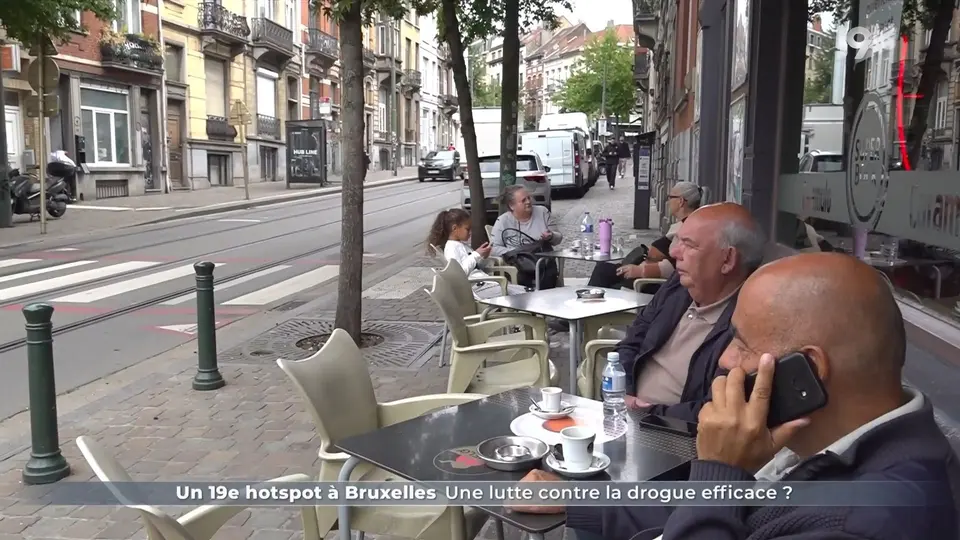
Ixelles joins the map of Brussels anti-drug hotspots
Rue Gray, a stone's throw from Place Flagey in the municipality of Ixelles, has just been classified as a "hotspot" zone by local authorities, reports RTBF Info. While the streets are relatively calm during the day, drug trafficking regularly takes place in the evening—a phenomenon documented for several years.
Mayor Romain de Reusme (PS) announced a series of concrete measures: installation of surveillance cameras, closure of a horeca establishment suspected of supporting trafficking, and now, hotspot status which, according to him, "will facilitate controls and administrative procedures to combat drug trafficking".
Residents divided on the effectiveness of the measure
In the district, the new measures are generally well received. "There is much more surveillance, the police pass by more and more and so we see less trafficking," testifies a resident. Some inhabitants remain sceptical. "It can help but not much," estimates a passer-by. "They see, but they don't arrest people. They don't do controls properly."
This 19th hotspot is added to the eighteen zones already active in the capital. The strategy carries a recognised risk: the displacement of trafficking to adjacent streets.
The Brussels regional minister-president calls for continuous evaluation
Boris Dillies (MR), minister-president of the Brussels Region, explicitly acknowledges this limitation. "In some cases, we see that hotspots produce results and then, there is obviously the principle of displacement which we must evaluate," he states. "I do not consider that a hotspot, abracadabra, will resolve everything, but there is one certainty, which is that we work with a very strong focus of police and judicial actions in these districts."
The drugs commissioner advocates for a complementary approach
Ine Van Wymersch, national drugs commissioner, insists on the need to go beyond the security aspect alone. "This is a first phase but we must also work on a preventive municipal regulation that protects honest traders and prevents dishonest traders from engaging in money laundering," she explains. She also calls for "actively working with young people and directing them towards education or employment".
Since they came into force, hotspots have multiplied in the capital with partial results, without putting an end to trafficking. Regional stakeholders are now calling for better coordination at the national level to amplify the effect of these measures.
Source: RTBF Info