Supreme Court: Fachim refuses joint judgment of Moraes and Mendonça in Tuesday's session
The president of the Supreme Court, Edson Fachim, rejected Alexandre de Moraes' request to be judged jointly with his rival André Mendonça in the extraordinary session on the 15th.
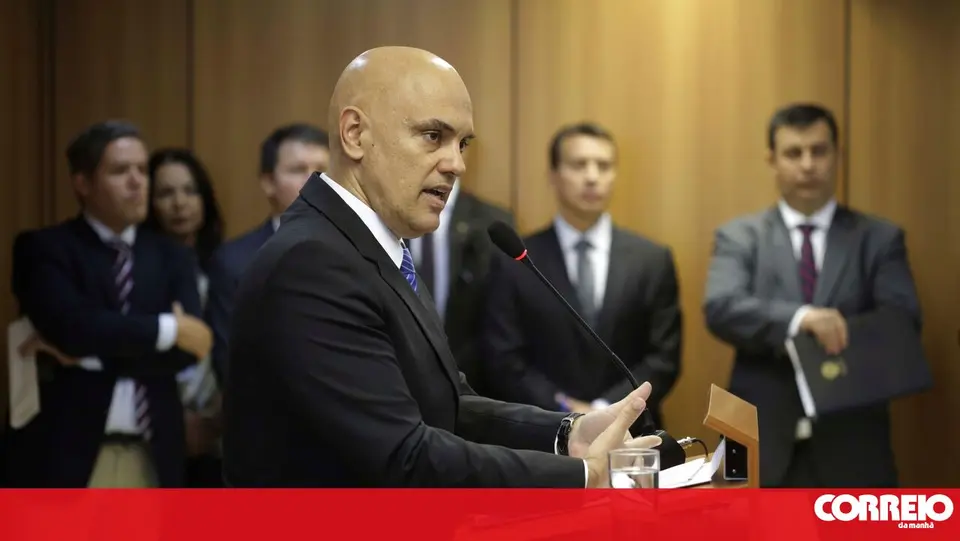
Fachim maintains extraordinary session and rejects consolidation of Moraes and Mendonça cases
The president of Brazil's Supreme Court (STF), Edson Fachim, rejected on Saturday the request from judge Alexandre de Moraes to be judged jointly with his main rival on the court, judge André Mendonça. The extraordinary session scheduled for Tuesday, the 15th, remains on its original terms, as reported by Correio da Manhã.
The decision represents another setback for Alexandre de Moraes and for the group of judges supporting him, who have sought to prevent the trial of their colleague on suspicion of improper ties to banker Daniel Vorcaro. Vorcaro is currently imprisoned on charges of corruption, fraud and bribery of officials. Moraes' wife, Viviane de Moraes, worked as a lawyer for the same banker.
The messages that triggered the proceedings
In his official letter, Fachim confirmed the convocation of the extraordinary session to analyse the relationship between Alexandre de Moraes and his wife with Vorcaro, as well as the investigation request formally submitted by André Mendonça last week. Mendonça requested the opening of the investigation after making public a report from the Federal Police (PF), previously classified, which documented 52 messages exchanged between Vorcaro and Alexandre de Moraes. In those messages, the judge appeared to be advising the banker on his business affairs and on the need to leave Brazil.
Two days after the release of these messages, Alexandre de Moraes responded to his colleague, with whom he has been a declared adversary for a long time, and in turn requested the opening of an investigation against André Mendonça. The accusations were based on alleged abuse of authority, usurpation of the powers of the STF president and politically directed investigations. Moraes' request relied on a purported Federal Police report, but the document is unsigned and doubts remain about its authenticity, given that its content does not meet the usual standards of intelligence reports.
Two separate sessions to avoid collision
Fachim chose not to judge the two cases simultaneously, as Moraes intended, but did not leave his colleague's request without response. In the same official letter in which he refused to consolidate the proceedings — a measure which, according to analysts, would complicate reaching a practical outcome — the STF president convened a plenary session for the 23rd designed to analyse the investigation request against André Mendonça.
Fachim's strategy is to demonstrate balance between the two sides, scheduling separate sessions for each case. However, this approach faces significant resistance. The group of judges aligned with Alexandre de Moraes — which includes Flávio Dino, former Justice Minister under President Lula, Cristiano Zanin, former lawyer for the current Brazilian head of state, and Gilmar Mendes — does not accept the separation of the proceedings.
Risk of blockade on Tuesday
In Tuesday's session, the group aligned with Moraes is expected to attempt to render the proceedings unworkable and may request a view of the case, that is, more time to analyse the documentation. This manoeuvre would paralyse the judgment for a period that could reach 90 days, indefinitely postponing a decision on the suspicions hanging over the judge.
Tension within the STF highlights the internal division of the court and raises questions about the institution's capacity to self-regulate when its own members are involved. Fachim, by maintaining the extraordinary session and by refusing to merge the cases, signalled that he will not yield to pressure to delay the proceedings concerning Alexandre de Moraes — at least for now.
Source: Correio da Manhã