Suspect accused of leading Comando Vermelho drug route between SP and RJ arrested in Maceió
Laércio Isidoro do Nascimento Júnior, known as "Boss", was detained on Monday (21) in Maceió. He is identified by the Rio de Janeiro Public Ministry as head of drug transportation for Comando Vermelho.
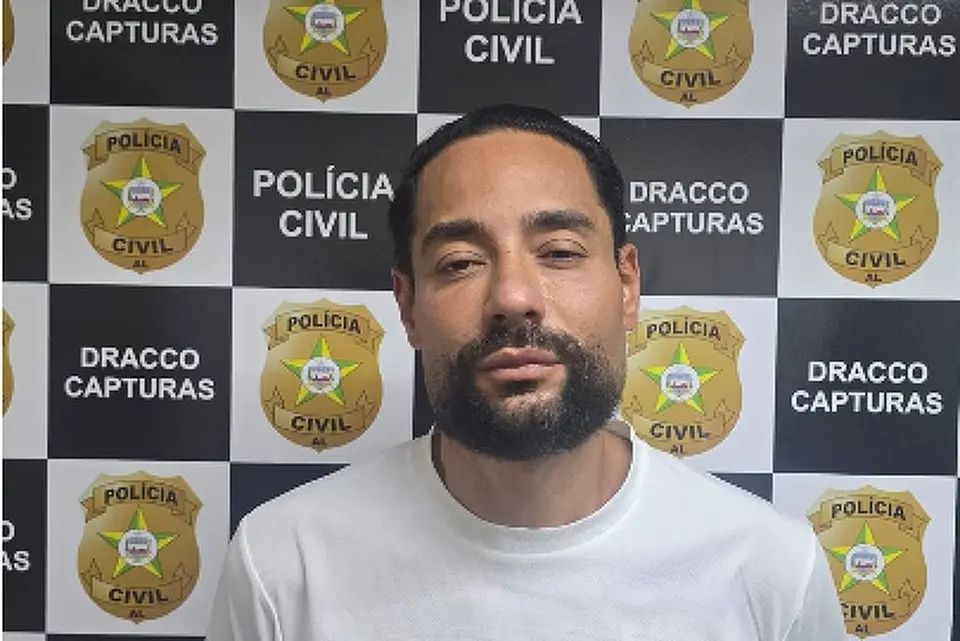
Operation Ícaro arrests alleged head of interstate Comando Vermelho route
According to www1.folha.uol.com.br, a man known as "Boss" — identified as Laércio Isidoro do Nascimento Júnior — was arrested on Monday (21) at his residence in Maceió, capital of Alagoas. The Public Ministry of Rio de Janeiro identifies him as the commander of a Comando Vermelho (CV) scheme responsible for transporting drugs between São Paulo and Rio de Janeiro.
The arrest occurred as part of Operation Ícaro, with arrest warrants issued by the 1st Specialised Criminal Court for Criminal Organisation. Boss is one of 15 defendants with arrest warrants without release deadline executed in the same week. The operation received support from the Civil Police of Rio de Janeiro, São Paulo and Alagoas, the State Secretariat for Prison Administration (Seap) and the Rio de Janeiro Military Police.
In addition to the arrest warrants, the operation included orders for the search and seizure of electronic devices, documents, money and vehicles linked to the scheme.
Successor of already-arrested leader
According to prosecutor Décio Alonso, Boss assumed the position previously held by Marcos Antônio Pereira Firmino da Silva, known as "My Thor", described as one of the CV's leaders and currently imprisoned in the Federal Penitentiary of Catanduvas in Paraná.
According to investigators, it was Boss who began to directly coordinate with faction leaders the supplying of communities, negotiating shipments, organising freight and payments, coordinating logistics operators and using front men to move drug trafficking money. Prosecutor Alonso also stated that Boss went years without being identified by investigations because he adopted "a policy of isolation".
In Rio de Janeiro, Boss supplied drugs exclusively for the CV, but maintained coordination with members of the PCC (Primeiro Comando da Capital) in other states, especially in São Paulo, according to the Public Ministry.
Shell companies and nearly R$ 71 million in atypical transactions
The group is identified as responsible for transporting tonnes of drugs between the two states, using transport and logistics companies as a front to conceal illegal cargo among regular goods. The cross-referencing of dozens of communications about atypical financial movements, involving defendants and commercial establishments, pointed to transactions of R$ 70,497,597 over a short period.
The São Paulo–Rio de Janeiro route is considered strategic for supplying Rio de Janeiro factions.
Two drug seizures linked to the scheme
The indictment links to the group's logistics structure two seizures carried out in 2024. On 2 February, 715.7 kilograms of cocaine and cannabis were found in Guarulhos, São Paulo. On 31 May of the same year, a further 73.8 kilograms of cocaine were seized in Seropédica, in the Baixada Fluminense. Together, the shipments total 789.5 kilograms of drugs which, according to police, were part of the same interstate transport operation.
Two military police officers among the accused
Among the 15 defendants, two are military police officers accused of providing armed support to the group and of acting in drug distribution and money collection. Both are already imprisoned. There is no information as to whether they have presented a lawyer; in the open cases, no appointed defence is listed.
Four other defendants were responsible for logistics, transport and collection within the scheme. Six received drugs on a recurring basis in Rio de Janeiro for subsequent redistribution. Two acted as front men.
The Public Ministry requested the conviction of the accused for association with drug trafficking and money laundering, as well as the confiscation of assets and the extended forfeiture of the group's property.
Source: Google News BR — São Paulo