ProCultura case: Antofagasta court declares itself incompetent and case transfers to Santiago
The Guarantee Court of Antofagasta transferred the regional aspect of the ProCultura case to the 4th Guarantee Court of Santiago. The defence of Alberto Larraín described the Public Ministry's formalisation as "poorly formulated".
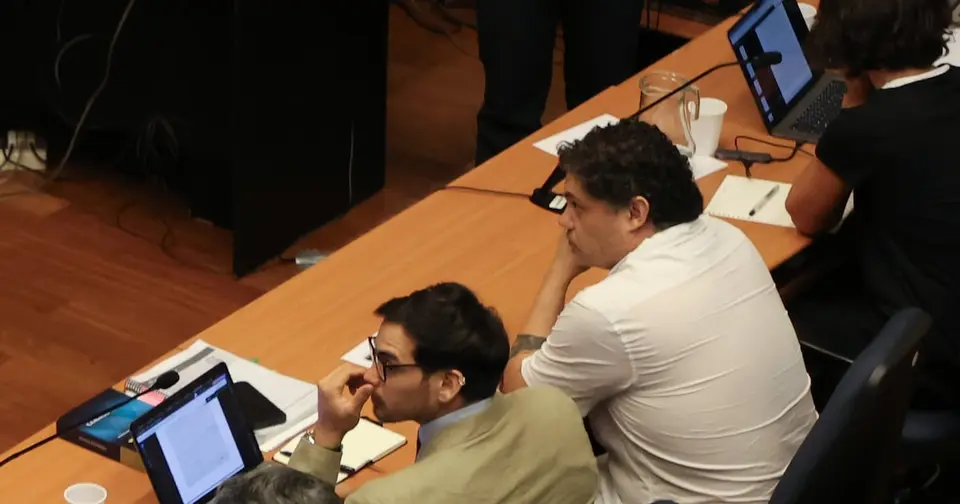
ProCultura case: Antofagasta court cedes jurisdiction to Santiago following defence challenge
According to latercera.com, the Guarantee Court of Antofagasta declared itself incompetent on Tuesday to hear the regional aspect of the ProCultura case, ordering that the case files be transferred to the 4th Guarantee Court of Santiago. The ruling represents a new setback for the Public Ministry and the State Defence Council (CDE) in the framework of this investigation.
The request for incompetence was presented by lawyer Cristián Arias, defender of Alberto Larraín, and was immediately backed by the defence of María Constanza Gómez. The central argument was that the questioned agreements were signed by Gómez in Santiago, specifically in the Las Condes district, via electronic signature.
Judge bases jurisdiction on location of misappropriation of funds
Judge María José Saavedra accepted the request despite opposition from prosecutor Cristián Aguilar and the CDE. In her ruling, Saavedra stated that the territory where the principle of execution of the investigated crime is established corresponds to the Las Condes district, given that the bank branch where the foundation's current accounts were managed—towards which the allegedly misappropriated funds were transferred—was located there.
"According to article 157 of the Courts Organic Code, the competent court is the one where the crime began to be executed. In the case of misappropriation of funds, this principle occurs at the moment the resources are diverted in a manner incompatible with the agreed purpose, not in the mere omission of restoring them", Saavedra stated.
The magistrate further clarified that "neither the lawful signing of agreements nor the receipt of funds constitute the principle of execution of the crime. Execution is linked to the act of disposition incompatible with the fiduciary mandate, which occurred entirely in the Metropolitan Region".
Should the 4th Guarantee Court of Santiago not accept jurisdiction, the dispute will be deadlocked before the respective Court of Appeals.
Context: six counts of embezzlement
The formalisation was presented by prosecutor Aguilar against Larraín and Gómez, both representatives of the ProCultura NGO, as perpetrators of six counts of completed embezzlement. The charges are linked to agreements signed between the foundation and the Regional Government of Antofagasta and the Housing Regional Ministry of that same region.
Larraín's defence attacks the Public Ministry
When asked by La Tercera, lawyer Arias was categorical in evaluating the ruling. "Once again the Public Ministry is poorly formulating the charge in the ProCultura case. This is a procedural rejection, which does not mean we will not again argue that there is an error in substance, but from the outset the Public Ministry's formalisation is poorly formulated", he stated.
Arias emphasised that the incompetence ruling does not imply that the court or the defence admit the imputed facts. "It is stated that, under the assumption that the facts it imputes are true, the one who must hear these facts is the Fourth Guarantee Court of Santiago. There and wherever necessary we will continue to argue that the facts that the Public Ministry imputes to Alberto Larraín are not constitutive of a crime", added the criminal defence lawyer.
The defender attributed the situation to a reorganisation of the Public Ministry's strategy. In his view, the Prosecution "should have abandoned its initial position that in the ProCultura case there was fraud against the State, a defrauding scheme, given the poor result it had in Santiago", and would have chosen to reformulate the charge towards an "alleged embezzlement through misappropriation", following the CDE in doing so.
"In doing this, this contortion, the charge ends up poorly formulated, both in form and in substance, as we will argue in the court that ultimately ends up hearing this formalisation which is completely distorted with respect to what has been done in the ProCultura case", Arias concluded.
The transfer of the case means that proceedings will have to be recommenced before the capital court, adding a further delay to a process that has already accumulated successive setbacks for criminal prosecution.
Source: Google News CL — Santiago